Showing posts with label Homelessness. Show all posts

Thursday, June 26, 2025

Homelessness: We have all the answers!


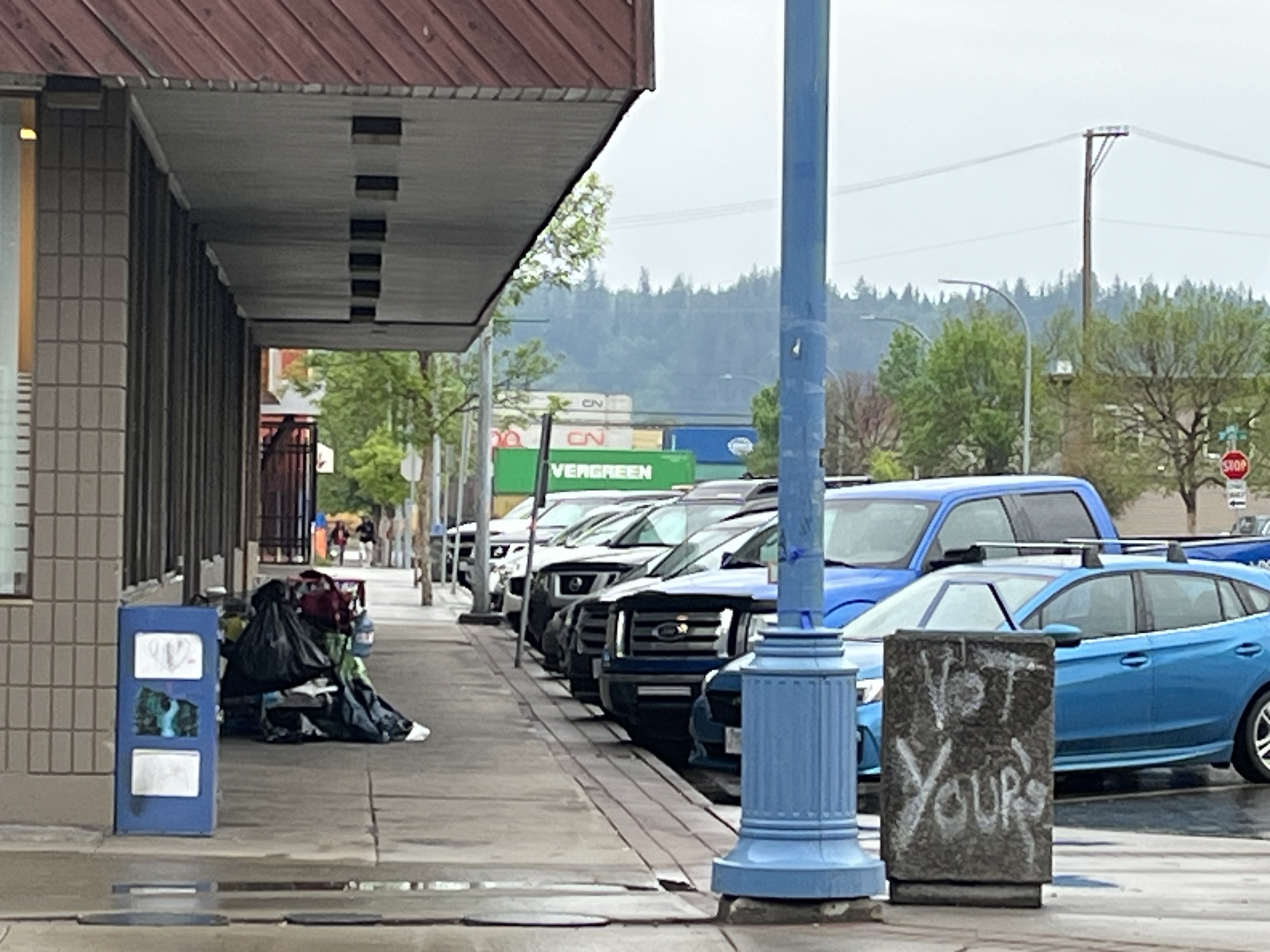
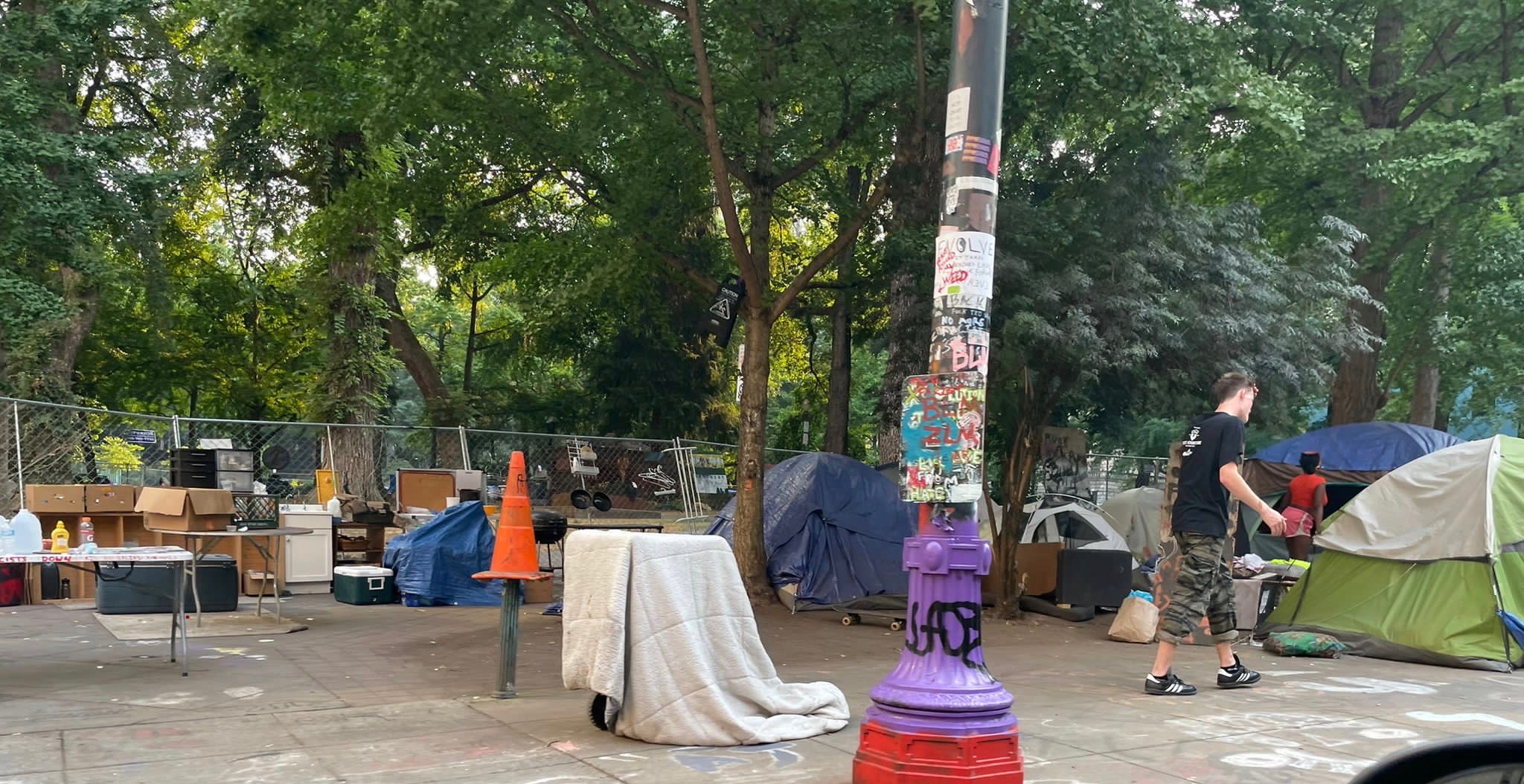
Helping the homeless - We have the tools to help
Photo Ed Yourdon from New York City, USA, CC BY-SA 2.0 via Wikimedia Commons

by Larry Leach

A quote recently hit me — something I’d been feeling for a long time. Malcolm Gladwell put it perfectly:


“The tools necessary to control an epidemic are sitting on the table, right in front of us. We can let the unscrupulous take them. Or we can pick them up ourselves and use them to build a better world.”

That’s exactly where we are with CPTED, SafeGrowth, and the broader crisis in our cities.

We have blogged on the topic of homelessness numerous times including Greg’s blog about the state of homelessness in 2024, Mateja’s blog on homelessness in a European city, and also in Australia, and Jon Munn's blog on the situation in Victoria, BC.

We already have the tools. We already know what works. Finland has proven it and last year we blogged on that country’s remarkable success.

Other countries have also been successful. The problem isn’t strategy — it’s will. What we face is not a lack of evidence, but a kind of Titanic denial — a refusal to accept who must act, and a reluctance to work together toward the solutions already in front of us.

The table is set. The only question now is: Who’s going to reach for the tools?


CANADA AND THE U.S.

In Canada alone, there are hundreds of Millions of dollars going to large agencies in the major cities and that can lead to different motives and outcomes with no one level of government or organization directly responsible or accountable for the outcomes. 

In fact many of these agencies, including shelters, detox, recovery communities, supervised consumption sites and housing get funding from civic, provincial and federal governments at the same time. Some agencies are involved in a number of these activities.

As we say in SafeGrowth, the experts are the people that live in the community. The closer decisions and actions are to the people in the community the better the solution will be for the residents.


U.S. homeless patterns - source: U.S. Dept of Housing and Urban Development 


Canadian homeless patterns - source Housing Infrastructure Canada

The trends show an inconsistency in addressing the problem. If we manage social issues, they will continue to manage us.  The rhetoric in the early 2000’s in Canada was “the plan to end homelessness” in every major city with goals and target dates. 

An example of this was Calgary’s plan to end homelessness in 2008. It was a 10 year plan. Calgary’s was the first to get to the 10 year mark and there are some learnings that can be found in detail here


WE KNOW THE ANSWERS 

We Already Know the Answers — So Why Aren’t We Acting?

Seven key barriers to ending homelessness were identified in 2018 — and in 2025, nothing has changed. These barriers include: lack of affordable housing, poor coordination, overreliance on short-term fixes, economic downturns, funding gaps, rising newcomer populations, and weak data systems.

Not one level of government has taken direct responsibility for addressing them, and progress remains glacial. Any attempts to move forward are, as the saying goes, a day late and a dollar short.

But the solutions already exist — and Finland has shown the world how.

I had the chance to visit Finland and meet Juha Kahila, head of international affairs for Y-Säätiö, the country’s largest non-profit landlord. Juha regularly speaks in Canada, sharing insights with governments and agencies.


Y-Säätiö Finland's 4th largest landlord committed to the Housing First program 


Finland is clearly different from Canada or the U.S., but some of their most effective policies could be adapted here — if we had the political will.

Most importantly: Finland made municipalities fully responsible for outreach, housing, and support services — not through grants, but by directly employing everyone involved. These same municipalities also manage healthcare, with outreach teams embedded in health clinics. Homelessness, addiction, and mental health are treated as connected health issues.


Finland shelter for homeless


The results? Helsinki reduced its shelter beds from 6,000 to just 600 — not by building massive new facilities, but by transitioning people into housing. When I toured one of their low-barrier shelters, I saw modest rooms with no more than 12 beds each, and upper floors dedicated to transitional housing for men, women, and couples.

Small-scale shelter spaces. Integrated mental health support. Full municipal accountability.


THE WAY FORWARD

By no means are these the only changes that need to happen, but the two simple ideas of making one level of government fully responsible for the sector and making it closer to healthcare can make a HUGE impact of the seven reasons the Calgary Plan to end Homelessness didn’t achieve its intended outcome. 

Making our shelter spaces smaller and turning some of the spaces into housing addresses the remaining factors that made the initiative fail.

By addressing these changes, we’ll know who is responsible to address the issue and make the necessary changes and our communities will be safer and more connected and can spend more time working on social cohesion rather than trying to address the social disorder that impacts many residents in many communities. 

With no one in charge, we will continue to suffer a patchwork of well-meaning agencies and small volunteer groups trying as best they can, with little to no coordination.

It’s not complex. We already know what works.


The only thing missing is action.


Wednesday, November 6, 2024

Pictures in the sky - a vision for the unhoused in Prince George


Judge and Senator Calvin Murray Sinclair
- photo by Archkris, CC BY-SA 4.0 via Wiki Commons

 by John Lyons

John Lyons spent many years as a patrol officer living and working in northern Canadian communities. A member of the Royal Canadian Mounted Police for 28 years, he served as a major crime investigator. For 10 years he was an international crime analyst with Interpol Ottawa. Post policing he consulted government on health care fraud. Now he brings his extensive experience to SafeGrowth, particularly in conducting search conferences to prevent crime and build collaborative networks.

This week, a giant died in Canada. I met him many years ago when I gave testimony in an inquiry that he headed as a judge. I have remained impressed by him ever since. How we could use his wise advice now! 

I speak of the Ojibway First Nations Judge and retired Canadian Senator Calvin Murray Sinclair who died on November 4th. His passing is a deep and huge loss to Canada. Judge Sinclair was a champion of crime prevention through First Nations community development. From 2009, he was a leader in Canada’s Truth and Reconciliation Commission and he had a profound impact on how Canadians, such as myself, contextualize colonial abuse of First Nations peoples. 

He shaped my perspective on addressing crimes and incivilities by economic and socially marginalized First Nations people. The problems Judge Sinclair brought to light are still apparent in the cities across northern communities, especially in the northern Canadian city of Prince George, British Columbia, a community with problems of homelessness, street crime, illicit drugs, and drug overdoses. The blog "Innovations in responding to street drugs" described those issues last year. 

The Prince George story illustrates Judge Sinclair’s message most succinctly. Last year's blog was about the 2023 SafeGrowth Person of the Year, Jordan Steward, and her downtown safe inhalation, harm reduction site – The Pounds Project – which was largely defunded.


Aerial photo of Prince George, British Columbia
- photo by CPG1100, CC BY-SA via Wiki Commons

Today, when thousands of drug-addicted and unhoused people populate Canadian cities, far too many hail from Indigenous backgrounds. Where is Judge Sinclair’s perspective at this point in history when so many Canadian cities, like Prince George, are suffering from this social pain?  


WHAT NEEDS TO HAPPEN?

First, one of the persistent paradoxes we know that emerges from top-down government responses to the unhoused, especially with people from marginalized communities, is the problem of inaction and the false belief that one-size-fits-all. True to form, this paradox has now reared its head according to news stories about conflicts between the city of Prince George and the provincial government. 

Second, having spent a great deal of time in Prince George, I have learned that it is not enough to treat the problem as an eyesore disrupting downtown businesses. The city must go beyond displacing these troubled souls to accommodations outside the city centre. This blog has previously described cities like Wheat Ridge, Colorado and Victoria, British Columbia that experienced the futility of simply rehousing the homeless without wraparound services.


Housing encampment in Prince George


Third, bottom-up strategies were already emerging in Prince George, for example the harm reduction that Jordan Steward attempted through her Pounds Project. That is what should be expanded and supported. We know that relocating the unhoused and drug addicted must involve far more than pushing the problem around the city like some perverse board game. We also know, from prior blogs, that successful projects already exist in places like Finland.

All these examples teach us that any relocation plan needs to consider setting up safer physical environments using strategies like 1st and 2nd-generation CPTED. They must also reinforce historic Indigenous culture. If there is to be any hope of redemption, that is the way to make things right. 


The Grand Medicine Society in Ojibwa syllabics. Judge Sinclair combined his wisdom as a member of this traditional First Nations society and as a Judge,  Canadian Senator, and a Companion of the Order of Canada.  


LOCAL ACTION PLANS 

Over the years I have joined members of the SafeGrowth team in delivering search conferences precisely to create local visions of new approaches and to build local capacity to make them happen. This approach produces success. For example, last year SafeGrowth facilitator, Professor Tarah Hodgkinson finished a successful search conference for safety planning in Brantford, Ontario.  

I see the value of empowering those in the community by teaching skills in crime prevention, neighborhood planning, community investment, and rehabilitation. This is how you build local capacity. Diffuse government programs rarely fit the local context, as suggested by recent provincial/municipal government conflicts in Prince George.

Judge Sinclair was a member of a traditional Ojibway medicine society and his Ojibway name was Mizanay Gheezhik. That translates to "the One Who Speaks of Pictures in the Sky”. If there was ever a time when we needed a new vision of something bigger and better – new pictures in the sky – now is the time! 

Judge Sinclair, we miss your vision. 


Tuesday, June 11, 2024

Displacement and the NIMBY wars

Downtown skyline, Madison, Wisconsin - site of our latest SafeGrowth training
- photo courtesy of Wiki Creative Commons

You always seemed so sure
That one day we'd be fighting

In a suburban war

Your part of town against mine

by Gregory Saville 

The rock group Arcade Fire wrote those lyrics about the alienation and gentrification in cities in their Grammy-winning song “The Suburbs”. It's a theme that arose several times in our SafeGrowth trainings in different cities this year, particularly as it pertains to the risk of displacing the troubles, disorder, homelessness, and crime in one neighborhood to others around the city. 

Displacement has shown up in this blog over the years including how gentrification displaces the poor, or how Melbourne, Australia positively displaced graffiti into a successful industry called street art tours.


MADISON

We spent time last week teaching in the beautiful city of Madison, Wisconsin. We were delighted by the dedication of members of very engaged police and planning departments, community members, business downtown advocates, and others. They chose their sites for projects and are now digging into their work to improve livability and safety. 

As in so many other cities we’ve visited over the past year, homelessness rose to the surface. We remind our students to keep an eye out for problems with crime displacement – moving problems from one area to another. They must not trigger fights between one part of town against another.

It is the same in other cities like Vancouver, Saskatoon, and Palm Springs where SafeGrowth teams identify homelessness as a major concern. Of course, homelessness, while troubling and tragic, is not a crime. Yet displacing people on the street from one place to another happens over and over and one neighborhood ends up fighting a war against another in another part of town. These NIMBY wars – Not-In-My-Back Yard – tarnish everyone and starts needless political wars. 


Architect Oscar Newman was among the first to describe the concept of crime displacement in his 1972 book Defensible Space - photo Livingston Press


WHAT DO WE KNOW?

The research article most commonly cited to describe crime displacement originally appeared in 1976. It was written by one of the original researchers from the first-ever evaluation of CPTED – the Westinghouse Studies. CPTED of that era was based on the work of architect Oscar Newman, among others, and his book on Defensible Space

However, it was in Newman's book where you will find the original deep dive into crime displacement. Newman spent years studying crime and prevention in New York public housing and he claims that it was Police Captain Arnold Berkman who tracked crime around the properties, including when it displaced. 

“As a vigorous police effort is concentrated in one project, criminals respond by moving into adjacent projects. Displacement, however, is seldom a full 100 percent.” (page 205). 

It is unclear from Newman’s book exactly how he and Captain Berkman traced displacement accurately enough to conclude that 100% displacement was rare. Subsequent research does seem to confirm that this is the case. 

Or does it? 

New research uncovered a different story - some of the first empirical examples of malign, negative crime displacement.


Movement around cities happens in many ways - trains, walkways, and roads. But other things move around cities, such as crime. This is the concept of crime displacement.


We advise those in our classes and in our projects that, when it comes to displacement, take nothing for granted. To the best of your ability, plan for the worst as well as the best. As in all types of neighborhood safety planning, include everyone potentially affected by displacement.  The question of displacement remains very much open.

Newman's conclusion from 50 years ago applies as much today: 

“There are serious moral implications to the question of displacement, and they are not as easily dismissed... The full extent of the displacement problem is yet to be understood and a means for coping with it developed.” (Page 206)


Tuesday, May 28, 2024

Homelessness in a European city

An underpass in Ljubljana - homelessness is everywhere


by Mateja Mihinjac

We’ve reported on the issues of homelessness several times although rarely from the European perspective. While not a new phenomenon, it appears the problem of homelessness – especially the most visible part that includes what Europeans call “rough sleepers” – is becoming more prevalent in the capital city of Ljubljana. At least this is the perception of many living here in Slovenia's capital city where it is now common to see a rough sleeper on the main city streets and the underpasses.   


THE PREVALENCE OF THE PROBLEM

Statistics on homelessness in Slovenia are currently lacking. The researchers Filipovič Hrast and colleagues report that the Statistical Office of Slovenia shows an almost triple increase in individuals without a home (from 4.252 in 2011 to 11.524 in 2021). In the same period, the number of individuals registered with the Centre for Social Work doubled from 1.426 to 3.085. 

The residents of Ljubljana increasingly report feeling less safe due to the perceived increase in homelessness and they have been contacting the Mayor’s office pleading to urgently address the issue.

They’ve been calling for the city to provide affordable housing for the homeless and the city is planning to respond by building a new shelter. Is that enough? Could we do better?


POOR DATA

One of the issues in dealing with homelessness in Slovenia is a lack of systematic monitoring of homelessness patterns and a poor understanding of the many pathways that lead to individuals losing a roof over their heads.

While the public often generalises and argues that homelessness is caused by personal choice, research shows there are many underlying reasons. This includes unaffordable housing, mental illness, domestic violence, substance abuse, loss of a job, financial difficulties, and others.

There is also no national strategy on homelessness. The Resolution on the National Social Protection Programme partially addresses the issue, mainly through social assistance programs. But that lacks a holistic approach to identify workable solutions that are not so limited.  


Signs of the unhoused are everywhere

WHAT NEXT?

Homelessness is becoming a major issue across Europe, possibly triggered by immigration waves from wars in Ukraine and elsewhere. 

Slovenia is not exempt from this trajectory. It is refreshing to see that the non-governmental humanitarian organisation Kralji ulice (“Kings of the Streets”) already adopted a Housing First approach in 2008. This program has been demonstrated the  most effective in addressing homelessness. It is also recommended in a White Paper of the International CPTED Association.


Finland has extensive Housing First programs and special housing facilities, such as the Kenttätie homeless shelter and a service center in Myllytulli, Oulu - photo Creative Commons Wiki


Building yet more shelters reminds me of another limited strategy – responding to crime by building more prisons. In both cases, nothing is truly fixed. It is a band-aid approach that does not address the underlying issues. 

A better strategy is to use the method we apply in SafeGrowth - work in partnership across various sectors. It is far more effective for the government to partner with non-governmental organisations, based on a comprehensive national strategy. That is the path to a much more effective response. 


Sunday, January 21, 2024

"Is This The World We Created" - Homelessness in 2024


City streets and laneways are cold, dangerous, and lonely places to live

by Gregory Saville

I recently chastised a colleague for using uncouth and demeaning terms to describe the unhoused. His view is that homelessness is a selfish and personal choice to avoid responsibility. His views are shared by many and perhaps that is not surprising considering the maze people must thread along public sidewalks or parks filled with used needles, unhygienic conditions, vandalism, unruly behavior and, sometimes, aggressive threats. No one wants to feel unsafe walking on the street; no one wants their property stolen or their loved ones threatened.

I understand the frustration. I understand it even though people who are unhoused are at a much higher risk of violence from each other, than passers-by are at risk from homeless people

I understand it because we have heard the same story in neighborhoods everywhere we deliver SafeGrowth, from Vancouver, BC, and Portland, Oregon, to northern Canada and cities across California. The story is the same; increasing numbers of the unhoused, out-of-control toxic street drugs, and mental illness.


Waiting for a Prince George, BC safe injection site to open in the morning


For decades, I have had personal and professional experience with those living on the street. In all that time, I have yet to find a single person who willingly gave up a roof over their head and food in their belly and instead chose a difficult life on the street, being cold at night, suffering a high risk of violence, and having little food. 

With sanitary, safe, and sheltered choices, every one of those people I have known or have spoken to, chooses that option over the street. The obstacles they face have more do to with addiction, mental illness, or debilitating poverty.

And yet ignorant views arise and indifference abounds. As the rock band Queen sang at the 1985 Live Aid concert, we must ask: "Is This The World We Created?"  


Moccasin Flats homeless tent city in Prince George, BC


An attempt to set up a community garden for unhoused people in Prince George, BC


Homelessness emerges from a toxic formula of poverty, unaffordable housing, drug abuse, and mental illness. Of those, the Opioid Crisis triggers the greatest harm. Thousands die on the streets each year from Opioids, particularly fentanyl. 

Statistica reports that in the U.S. fentanyl and related drug overdoses on the street resulted in 70,000 dead in 2021 alone (up from 2,600 in 2011). Clearly, while homelessness has been with us for ages, street drug overdoses pose a major public health catastrophe. 


RESPONSES

There is no shortage of responses to homelessness, including substance abuse tactics. In this blog we have been investigating the problem, and reporting on mitigation methods, for over 15 years. We have written dozens of posts on the topic of homelessness. 

Last summer I wrote about a harm reduction safe injection program in Prince George, British Columbia. That community continues to struggle with ineffective responses. In Beth Dufek’s last blog, she wrote about our SafeGrowth training of another response case - the Portland’s TriMet Safety Response team on the Portland transportation system

Here are others:

  • 2021 – Tod Schneider blogged about community-supported shelters in Oregon
  • 2020 – SafeGrowth advocate Jon Munn wrote about homelessness in Victoria, BC’s Topaz Park during COVID
  • 2019 – I blogged on inaccurate media reporting of Seattle’s homeless problem compared to Tulsa, Oklahoma
  • 2018 – A blog on the words and poetry of homeless people in Toronto
  • 2017 – Reducing homelessness in Australia Part 1 and Part 2
  • 2010 – Colorado, Springs, Colorado’s police department response to homelessness 

Most of those blogs emerged from our SafeGrowth work on homelessness, livability, and crime prevention over the past few decades. We also co-wrote the International CPTED Association’s White Paper on homelessness

All these years later, the problem worsens!


Almost invisible, almost forgotten, a woman sleeps under an overpass


AROUND THE GLOBE

Global homeless rates are pretty horrible.

Nigeria, Egypt, Pakistan, Syria, and Honduras, all have some of the worst homeless rates in the world. In Nigeria, Egypt, and DR Congo alone, there are more homeless people than the entire population of California (over 40 million). 

In the America’s, the majority of homeless people live in the U.S. (580,000) and Mexico (456,000). But raw numbers tell us only part of the larger picture. We need to calculate rates per population to compare apples to apples. When we do that, even with the shoddy state of homelessness statistics, the picture is bleak. 

Most governments use “point-in-time” counts of homeless people and they have different categories for shelter occupants, temporary and chronic homeless, and so forth. The numbers don’t always line up. Also, the data are notoriously vulnerable to politics. Some countries, such as China and Japan, offer up very suspect data that cannot be verified and are therefore useless.


Homeless encampment in Bridgetown, Barbados


In spite of all these limitations, we can piece together a rough image based on the World Population Review, and various data sources like Canada’s point-in-time counts (Canada’s, in particular, is probably under-reported).  

Here is the ugly picture from street homeless statistics 2022-2023, with the highest rates of homelessness to the lowest for selected countries.


It might be obvious that a very poor country like Guatemala has such a high homeless rate, but how is it that wealthy countries like the UK, France, and Australia are doing so poorly? Perhaps Australia’s warmer weather inflates their point-of-time counts? 

Australia’s news outlets report that the rates are worsening every year and 3 states suffer the worst – Queensland, Western Australia, and New South Wales. According to the Guardian newspaper, in Australia last year “demand for homelessness services rose 7.5% across Australia amid soaring rents and record low vacancy rates.”


Hostile architecture to deter the unhoused from sitting in front of
a Marylin Monroe statue in Palm Springs, California


NOTHING TO BRAG ABOUT

What of the UK and France? 

We hear much about European illegal immigration inflating homeless numbers, but if that is true, why is Germany’s rate so much lower? In the U.S., the political classes blame illegal immigration for homelessness increases. Yet, those arguments fall apart when you compare homeless rates with those of some of Europe’s largest countries.

Is illegal immigration really so much worse in those European countries? Is the correlation between illegal immigration and homelessness just nonsense? 

Canada might look good from a global perspective, but 35,000 homeless people on the street each night is nothing to brag about. In addition, we know of the link between homelessness and drug overdoses, and Canada lost over 8,000 people last year to street opioid overdoses. Over the past 7 years, according to one source, the toll is over 40,000 dead - each one of them is a son, daughter, brother, sister, mother, father, or grandparent. Each one, to at least somebody, is a friend, now gone.

And it is getting worse.

Next blog – What can be done? Does anything work?


Sunday, July 23, 2023

My journey with SafeGrowth in Palm Springs

Palm Springs, California - site of the latest SafeGrowth Program Training


By Allison Martin, Ph.D

Allison Martin is a professor of criminology at San Jose State University in California. She has conducted research and published on crime patterns, policing, community disadvantage and racial conflict. She is a member of the SafeGrowth Network and recently attended her first SafeGrowth program training which she describes in this blog.


My first experience with SafeGrowth in Palm Springs, California over the past few months has been nothing short of remarkable! As a criminologist with a career focused on academia, I have had few opportunities to dive into the practitioner’s world. This past year, I was extended the wonderful invitation to join the SafeGrowth team alongside local residents, city planners, and police officers to tackle local crime issues using SafeGrowth's unique community-level approach. The journey was insightful, enjoyable, and highly intriguing. I am excited for future projects, as we witness the transformation of Palm Springs into a safer and more vibrant community.


PALM SPRINGS

Every community has its own individual challenges and Palm Springs was no exception. Palm Springs is a desert resort city of approximately 45,000 residents in the Coachella Valley in California. In the winter months the population balloons to over 150,000 residents who come to escape northern weather and enjoy a warm and sunny climate with lively entertainment and mid-century modern architecture. 

The city has a distinctive blend of urban landscapes and serene environments that presents a canvas rich with potential. By immersing ourselves in the local culture and listening to the concerns of residents, we gained valuable insights into the nuances of local life. The SafeGrowth team stood out in this regard; their engagement with the community, and understanding of the residents’ aspirations and apprehensions was commendable. It is something I truly believe to be exclusive to the SafeGrowth team. 


The Palm Springs Police Department, under the direction of Chief Andy Mills,
is the sponsor of CPTED and SafeGrowth training in the city


From the onset, SafeGrowth's methodology was promising. Participants enrolled in the training learn to identify environmental vulnerabilities and apply urban design solutions to enhance safety, such as improving lighting and ensuring proper maintenance of public spaces, otherwise known as CPTED principles. Above all, however, is the emphasis on collaborative initiatives by empowering the community to take ownership of their environment. 

SafeGrowth's training goes beyond theory, providing participants with practical tools to apply in real-world scenarios. Participants are encouraged to explore their own neighborhoods and identify opportunities for improvement using the concepts learned during the training. As such, teams in the training chose a variety of locations for their projects, which, after 2 months of fieldwork, they then presented to the community at the conclusion of the training. The projects included: 

  • A local motel with complaints of crime; 
  • A creek walking trail dubbed “the wash” used by many; 
  • A popular downtown parking garage; 
  • An abandoned building ripe for crime; and 
  • Homelessness around cannabis businesses in an industrial district. 


One of the project display boards at the final presentations


Inspiring the community became a cornerstone of their efforts, while the application of CPTED principles, such as natural surveillance, proved to be a powerful tool in shaping initiatives. I was astonished to see the community come together and watch everyone contribute to their shared vision of the projects. At the time of this blog, the projects are still ongoing, but it was clear to see the potential transformation of once-neglected areas into vibrant, welcoming spaces.


Class photo from the SafeGrowth graduates


Working with SafeGrowth in Palm Springs has been an unforgettable journey of growth and collaboration. I am grateful for the opportunity to be a part of the working teams and I eagerly look forward to embarking on future projects with SafeGrowth and witnessing the positive impact of collective action. Together, we can create a safer and more secure world, one neighborhood at a time, and this training program offered opportunities to see SafeGrowth in action.


Sunday, May 29, 2022

Post-covid safety for urbanites


Quiet streets in the James Bay neighbourhood at night, Victoria, BC


GUEST BLOG: Lilit Houlder is an urban planner working with a consulting firm in Edmonton, Canada. She is the most recent member of the SafeGrowth team and has contributed a number of guest blogs to this site. This, her latest blog, describes some recent initiatives in her municipality indicating a new reality in a post-Covid world. 


Downtown communities around the world have been facing challenges since the start of the pandemic in the Spring of 2020. The work-from-home mandates resulted in deserted or sparse city core areas that left businesses dependent on office workers in a struggle to attract customers who were no longer in the vicinity. 

Like other cities, Edmonton’s downtown residential and business community has also been affected by increased crime rates. Edmonton’s downtown crime has increased by nearly 12% in 2021 from before the pandemic.

Within the past two years, we have seen residents relocating away from downtown. Some businesses permanently closed their doors. Additionally, as an update to previous blog posts from Portland and Edmonton on homelessness, Edmonton saw the number of individuals experiencing homelessness double. This has led the city to develop encampment strategies to increase safety. 

Those residents and businesses that continue to live and operate in the area are advocating for safety in the neighbourhood and are asking for the local Council’s help. Council recently initiated a program to increase downtown patrolling by bringing together teams of police officers and social service agencies. These patrol groups will target downtown areas and transit stations (where most of the crime increases have been reported) and will focus on crime prevention and education programs for the community. 

In the meantime, the Downtown Business Association has been outspoken in putting in serious efforts to aid in the downtown safety efforts. 


Isolated parking lot looking onto Edmonton street


For long-term goals, Edmonton’s City Council is working on approving the Community Safety and Well Being Strategy and is preparing grant plans for the Edmonton Police Service, call dispatch centres, indigenous-led centres, and other initiatives. 

This strategy employed by Edmonton echoes the 2nd Generation CPTED principles of employing an inclusive and relationship-based approach. Community involvement captures the intent of 2nd Generation CPTED principles that are missing from many municipal CPTED strategies. 

Employees are slowly transitioning back to the office, and with the Edmonton Oilers in the NHL playoffs, Edmonton’s downtown streets are seeing more activity throughout the day. From lunch crowds at local cafes, to eyes on the street on local patios, it appears there are early encouraging trends. 


Sunday, September 26, 2021

Portland suffers - is a great city on the decline?

Portland, Oregon. Much of it is still a beautiful city

by Gregory Saville

This city was once one of my favorites. Even today, there are still great, and well-used, neighborhood parks. Nature here is spectacular with nearby rivers, lush forests, and a Pacific Ocean coast an hour or so drive. Yet, all is not well in this once spectacular city.

Portland, Oregon is applauded in urban planning for its efficient public transit, beautiful architecture, and a famous urban growth boundary that preserved farms and forests alike.

Portland was a model for America and here on SafeGrowth we have posted blogs on neighborhood innovations that show how neighborhood planning can work, such as the Intersection Repair program.

Sadly, no more. I spent a week there recently co-teaching SafeGrowth and discovered something is catastrophically wrong in Portland. I truly hope it does not portend the decline of that great city. I hope it is not a bellwether for other cities.


Homeless encampments. Like other cities, Portland struggles 


WHAT IS GOING ON?

As in all major cities in the U.S., crime, especially homicide, is increasing. Homicides have been increasing yearly in Portland for 5 years (the police defunding movement cannot claim full responsibility). 

Homelessness has never been worse. Downtown streets are lined with boarded-up buildings, vacant properties, and addicts on seemingly every corner. It looks like the beginning of the worst years in Detroit! 


In spite of innovations in housing the homeless, the problem grows


How did this happen? For starters, consider 100 straight days of protests and riots in 2020. Then add racial unrest and anti-police protests. Throw in COVID shutdowns and economic strife and a persistent inability to respond effectively to street homelessness, mental illness and substance abuse. This is a perfect storm for urban decline.  


SAFEGROWTH

Our work there has just begun and the Portlanders engaged in the SafeGrowth crime prevention work are impressive and dedicated to making things better. I’m curious to see how much help they get from other organizations. They have plenty of conceptual crime prevention tools and a system for tackling the big issues. But they are just getting started and there is much work to do.

In the meantime, there are so many critical questions to consider: How to respond to mental illness? How to tame the rash of shootings? How to provide humane and effective services to the homeless? How to reclaim downtown Portland for all Portlanders?


A transformed downtown

Vacant stores, companies leaving downtown


WHAT OF THE POLICE?

One of those critical questions involves the Portland Police. 

I have worked for three decades to reform the police academy curriculum toward the 21st Century. I have co-written books on the deficiencies in police training, patrol, hiring, and supervision. I have co-written, with my colleague Gerard Cleveland, OpEds in the Denver Post newspaper describing what should be done.

As Jane Jacobs said, as necessary as police are, they cannot control crime without the intricate, almost unconscious network of voluntary social controls among people themselves (in other words, SafeGrowth). But her injunction deliberately attaches the phrase "the police - as necessary as they are." So what is happening to the necessary role of police in Portland?


THE STREET REALITY

Portland Police Chief Chuck Lovell says his force now has less than 40 officers patrolling the streets each night and, according to CNN "he doesn't think that is nearly enough to deal with the increased violence. During one weekend, his department had over 1,200 calls for help.”

Is he right, I wondered? As a former police planner, I slipped back into my habit of crunching the numbers: 

  • 1,200 calls divided by 48 hours = 25 calls an hour. 
  • Only 40 officers patrolling the entire city means 40 officers – 25 calls = 15 officers available each hour 

Of course, that only works if Portland police use single-officer patrols and not two-officer patrols (I have no clue which they use). Further, many of those 25 calls require two officers to attend (car crashes with injuries, bar fights, etc). What does that do to the bottom line? 

  • If 25% of those 25 calls require a two-officer response (I am being cautious - it’s probably much higher) 
  • Then 25 calls per hour = 30 officers tied up in calls every hour 
  • Therefore, 40 officers – 30 officers = 10 officers remaining for calls 
What do we know about the geography of policing in Portland?
  • Portland is a city of 660,000 residents and 145 square miles. 
  • Since I have no idea how their department structures patrol zones, let's estimate. 145 / 10 = 14.5 
There are maps showing better ways forward - Our book You In Blue outlined some 6 years ago


IS THIS ALL THAT MATTERS? 

Admittedly, this back-of-the-envelope calculation is probably too conservative. But it is a best-case result and to leaders and citizens alike, it should pose an alarming question: Is there really only 1 officer available for every 14.5 square miles in Portland during busy weekends?

If so, no wonder the Portlanders I spoke to complained about a complete absence of police. After all, if Portland cops are not already on a call, then they are spread so thin it is unlikely the dispatch supervisor can afford to send them to anything but the most serious offenses.

Do Portland residents no longer have a police department able to do its job! If so, then who is responding to the drug dealing, street assaults, robberies, sexual crimes, and so forth? 

Is this call-ratio/quality-of-police response all that matters? No. But it is enough to get started.


BETTER WAYS

SafeGrowth can make a major impact on community engagement. And there are many reasons to reform the police. But stripping down your emergency response to almost zero? Does that really make sense? What are the alternative emergency response options? I know of attempts to create small special response units. I know the recent trend is to pair officers with social workers in cars. 

But, let’s be frank. These are piecemeal answers. There are better ways to solve problems, better training methods, better leadership styles, and better ways to govern police.

Today Portland suffers. The residents, minority groups, the disenfranchised, and the police themselves, deserve better! 


Wednesday, January 27, 2021

Community Supported Shelters - the latest for the homeless

Community Supported Shelters in Eugene, Oregon

GUEST BLOG: Tod Schneider is an old friend and has posted blogs here on CPTED in schools. Since then we have posted many blogs on homeless issues such as homeless reduction and tactical urbanism in Portland. Here, Tod shares his latest innovative work on homeless shelters. 

Tod Schneider, Executive Director, Community Homeless Shelters

Most homeless camps have a bad rap for good reasons: they’re poorly designed, if designed at all; they’re under-funded if they’re funded at all; they’re managed by people unequipped to manage at all; and they’re sheltering primarily people who are wrestling with severe life crises. 

Community Supported Shelters is different. We have an approach that works. We shelter people with few resources who would like help pulling their lives back together. Our effectiveness is reflected in the widespread support we receive from the homeless population, the advocate community, the police, and the local government. 

Although NIMBY continues to be a challenge, we even have widespread support from the general public, reflected in the $350,000 in private donations we received last year. Here are the key ingredients that work for us: 

The homeless have a place for their animal friends

  • The Conestoga Hut. It looks decent, which is important if you don’t want to offend the neighbors, as well as if you want to feel happy coming home at the end of the day. The raw materials cost under $1500. It can be built in a matter of hours. We sell hundreds of hut manuals and templates every month to motivated advocates handy with tools. The hut is attractive, well insulated and lockable. Residents feel safe locking their stuff up so they can go live their lives during the day. 
  • Camps. We cluster the huts into camps. Camps include port-a-potties, trash service, recycling, kitchen sheds, wood-heated commons sheds, solar recharging stations for cell phones, and 6 to 20 huts. Gardens usually sprout up as well. The camps are fenced and locked. Many homeless camps consist of tents that can’t be locked, in clusters that can’t be protected. This allows the severely disturbed, intoxicated, or dangerous homeless to terrorize everyone else. Camps need securable huts and fences, just like the housed need lockable doors and solid walls. 
  • Communities. Equally essential is how a camp is managed. Everyone we welcome is screened, but not in the usual way. We’re not doing background checks. We don’t bar people with criminal convictions or bad credit histories. Our applicants mostly self-screen. We explain that they are applying to be part of a mutually supportive community. They have up to a year of free rent, mutual support, staff support recovering from trauma, and navigation assistance in connecting with essential services as part of their life-improvement plans. 

Home should not be a street - photo Kate Harnedy

Many people start out needing help with basic needs: replacing lost I.D., lost teeth, and lost dignity, making supportive friends or finding a decent meal, getting used to people looking them in the eye, or calling them by name. 

Two out of three of our campers move on to better circumstances in less than a year. We started with one hut, next to a church, in a wary community. We added three camps over the next half dozen years, and support started to grow. In September 2020, the local government, having seen our effectiveness, came to us with enthusiasm, pulled out their checkbooks and funded five new camps. We’ll be sheltering 160 people in 8 camps by somewhere around Valentine’s Day. 

To learn more about CSS, visit our website, or email: tod.csseugene@gmail.com

Thursday, January 21, 2021

"Crime is common - logic is rare"

Solving community problems through diagnosis and logic

by Mateja Mihinjac

The above quote from Sherlock Holmes brings to mind a question we ask municipal leaders: How do you most often respond to crime? They typically describe hiring more police or installing CCTV. They are mystified why these cookie-cutter solutions work so rarely to ensure safety. 

I've recently gone down a rabbit hole, binge-watching the Netflix docuseries Diagnosis. The main premise of the series is crowdsourcing diagnoses for rare medical conditions to help investigate their root causes. It sounds logical – to effectively address the ailments, we need to understand the causes that lead to symptoms and their unique manifestation in an individual and not simply suppress the symptoms with common drugs.

In crime prevention, we often draw parallels with the medical approach to problem-solving. Yet, in practice, we rarely enact this as we don’t give sufficient emphasis to diagnosing the problem – instead, we often apply quick generic solutions.

Complicated problems like homelessness require diagnosis 


DIAGNOSING PROBLEMS

Consider this: Recently one of our SafeGrowth practitioners experienced an influx of homelessness in his community. The number of thefts and burglaries increased in the homes around his street. He thought it was connected to the homelessness situation, but he was uncertain. He didn’t want to blame disadvantaged people, but he had no idea how to proceed.

Too often we see knee-jerk responses to complex problems. Arrest the homeless? The police tell you they cannot simply arrest without cause and arrest is not the solution. Move the homeless away? But where do they go, where did they come from, and why are the numbers increasing now? 

Install security lighting, cameras, and target hardened fences? Quick generic “solutions” like these move the problem from one house to another. Further, it makes the neighbourhood look like an armed camp.

Simple, generic solutions can create neighbourhood fortresses

WHAT IS THE ANSWER? 

In SafeGrowth we diagnose the problem before we develop solutions. We’ve previously written about simplistic approaches to crime prevention and the need for an integrative approach.

We recognize that each neighbourhood needs an individually tailored approach to identify problems and apply solutions, such as in the homelessness problem above.

We use neighbourhood teams and train them about the importance of understanding the problem before developing solutions. Generic, one-size-fits-all, solutions (like security cameras), are no guarantee of a safe community.

Our approach is scientific and investigative. Our stepwise problem-solving process starts with Problem Identification and Problem Analysis.


Digging at the roots of a problem, not hacking at the branches

IDENTIFICATION

Problem identification is an essential step, yet it is often rushed or ignored. Teams identify what they already know about the underlying problems and what they still need to learn. For example, is the homeless problem above related to drug abuse, mental illness, lack of affordable housing, or poor home security? 

Teams formulate a series of hypotheses which they then test as they collect and analyse the information. For example: The reason homelessness has increased is due to increases in rents and a lack of affordable housing. Another example: Homeless increases result from an influx of street drugs in our city and the activities of a local street gang.


ANALYSIS

Problem analysis allows teams to collect and analyse information against each of the hypotheses, integrate the findings and then either accept or disprove the hypotheses. 

This systematic and evidence-based investigative process sounds complicated and time-consuming. But it is essential for the team to gain an in-depth understanding of the problems and their causes. That is why SafeGrowth teams are so successful in developing solutions that are tailored to neighbourhood needs. 

This is the best path to improve the quality of life for residents in which residents themselves feel they have a role. It is how we avoid ineffective cookie-cutter solutions that don’t work. It is also how we avoid building neighbourhoods that look like fortresses and reduce fear at the same time.

Our 21st Century neighbourhoods deserve no less.