Showing posts with label bus stops. Show all posts

Tuesday, April 19, 2022

Bus stops and crime - 30 years later

Bus stop location in Scarborough not far from where
Paul Bernardo waited at night to follow and sexually assault women


by Gregory Saville

Between May 1987 and June 1990, Toronto police investigated the case of the Scarborough Rapist - Paul Bernardo. Scarborough is a sprawling suburb of Toronto and at the time the fear of a serial rapist spread across the entire Toronto metro like wildfire, especially along public transit lines. This notorious and horrific case is well-known in Canada and eventually led to the arrest and conviction of Paul Bernardo, the rapist (by that time, tragically, a serial murderer). 

I first learned of this case as a police patrol officer 25 miles west of Scarborough, but we knew very little about the facts at that point. Coincidentally, I was also in urban planning grad school at that time and one of my professors asked me to join a new group conducting field visits and safety reviews on the Toronto transit bus and subway system resulting from the Scarborough rapes. They created their audit form from research on CPTED and they were calling it a safety audit. 

That is how the safety audit was born – out of tragedy and necessity. 

Up to that point, fear of crime patterns was surmised from generic surveys, but specific geographical details were sketchy. We knew from interviews what residents said about fear, but little about the specific places that triggered those fears. The Safety Audit changed all that.


Today, many Scarborough bus stops are not much better than in the late 1980s


SAFETY AUDITS IN COLORADO

A few days ago I helped a local transit committee conduct their first Safety Audit on a bus stop near my home – the first audit of its kind in Colorado. 

What we found was fascinating. We discovered an isolated and remote bus stop location with few nearby opportunities for natural surveillance. We learned that bus drivers reported disorderly incidents on this route and that this stop was the end of the line and was nowhere near restroom facilities. We also uncovered a nearby shopping mall with numerous crime incidents, including a recently burglarized restaurant when we discovered a jimmied front door (we called the police). 

Thus, we were able to report a crime before the owner learned about it. I spoke to him when he arrived and, naturally, the poor fellow wasn’t happy! He was the latest victim of crime in this shopping mall next to our bus stop. 

As this transport committee learns how to use the Safety Audit process, they will eventually have the capacity to conduct other safety reviews across other parts of the transportation system. 
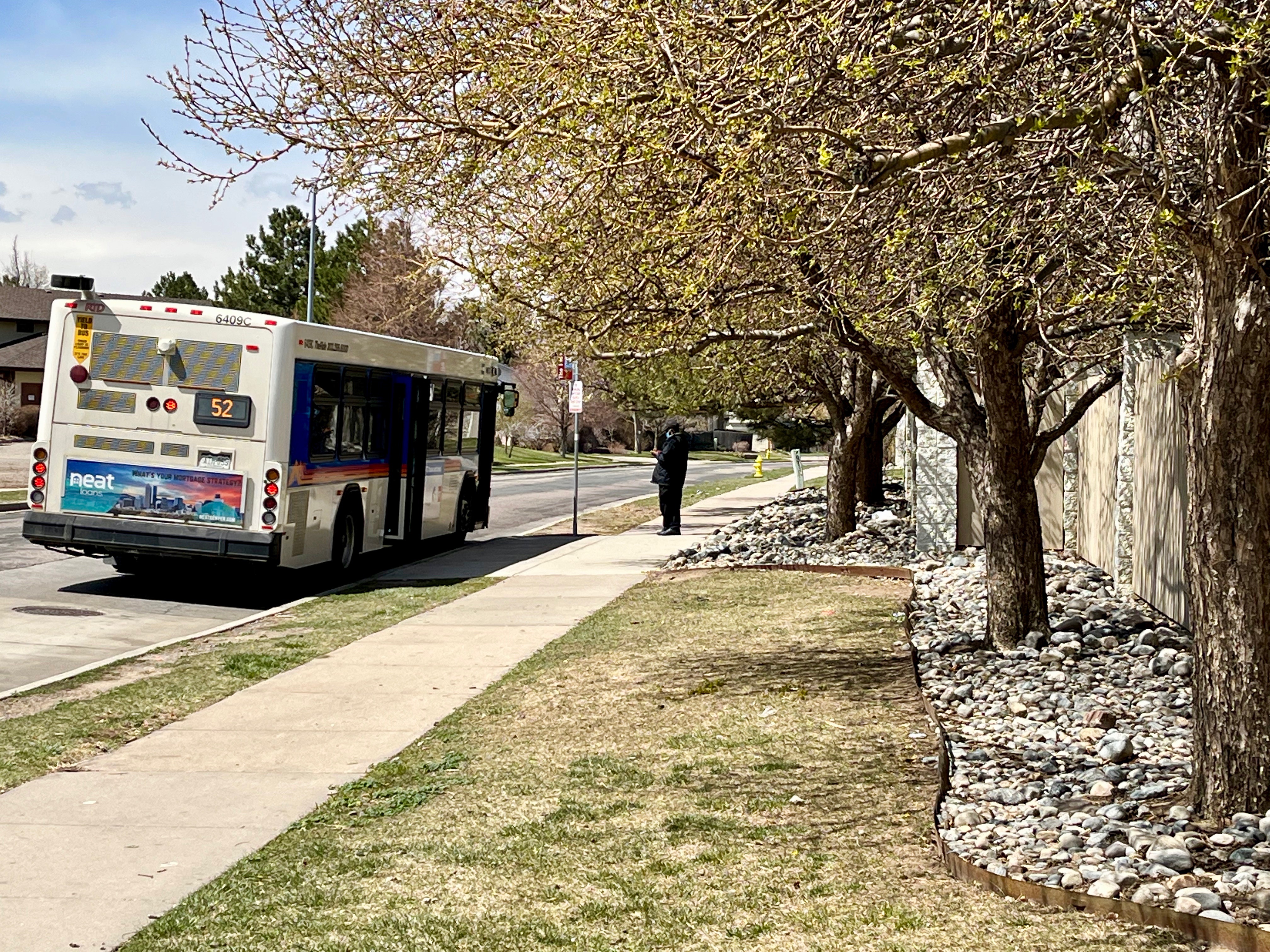

Metro Denver bus stop location a few days ago during our Safety Audit
- many similarities to other cities


SIMILAR AROUND THE WORLD

Safety audits are not new to this blog. Seven years ago, Tarah blogged on how to teach high school students the art of the Safety Audit in Every time they want to count you out – use your voice.

Four years ago I blogged on safety audits in A Tool for the Archeology of Fear. I described the mistake CPTED practitioners make when they confuse safety audits with CPTED surveys or visual checklist inspections. Some conflate Safety Audits with Jane’s Walks or Night-Out-Against-Crime. They too are wrong.

Then, two years ago, Mateja blogged on how she digitized our Safety Audit process for measuring fear in downtown Saskatoon.

What struck me this week is not how much the committee members enjoyed the Safety Audit process. That is a comment SafeGrowth advocates hear commonly during our training. Rather, the most striking thing was how similar design and location problems arise over and over at bus stops here and elsewhere. 

We have taught audits from Melbourne Australia, Christchurch New Zealand, San Diego California, and Calgary Alberta, to New York City, and Helsingborg Sweden. We usually uncover similar fear and crime opportunity risks in those cities just as they existed in Scarborough during the Paul Bernardo rapes 30 years ago. 

Will we never learn?


Thursday, April 12, 2012

Forget the hoodie, change the law


There is a great 2010 TED.com talk by Philip Howard about reforming criminal law. He says lawyers, judges and politicians need to know much better the science behind preventing social harm. He offers four steps for getting started.

Thinking about bus violence, an erratic sentence, and prevention science from my last blog, Ezzat Fattah came to mind.

Ezzat was one of my favorite grad school profs. Extensively published, fair-minded, and award-winning, he was a pioneer in victimology decades before restorative justice existed. He is respected around the world as a human rights advocate for Amnesty International.

In other words, one of the best!

And what do I recall one of the best saying regarding reforming criminal law? Contrary to some legal scholars' persistent belief in the myth of general deterrence, criminal law doesn't prevent much crime. Instead it is about punishment, morality and politics. No surprise, perhaps. Yet given decades of research into deterrence, this is disappointing because it turns out, for most violence, retribution and deterrence do not stop it!

If we were really serious about reducing social harm we would not rely on 3-strikes rules, mandatory sentencing, and tough-on-crime punishments to protect us. We'd tackle irrational sentencing, we would implement restorative justice, and we'd seriously consider anti-violence prevention programs like David Kennedy's Don't Shoot.

Kennedy says it outright: most gang-and-drug street violence isn't about money. It is about shame and loss of respect. It's about honor, which is why restorative methods work. That is how social harms will be cut.

Florida's "Stand Your Ground" law? An unarmed, hoodie-wearing teen was shot to death
last month while walking in a gated community by a neighborhood watch captain. 
Retributive justice has failed. The worst example is Florida's "Stand Your Ground" gun law. Did that law lead to gun-toting vigilantism in the shooting of Trayvon Martin last month? Was this a Neighborhood Watch program unravelling as an unarmed black kid in a hoodie is killed for the crime of walking in a gated community? A month after the shooting, following much speculation (and, no doubt, much politicking), they have now criminally charged Trayvon's shooter.

Gandhi said an eye-for-an-eye leaves the whole world blind. In Trayvon's case it might have left him dead.

Sunday, September 19, 2010

The devil is in the details - grass walls and bus stops

Green walls are eco-friendly, attractive, and deter graffiti

Oregon's famous urban growth boundary experiment in regional planning has detractors and cheerleaders. There is, however, little doubt that limiting suburb size and preserving farmland has created one of the most successful city's in the nation. I am not being Pollyannaish. It has dreary and rainy winter weather. It still has a homeless problem and crime. But overall, it's hard to argue about the success of Portland.

This is largely a function of zoning, something I've been discussing of late.

It came to mind this week during a business trip to Portland. I mentioned Portland's successes last year during a visit. The list of laurels is long but it among them is a very low (and declining) city crime rate. All this is in spite of a nasty higher-than-normal unemployment rate.

My walks last year were in the residential neighborhoods. This time I stayed downtown where there are lively and safe downtown streets at night. There are safe public areas, parks and well-used transit. There is a wide mix of pedestrian traffic and though one-way streets dominate, unlike other cities I've visited lately, in Portland they tend to be narrower with a dense proportion of shopping variety. As in Philadelphia's South Street, shops here cater also to local residents (grocery stores).

Does regional zoning explain this success? In Portland's case the zoning style tends to the traditional form, though the urban growth boundary concept was revolutionary for its time. By law all Oregon cities must establish urban growth boundary beyond which urban development is prohibited.

An urban growth boundary limits sprawling suburbs like those elsewhere. That, more than other cities I've seen, results in intense attention to urban amenities (free public transit downtown) and a preponderance of grassroots local action (such as the local City Repair movement).

Portland's simple bus stop designs with no-ad clear glass and safety intercoms

It also results in far more interesting urban forms than I've seen elsewhere (streetscaping and architecture) which makes downtown walking fun, activity-rich, and culturally interesting. For example, street lighting does not replace decorative sidewalk lighting. Parking lots were uniformly well lit, clean, with good sightlines. Grass walls deterred graffiti. It had well designed bus stops with CCTV and without unsightly billboard ads. All these little details added to the safety mix downtown.

This week Portland reminded me that the style of zoning, though important, isn't enough to create a safe place. It's the little details of the urban fabric that matter too. In safety, we do sweat the small stuff.

Friday, August 13, 2010

Bus Stops - crime hot spots or community building blocks?

Clean, good sightlines, territoriality - What is this bus stop missing?


Guest Blog


Megan Carr is a Livable Communities Specialist interested in SafeGrowth, particularly transportation’s role in shaping vibrant and safe communities. She runs her own consulting firm, Civitae, LLC. Megan recently participated in the AARP SafeGrowth programs in New Orleans and delivered a presentation to transportation authorities regarding safety and bus stops. A longer version of this article will appear in the upcoming ICA newsletter CPTED Perspectives.


Why is it that some bus stops act as hot spots for crime while others can serve as building blocks for community?

 Two studies by Loukaitou-Sideris in 1999 and 2003 examined the physical attributes of high crime bus stops in Los Angeles. What’s interesting about the findings is that of the nearly 20,000 bus stops, 18 percent of the total incidents occurred at just ten stops.

Findings at these ten stops indicated they were:

• Located at intersections involving inactive land uses such as empty lots and surface parking lots

• Lacked adequate lighting or nearby shops, public phones or police sub-stations

• Located near dilapidated and/or vacant buildings (83%)


Furthermore, movement predictors such as nearby alleys had an almost double crime incidence rate. Crime was also significantly higher at intersections near bars, liquor stores, check cashing establishments, and Single Room Occupancy hotels.


The Other Side of the Coin


In Los Angeles following the Rodney King riots in 1992, Mayor Riordan launched the Los Angeles Neighborhood Initiative designed to restore people’s sense of ownership in their communities. Recognizing that bus stops can function as focal points for communities, the organization developed community plans starting with placemaking improvements at bus stops.


Project for Public Spaces was hired to assist neighborhood groups who were each given a grant to develop a bus stop area plan. Many positive outcomes followed as a result. From the initial $100,000 seed investment, a vacant lot in North Hollywood was transformed into a beautifully landscaped transit park with illuminated bus shelters, matching benches, information kiosks and kiosk art. Eight new businesses were attracted to the intersection filling formerly vacant facilities.

An additional $500,000 was invested in property improvements and $60,000 in private funding was invested in the park. Consequently, 30 new jobs were created in the vicinity of the bus stop.


The project employed a placemaking approach that encompassed what 2nd Generation CPTED calls Community Culture. It included façade improvements, pedestrian walkways, pedestrian-oriented lighting, public art and plentiful landscaping providing needed shade and defining pedestrian areas.

By making improvements to the site, riders today benefit from natural surveillance and amenities from nearby businesses in addition to a more aesthetic and comfortable bus experience.

These examples provide valuable lessons on the importance of site design at bus stops. From reducing the opportunity for crime to supporting local economic development, investing in quality public spaces at bus stops is a worthy focus for community redevelopment.