Showing posts with label slovenia. Show all posts

Wednesday, July 30, 2025

When minorities speak but we don't listen


Attack in farmland area at the outskirts of Ljubljana 


by Mateja Mihinjac

A few weeks ago, a brutal attack on an elderly farmer shocked the residents of Ljubljana, the capital of Slovenia. News outlets quickly reported that the four men responsible for the attack were members of the Roma community.

In response to this attack—along with more than 15 years of ongoing incidents and threats from some members of the Roma community—residents in the farmer’s local area announced a peaceful rally to support the victim and draw attention to the unresolved tension.


Some locals even warned that if no steps were taken, they might form vigilante neighbourhood patrols. One MP went so far as to suggest that citizens join shooting clubs and acquire weapons to protect themselves.


Peaceful protests occurred supporting the victim 


These remarks were widely condemned by fellow MPs, the President of Slovenia, and the Shooting Association of Slovenia, which stressed that shooting clubs exist for sport—not self-defence.
Meanwhile, Roma representatives emphasised that the actions of a few individuals should not vilify an entire community.


This is just one of many incidents over the past two decades. What has led to this persistent divide between the Roma and the broader Slovene population?


WHAT GOT US HERE?

The Roma are an ethnic minority originating from northern India who migrated to Europe around 1,000 years ago. Today, 10–12 million Roma live across Europe, with an estimated 8,500 residing in Slovenia.
Tensions arise from a mix of historical, cultural, and systemic factors. Many Roma communities live in extended family settlements, often in informal housing lacking infrastructure. One EU report described this as “ethnic and social ghettoisation.”


European Union research on the Slovenian Roma population


Roma communities also face poor health outcomes, including high infant mortality and smoking rates among pregnant women. Education remains a challenge; a decade-old report showed that nearly half of Roma pupils had not completed primary school, often due to language barriers. This has contributed to high unemployment and ongoing reliance on social assistance, which in turn discourages social mobility.


Discrimination has also been a long-standing issue. Although progress has been made, the Roma Civil Monitor project points to persistent barriers: a lack of disaggregated data, limited institutional coordination, insufficient involvement of Roma in policy-making, and the absence of parliamentary representation.


As in other SafeGrowth projects where we confront minority-related crime and social division, these conditions highlight how deep-rooted challenges require community-driven solutions—not reactive measures.


Slovenia - a European country of scenic mountains and countryside -
rarely associated with violence 


WHAT MOVES US FORWARD?

Reconciling opposing traditions and value systems between minority groups and their broader population is not new. In SafeGrowth, we often need to reconcile many viewpoints and ideas that diverse people from the neighbourhood have, and then also find a common language between that neighbourhood community and organisations that they partner with.

Slovenia has also made some strides towards progress. 

In my next blog, I’ll explore Slovenia’s Framework, which aims to address the most critical barriers, including education, employment, and social dependency. These issues resonate in every country where we provide SafeGrowth programming. I will highlight policing strategies and multi-ethnic community policing programs that successfully reduce tensions and build trust between Roma communities and law enforcement.

I’ll share the story of one Roma village that became self-governing—a model that demonstrates what is possible when integration is built from the ground up. 

Stay tuned!


Tuesday, May 28, 2024

Homelessness in a European city

An underpass in Ljubljana - homelessness is everywhere


by Mateja Mihinjac

We’ve reported on the issues of homelessness several times although rarely from the European perspective. While not a new phenomenon, it appears the problem of homelessness – especially the most visible part that includes what Europeans call “rough sleepers” – is becoming more prevalent in the capital city of Ljubljana. At least this is the perception of many living here in Slovenia's capital city where it is now common to see a rough sleeper on the main city streets and the underpasses.   


THE PREVALENCE OF THE PROBLEM

Statistics on homelessness in Slovenia are currently lacking. The researchers Filipovič Hrast and colleagues report that the Statistical Office of Slovenia shows an almost triple increase in individuals without a home (from 4.252 in 2011 to 11.524 in 2021). In the same period, the number of individuals registered with the Centre for Social Work doubled from 1.426 to 3.085. 

The residents of Ljubljana increasingly report feeling less safe due to the perceived increase in homelessness and they have been contacting the Mayor’s office pleading to urgently address the issue.

They’ve been calling for the city to provide affordable housing for the homeless and the city is planning to respond by building a new shelter. Is that enough? Could we do better?


POOR DATA

One of the issues in dealing with homelessness in Slovenia is a lack of systematic monitoring of homelessness patterns and a poor understanding of the many pathways that lead to individuals losing a roof over their heads.

While the public often generalises and argues that homelessness is caused by personal choice, research shows there are many underlying reasons. This includes unaffordable housing, mental illness, domestic violence, substance abuse, loss of a job, financial difficulties, and others.

There is also no national strategy on homelessness. The Resolution on the National Social Protection Programme partially addresses the issue, mainly through social assistance programs. But that lacks a holistic approach to identify workable solutions that are not so limited.  


Signs of the unhoused are everywhere

WHAT NEXT?

Homelessness is becoming a major issue across Europe, possibly triggered by immigration waves from wars in Ukraine and elsewhere. 

Slovenia is not exempt from this trajectory. It is refreshing to see that the non-governmental humanitarian organisation Kralji ulice (“Kings of the Streets”) already adopted a Housing First approach in 2008. This program has been demonstrated the  most effective in addressing homelessness. It is also recommended in a White Paper of the International CPTED Association.


Finland has extensive Housing First programs and special housing facilities, such as the Kenttätie homeless shelter and a service center in Myllytulli, Oulu - photo Creative Commons Wiki


Building yet more shelters reminds me of another limited strategy – responding to crime by building more prisons. In both cases, nothing is truly fixed. It is a band-aid approach that does not address the underlying issues. 

A better strategy is to use the method we apply in SafeGrowth - work in partnership across various sectors. It is far more effective for the government to partner with non-governmental organisations, based on a comprehensive national strategy. That is the path to a much more effective response. 


Wednesday, March 30, 2022

Headlines do not define us - Part 2

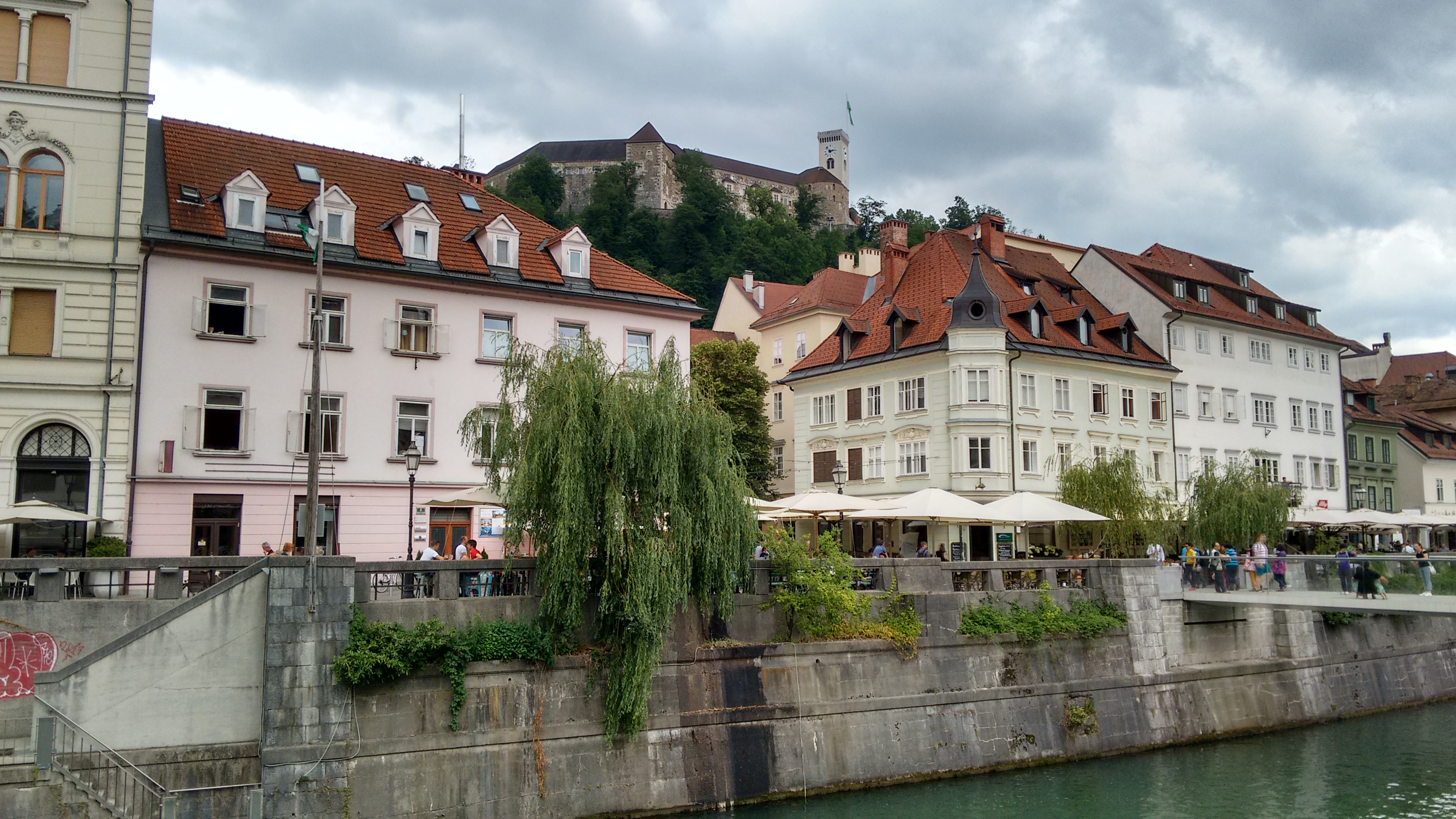
Ljubljanica river banks in the Slovenian capital city
Photo Aleš Kravos, Creative Commons


Last week we began a series of blogs about the impact of local news on neighborhood perceptions and how different media styles affect community engagement. The last blog discussed media coverage in Denver, Colorado. This week Mateja takes our analysis to Slovenia.


by Mateja Mihinjac

Like in many other parts of the world, Slovenian daily news likewise has disproportionately covered the Ukrainian war for over a month. Sadly, local crime remains uninhibited despite this global crisis. In fact, it is possible that crime may increase during these times or shortly afterwards.


ARMED ROBBERY OF A JEWELLERY STORE

One news story that raised eyebrows was a brazen armed robbery of a jewellery store committed in daylight adjacent to the city’s municipal building.

Two robbers, one of whom was armed, tied up an employee and then escaped via the historic part of the city. There was a description of the two perpetrators, however, readers commented that this was of no use since the perpetrators would have already disguised themselves once they escaped. Those responsible for the robbery have not yet been apprehended.

As in last week’s blog, reader comments also mentioned police issues. Readers complained that police foot patrols that were once present in the city centre are now absent. They believed such a presence could deter crime and provide reassurance to city-goers. There is scientific evidence supporting these comments. Research shows that police foot patrols can help reduce robberies.


Preseren Square, main activity node in Ljubljana


DOMESTIC HOMICIDE

This story reports on a domestic homicide from last year when an 80-year-old man murdered his sleeping wife by repeatedly hitting her on her head with an axe. The story reports details of how he hit her at least 34-times causing her to die at the scene. The story questions whether the accused will be fit to stand trial considering his frail health and possible impaired judgment at the time of the act. The report offers a dry description of facts.

While the cases of domestic homicide are difficult to comprehend, they are sadly all too common and have increased in Slovenia during COVID lockdowns. Domestic violence most often occurs behind closed doors and in neighbourhoods where people are disengaged from one another. In Slovenia, it is not uncommon to expect that what happens at home is a private matter, especially in rural areas.


ARSON

The final news story involves a 25-year-old perpetrator who broke in, stole items, and then set fire in several locations across Ljubljana city centre including the COVID test location, a market stand, and a rubbish bin. The perpetrator was apprehended owing to witness information about his movements. The rest of the report provides basic facts about the event and the police statement. Readers’ comments, however, are highly judgmental about the apprehended young man and suggest he must be bored for engaging in such acts or that he needs to “learn to do some real job”.

This case attracted extra attention as the country is currently on high alert for forest fires, so any open fire is strictly prohibited. Over the past two weeks, firefighters had to extinguish several forest fires and police suspect these fires have been set intentionally.


Ljubljana is noted as one of the most beautiful cities in Europe


TAKEAWAYS

I am lucky to live in a fairly safe country. The national homicide rate is around 1 per 100.000 inhabitants. Rates vary by city (the capital city Ljubljana’s rate is below 1 while Celje’s – the third-largest city – is 2.6) but overall serious crime is rare. Unlike the situation in Denver reported last week, in Slovenia the rarity of shootings and homicide is reflected in scarce reporting of serious crimes in the news media.

However, there are some implications from Slovenian news not directly mentioned in these reports. They are obvious to those of us engaged in SafeGrowth programming:
  • Neighbourhoods need to offer something for everyone. Youth and young people, especially, require extra stimulation and access to activities that fulfil them. Consider, for example, how intentional fire setting is commonly attributed to youth and how more inclusive opportunities for youth offer a deterrent.
  • We should work to eliminate the mantra that what happens behind closed doors is no one’s business. Support structures within neighbourhoods should offer assistance for family conflicts to both the perpetrators and victims. Building up neighbourhood social cohesion will help reverse people remaining disengaged from one another.
  • Police-community relationships are important for a balanced neighbourhood and those relationships can only be built by a direct and positive interaction between the police and residents. Properly deployed foot patrols, with well-trained officers, offer the first step toward this positive interaction. Research supports police patrols as integral to community or neighbourhood policing models.

It might be too early to tell what impacts the current war will have on local crime trends, however, one thing is certain. We should not disregard the impacts of global affairs. Our neighbourhoods are not insulated from their surroundings. Spending extra attention on community-building and creating resilient neighbourhoods is the best insurance policy against the potential post-war effects of increasing crime and the worsening news headlines that may become a new reality.

Thursday, July 15, 2021

Who rules us? Who serves us?

Recent anti-government demonstration in Slovenia - 
photo Adriana Aralica


by Mateja Mihinjac

On June 1 of this year, 4265 tiny Slovenian flags appeared in the capital’s city park. The flags symbolised the number of lives lost in the preceding 12-months from the day the military jets flew over the country to celebrate the presumed “victory” over COVID. It was the day the Slovenian government declared the end of the epidemic following what the government claims were only 108 COVID-related deaths. Little were we prepared for what followed.

The sight of all those flags made me reflect with sadness on the unprecedented crisis over the past year. It also reminded me of the importance of local trust in governance – and good governance itself – to support the nation in times of crisis.

In the SafeGrowth movement, we put emphasis on building local trust and we teach problem-solving and community development with diverse teams within each neighbourhood. The goal is to promote democratic neighbourhood self-governance with the objective of creating safe, liveable, inclusive, and cohesive neighbourhoods. 

Our focus is on individual neighbourhoods at a micro-scale. But this process can be difficult when there are large, macro-scale obstacles halting progress – such as poor governance and an intense distrust of those who govern.


4265 Slovenian flags for each COVID death


TRUST 

I have blogged regarding public concerns about the Slovenian government and the misuse of powers during the crisis some months ago. While the current crisis has deepened distrust, for over a decade 80% of Slovenians have indicated low levels of trust in the national government and its legitimacy.

The OECD also reported a significant 20% drop in trust in Slovenian governance between 2006 and 2017. Conversely, in that same period, Poland, (also a post-communist country like Slovenia), has observed a 42% increase in trust. Clearly, there are things governments can do to create conditions of trust.

Low trust in Slovenia has been attributed to the perception of poor integrity, transparency, and fairness. According to OECD’s findings, the Slovenian government is much less open compared to other OECD countries, which impacts the levels of institutional trust. 

When it comes to a functioning democracy, trust matters a great deal. It has been common to hear accusations that national governments have acted abusively and granted themselves special powers beyond those necessary to address the pandemic. Those accusations now have support from research that confirmed this creeping threat to democratic countries. 

How do we move forward in such times?


GOING FORWARD

As anthropologist Margaret Mead said, thoughtful and committed citizens are the key to progress. Others have added that organised collective action is just as paramount:

“Never doubt that a small group of thoughtful, committed, organized citizens can change the world; indeed, it's the only thing that ever has.”


Lake Bled, Slovenia - some of the most beautiful waters in the world
- photo Adiel Io, Creative Commons 


I recently witnessed some bright moments of democracy prevailing. Just this past weekend an overwhelming 86% of voters rejected the new Slovenian Waters Act due to provisions that would permit construction in the areas where it could threaten natural drinking resources. The referendum – with the second-highest turnout in Slovenian history – succeeded due to extensive efforts and organised action by citizens and civic organisations.

Some issues also require democratic actions on a local neighbourhood level. 

For example, very recently, in my local village, a group from the local community worked together to demand the removal of the company responsible for illegal waste storage in the neighbourhood. It demanded immediate action and the residents organised a news conference with attendance from the mayor, representatives of companies responsible for the waste, and the news networks. This collective action prompted the government to act. 

The way forward is a commitment to change coupled with organised action. Those are excellent ways to address both macro and micro issues. This reaffirms our SafeGrowth philosophy that an organised approach by informed and engaged local citizens is the key to forward momentum and effective problem-solving with communities large and small.  


Saturday, July 4, 2020

Our country is not your sandpit


by Mateja Mihinjac

Public protests and demonstrations erupted throughout the world in recent years warning us about the perils of social inequity, racial inequality, and environmental concerns. And now, over the past few weeks, as anti-government protests are underway, much of the world has united over anti-discrimination and Black Lives Matter.

One common thread that links these protests is dissatisfaction with government leaders and their inaction that underlie these disparities.

CASE IN POINT - SLOVENIA

In my home country of Slovenia in central Europe, every Friday since April citizens protest against the government’s misuse and abuse of power related to controversial decisions masquerading under the pretense of COVID-19 interventions.

The public outcry started on March 13 as the new right-wing coalition government took over the leadership following the resignation of the previous centre-left Prime Minister (just after his government declared a state of epidemic). Very quickly, problems arose in the public eye about a lack of legitimacy for this new government.

Recent anti-government Slovenian protest, Ljubljana
- photo Creative Commons

The backlash arose from numerous questionable government decisions: Ministerial salary raises at the time when the unemployment rate had peaked; poorly communicated COVID-19 intervention measures; and attempts to drastically increase police powers and discredit journalists. It included irregularities in the purchase of personal protective equipment, which is currently undergoing police investigation. Many accuse the government of autocratic aspirations.

More recently, the government changed environmental laws and introduced another COVID-19 intervention act. These measures exclude the citizens and limit the participation of NGOs and environmental organisations from decision-making in new infrastructure and building projects, a move many see as prioritizing capital over nature.

The resulting mass civic engagement and social unrest are unprecedented in my lifetime. Weekly demonstrations across Slovenia attract thousands of people! In the capital city of Ljubljana, the public has been gathering in front of the House of Parliament shouting “thieves” and “fascists”. They wave signs such as “our country is not your sandpit” signifying that the government should not be allowed to mold the country to suit their needs.

The government responded with barricading access to the square in front of the Parliament building, increasing police controls and identity checks, and criminalizing participation in demonstrations. As elsewhere around the world, such responses signal the need for reform and confirm that government institutions must listen to citizens' voices more seriously than in the past.

Ljubljana is the capital of Slovenia in central Europe
- photo Wiki Commons

GOOD GOVERNANCE

A system in which the government wishes to single-handedly control decision-making is not a system that is well-suited for any democratic country, especially during the COVID-19 pandemic. Competent democratic governance requires that everyone has a voice and that decisions are based on broad consensus. It requires that all sectors are accountable to the public and that processes are fair and transparent.

And how can this be achieved? Various organisations call for inclusive citizen participation. They call for empowering citizens and for participatory governing processes. Protesters demand reform of particular sectors, such as the police.

ANOTHER PATH FORWARD

SafeGrowth takes another path. By proposing a system of networked urban villages, the SafeGrowth model calls for democratic local governance within each of the neighbourhood villages.

It transfers the decision-making power of the citizens from the national or large regional scale to a local-neighbourhood scale, but it does so in such a way that local, democratic and fully trained organizations can plan for neighbourhood needs. Moreover, the SafeGrowth’s Livability Academy program develops local leaders who represent the voice of residents and lead changes that address social and racial inequity. Neighbourhood-level change thereby becomes the bridge between government organisations and the wider community.

In SafeGrowth neighbourhoods from New Zealand to New Orleans residents thus become an integral part of their own governing system and they link to other surrounding neighbourhoods to coordinate how they solve problems and plan for their own future.

Pre-pandemic Ljubljana, in more peaceful times

WHAT'S TO BE DONE?

It is no longer sufficient for governments to only ask citizens for input when mandated or when it creates top-down plans for development. It is no longer sufficient that the government expects that its citizens must trust the government and public institutions without question or dissent – the government also needs to trust the public and civic organisations, and start transferring the decision-making power back to local communities.

And along the way, we must create a more sustainable governance system in which politicians start considering the long-term consequences of their decisions beyond the expiry date of the next election. If we fail to do this, democratic governance may quickly become irrelevant and lose legitimacy. We need to turn this around. The country should be its citizens’ sandpit.