Showing posts sorted by relevance for query finland. Sort by date Show all posts

Thursday, June 26, 2025

Homelessness: We have all the answers!


Helping the homeless - We have the tools to help
Photo Ed Yourdon from New York City, USA, CC BY-SA 2.0 via Wikimedia Commons

by Larry Leach

A quote recently hit me — something I’d been feeling for a long time. Malcolm Gladwell put it perfectly:


“The tools necessary to control an epidemic are sitting on the table, right in front of us. We can let the unscrupulous take them. Or we can pick them up ourselves and use them to build a better world.”

That’s exactly where we are with CPTED, SafeGrowth, and the broader crisis in our cities.

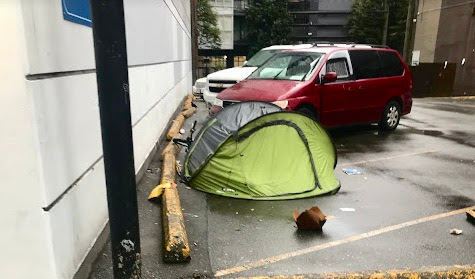
We have blogged on the topic of homelessness numerous times including Greg’s blog about the state of homelessness in 2024, Mateja’s blog on homelessness in a European city, and also in Australia, and Jon Munn's blog on the situation in Victoria, BC.

We already have the tools. We already know what works. Finland has proven it and last year we blogged on that country’s remarkable success.

Other countries have also been successful. The problem isn’t strategy — it’s will. What we face is not a lack of evidence, but a kind of Titanic denial — a refusal to accept who must act, and a reluctance to work together toward the solutions already in front of us.

The table is set. The only question now is: Who’s going to reach for the tools?


CANADA AND THE U.S.

In Canada alone, there are hundreds of Millions of dollars going to large agencies in the major cities and that can lead to different motives and outcomes with no one level of government or organization directly responsible or accountable for the outcomes. 

In fact many of these agencies, including shelters, detox, recovery communities, supervised consumption sites and housing get funding from civic, provincial and federal governments at the same time. Some agencies are involved in a number of these activities.

As we say in SafeGrowth, the experts are the people that live in the community. The closer decisions and actions are to the people in the community the better the solution will be for the residents.


U.S. homeless patterns - source: U.S. Dept of Housing and Urban Development 


Canadian homeless patterns - source Housing Infrastructure Canada

The trends show an inconsistency in addressing the problem. If we manage social issues, they will continue to manage us.  The rhetoric in the early 2000’s in Canada was “the plan to end homelessness” in every major city with goals and target dates. 

An example of this was Calgary’s plan to end homelessness in 2008. It was a 10 year plan. Calgary’s was the first to get to the 10 year mark and there are some learnings that can be found in detail here


WE KNOW THE ANSWERS 

We Already Know the Answers — So Why Aren’t We Acting?

Seven key barriers to ending homelessness were identified in 2018 — and in 2025, nothing has changed. These barriers include: lack of affordable housing, poor coordination, overreliance on short-term fixes, economic downturns, funding gaps, rising newcomer populations, and weak data systems.

Not one level of government has taken direct responsibility for addressing them, and progress remains glacial. Any attempts to move forward are, as the saying goes, a day late and a dollar short.

But the solutions already exist — and Finland has shown the world how.

I had the chance to visit Finland and meet Juha Kahila, head of international affairs for Y-Säätiö, the country’s largest non-profit landlord. Juha regularly speaks in Canada, sharing insights with governments and agencies.


Y-Säätiö Finland's 4th largest landlord committed to the Housing First program 


Finland is clearly different from Canada or the U.S., but some of their most effective policies could be adapted here — if we had the political will.

Most importantly: Finland made municipalities fully responsible for outreach, housing, and support services — not through grants, but by directly employing everyone involved. These same municipalities also manage healthcare, with outreach teams embedded in health clinics. Homelessness, addiction, and mental health are treated as connected health issues.


Finland shelter for homeless


The results? Helsinki reduced its shelter beds from 6,000 to just 600 — not by building massive new facilities, but by transitioning people into housing. When I toured one of their low-barrier shelters, I saw modest rooms with no more than 12 beds each, and upper floors dedicated to transitional housing for men, women, and couples.

Small-scale shelter spaces. Integrated mental health support. Full municipal accountability.


THE WAY FORWARD

By no means are these the only changes that need to happen, but the two simple ideas of making one level of government fully responsible for the sector and making it closer to healthcare can make a HUGE impact of the seven reasons the Calgary Plan to end Homelessness didn’t achieve its intended outcome. 

Making our shelter spaces smaller and turning some of the spaces into housing addresses the remaining factors that made the initiative fail.

By addressing these changes, we’ll know who is responsible to address the issue and make the necessary changes and our communities will be safer and more connected and can spend more time working on social cohesion rather than trying to address the social disorder that impacts many residents in many communities. 

With no one in charge, we will continue to suffer a patchwork of well-meaning agencies and small volunteer groups trying as best they can, with little to no coordination.

It’s not complex. We already know what works.


The only thing missing is action.


Wednesday, January 31, 2024

Is This The World We Created? Part 2


From 30,000 feet, the city hides many blemishes. On the ground, not so much.

by Gregory Saville

In my last blog Is This The World We Created? I discussed the growing problem of street homelessness in cities around the world. I presented facts and listed some responses. Most of those responses use a continuum of care in which people who are homeless must climb a staircase of supports with housing at the top as the final step.

Perhaps that is wrong? Maybe it should be the other way around in which care follows housing as in the Housing First program?


CRIME = HOMELESSNESS?

While there is not necessarily a connection between homelessness and crime, the public makes the crime/homelessness connection. Take for example recent media comments by a British Columbia citizen group Save Our Streets:

“Drug addictions and drug trade, mental health challenges, law enforcement, judicial reform, homelessness, are all factors…while governments have a long history of announcing policies and programs meant to respond to these issues, the desired results have not been realized.”

So in the mind of the public it seems one issue relates to another. Further, there is growing discontent that current government programs are ineffective at solving the problem, a view supported by some of the research I discussed in the last blog. What can be done?


FINLAND


In Canada and the U.S., we have homeless rates of .8 and 1.7 per thousand people respectively. It’s much worse in other European countries. 

What would it be like if we could reduce that to 0.1 of the total population? In other words, in the U.S. over 600,000 people live without shelter or food each night. If we cut that to 0.1 we could virtually eliminate most of the homelessness in our cities. 

Why 0.1? Because it has already been done in Finland.

The video above explains how the country of Finland used a modified and expanded version of the Homes First program to accomplish precisely this result. Finland’s success is not based on a staircase, but rather by starting with housing and then adding intensive and sustained supports later.


WALLS MUST FALL

Of course, this is not a simple proposition and there are many walls in the way. 

First, the Finnish response is not simply to house people but rather to provide intensive, and sustained, services immediately upon housing people. When the city of Medicine Hat, Canada tried the Housing First method they had initial success. Sadly, they did not follow up with the intensive and sustained servicing that was available in Finland. Thus, five months after housing people, the problems and homeless rates returned.

Then there is the city of Wheat Ridge, Colorado. They shut down homes for the homeless in motels due to ongoing crime concerns, thereby forcing those residents back onto the street.


Clearly, the Finns understood the importance of intensive and sustained in-home support (in-house security, substance abuse counselling, mental health services, financial support, etc). They understood what would happen without that support.


HOW MUCH WILL IT COST?

Finally, there is the issue of cost. This is not a trivial obstacle. However, as Charles Marohn reveals in his book Strong Towns, there is already tremendous wasteful municipal spending on zero rate-of-return municipal projects. 

I made this point 15 years ago in my blog Give me a $1,184 inch…and I’ll make me a mile. In that blog, I unpacked a $2.67 billion highway connector project in Houston that cost $75 million per mile, or $1,184 per inch (in a city that already had between 14,000 to 30,000 homeless people). 

Just imagine... giving up a single mile of that roadway connector could create over $75 million for homes. And since former SafeGrowth blogger Tod Schneider tells us they have developed Conestoga Huts for homeless people that cost $1,500 each, that means a single mile of Houston’s connector could free up over 50,000 homes, far more than enough to house every single homeless person in Houston. 

This back-of-envelope (and admittedly simple) calculation ignores many other more sophisticated ways to make enhanced Housing First a reality. It also ignores other walls, like figuring out where to locate those small homes without triggering the ire of the Not-In-My-Backyard crowd (a crowd that, incidentally, is already being encroached on by uncontrolled tent cities and unsanitary encampments).

Surely we can create a better world for those most in need.


Thursday, April 17, 2025

What If happiness was the secret to safer streets?

While certainly not perfect, Vancouver, Canada is often ranked as one of the world's most livable cities with plentiful opportunities for engaged neighbourhood living  

by Mateja Mihinjac

When Greg Saville and I introduced liveability as a central concept of Third Generation CPTED, we did so with a clear question: how can we create a highly liveable neighbourhood to promote opportunities for individual and social well-being? The “neighbourhood”—also a core unit in SafeGrowth—therefore plays a key role in ensuring liveability. It also appears to play a key role in happiness. 

There is a mountain of research about the concept of the “neighbourhood” – especially in the urban sociology literature. Social researchers at the University of Chicago began defining neighbourhoods from the perspective of crime prevention as far back as the 1920s. That work continues today under the umbrella of Robert Sampson’s concept “collective efficacy” – at least within the field of criminology. 

However, in the urban planning world, the concept of neighbourhood cohesion and liveability is well entrenched as an empirical reality. In 2013, Charles Montgomery published his book "Happy City - Transforming Our Lives Through Urban Design” to capture the flavour of a happy and flourishing city. From his view, happiness was more than pleasure – it was how interested and engaged you are in neighbourhood life.

Happiness, it appears, is not just a feeling. It has powerful implications for safety. Our work in SafeGrowth confirms that thesis. 

But what of the concept of “happiness”? What defines that? 


Safe public access to beautiful natural scenery and a quiet sunset walk. Many cities limit beachfront and water access for private property owners and thus deprive opportunities for such moments.

INSIGHTS FROM THE WORLD HAPPINESS REPORT

Every year, the World Happiness Report uses data from the Gallup World Poll, which surveys around 1,000 people in over 140 countries. People are asked to rate how satisfied they are with their lives on a scale from 0 to 10. The survey also includes questions about kindness, generosity (like donating to charity or helping a stranger), and trust (for example, whether someone believes a lost wallet would be returned by a neighbour, a stranger, or the police).

For the seventh year in a row, Finland has been ranked the happiest country in the world. What’s behind their success? Researchers point to two main ingredients: generosity and trust.  

People in Finland believe they can rely on others and feel connected to their communities. This sense of expected kindness—knowing that those around you will likely help you out—is a powerful driver of happiness.


Colourful street celebrations, festivals, music, and dance.
Plentiful street activities offer opportunities for joy. But that is only
one part of the story. Generosity and Trust are key.  

DO HAPPY PEOPLE MAKE SAFER NEIGHBOURHOODS?

The World Happiness Report shows that strong social connections are key to our happiness and well-being, and those connections often start in our neighbourhoods.

From our work with SafeGrowth, we’ve seen how important well-designed, healthy, and socially active neighbourhoods are for safety. Things like good housing, walkable streets, local shops, youth activities, clean parks, good lighting, and public art all help create places where people want to spend time and connect with others.


The public realm is key for happiness. Careful urban design of
public spaces matter, like sitting spaces to watch street life.


Just as important are the relationships people build—what we call social cohesion. When neighbours trust each other and work together, they create safer, more livable communities.

Traditional CPTED focuses on controlling the physical environment to reduce crime, often through what's known as “crime opportunity theory.” But we believe something is missing in that approach: the opportunity for people to build positive, supportive relationships and enjoy a high quality of life. 

It’s not just about eliminating crime opportunities – it’s about creating opportunities for people to choose a better path forward. It’s not just about reducing crime—it's about creating the conditions for a good life. This is a kind of “livability opportunity theory”. And that begins right in the neighbourhood.


Tuesday, May 28, 2024

Homelessness in a European city

An underpass in Ljubljana - homelessness is everywhere


by Mateja Mihinjac

We’ve reported on the issues of homelessness several times although rarely from the European perspective. While not a new phenomenon, it appears the problem of homelessness – especially the most visible part that includes what Europeans call “rough sleepers” – is becoming more prevalent in the capital city of Ljubljana. At least this is the perception of many living here in Slovenia's capital city where it is now common to see a rough sleeper on the main city streets and the underpasses.   


THE PREVALENCE OF THE PROBLEM

Statistics on homelessness in Slovenia are currently lacking. The researchers Filipovič Hrast and colleagues report that the Statistical Office of Slovenia shows an almost triple increase in individuals without a home (from 4.252 in 2011 to 11.524 in 2021). In the same period, the number of individuals registered with the Centre for Social Work doubled from 1.426 to 3.085. 

The residents of Ljubljana increasingly report feeling less safe due to the perceived increase in homelessness and they have been contacting the Mayor’s office pleading to urgently address the issue.

They’ve been calling for the city to provide affordable housing for the homeless and the city is planning to respond by building a new shelter. Is that enough? Could we do better?


POOR DATA

One of the issues in dealing with homelessness in Slovenia is a lack of systematic monitoring of homelessness patterns and a poor understanding of the many pathways that lead to individuals losing a roof over their heads.

While the public often generalises and argues that homelessness is caused by personal choice, research shows there are many underlying reasons. This includes unaffordable housing, mental illness, domestic violence, substance abuse, loss of a job, financial difficulties, and others.

There is also no national strategy on homelessness. The Resolution on the National Social Protection Programme partially addresses the issue, mainly through social assistance programs. But that lacks a holistic approach to identify workable solutions that are not so limited.  


Signs of the unhoused are everywhere

WHAT NEXT?

Homelessness is becoming a major issue across Europe, possibly triggered by immigration waves from wars in Ukraine and elsewhere. 

Slovenia is not exempt from this trajectory. It is refreshing to see that the non-governmental humanitarian organisation Kralji ulice (“Kings of the Streets”) already adopted a Housing First approach in 2008. This program has been demonstrated the  most effective in addressing homelessness. It is also recommended in a White Paper of the International CPTED Association.


Finland has extensive Housing First programs and special housing facilities, such as the Kenttätie homeless shelter and a service center in Myllytulli, Oulu - photo Creative Commons Wiki


Building yet more shelters reminds me of another limited strategy – responding to crime by building more prisons. In both cases, nothing is truly fixed. It is a band-aid approach that does not address the underlying issues. 

A better strategy is to use the method we apply in SafeGrowth - work in partnership across various sectors. It is far more effective for the government to partner with non-governmental organisations, based on a comprehensive national strategy. That is the path to a much more effective response. 


Wednesday, November 6, 2024

Pictures in the sky - a vision for the unhoused in Prince George


Judge and Senator Calvin Murray Sinclair
- photo by Archkris, CC BY-SA 4.0 via Wiki Commons

 by John Lyons

John Lyons spent many years as a patrol officer living and working in northern Canadian communities. A member of the Royal Canadian Mounted Police for 28 years, he served as a major crime investigator. For 10 years he was an international crime analyst with Interpol Ottawa. Post policing he consulted government on health care fraud. Now he brings his extensive experience to SafeGrowth, particularly in conducting search conferences to prevent crime and build collaborative networks.

This week, a giant died in Canada. I met him many years ago when I gave testimony in an inquiry that he headed as a judge. I have remained impressed by him ever since. How we could use his wise advice now! 

I speak of the Ojibway First Nations Judge and retired Canadian Senator Calvin Murray Sinclair who died on November 4th. His passing is a deep and huge loss to Canada. Judge Sinclair was a champion of crime prevention through First Nations community development. From 2009, he was a leader in Canada’s Truth and Reconciliation Commission and he had a profound impact on how Canadians, such as myself, contextualize colonial abuse of First Nations peoples. 

He shaped my perspective on addressing crimes and incivilities by economic and socially marginalized First Nations people. The problems Judge Sinclair brought to light are still apparent in the cities across northern communities, especially in the northern Canadian city of Prince George, British Columbia, a community with problems of homelessness, street crime, illicit drugs, and drug overdoses. The blog "Innovations in responding to street drugs" described those issues last year. 

The Prince George story illustrates Judge Sinclair’s message most succinctly. Last year's blog was about the 2023 SafeGrowth Person of the Year, Jordan Steward, and her downtown safe inhalation, harm reduction site – The Pounds Project – which was largely defunded.


Aerial photo of Prince George, British Columbia
- photo by CPG1100, CC BY-SA via Wiki Commons

Today, when thousands of drug-addicted and unhoused people populate Canadian cities, far too many hail from Indigenous backgrounds. Where is Judge Sinclair’s perspective at this point in history when so many Canadian cities, like Prince George, are suffering from this social pain?  


WHAT NEEDS TO HAPPEN?

First, one of the persistent paradoxes we know that emerges from top-down government responses to the unhoused, especially with people from marginalized communities, is the problem of inaction and the false belief that one-size-fits-all. True to form, this paradox has now reared its head according to news stories about conflicts between the city of Prince George and the provincial government. 

Second, having spent a great deal of time in Prince George, I have learned that it is not enough to treat the problem as an eyesore disrupting downtown businesses. The city must go beyond displacing these troubled souls to accommodations outside the city centre. This blog has previously described cities like Wheat Ridge, Colorado and Victoria, British Columbia that experienced the futility of simply rehousing the homeless without wraparound services.


Housing encampment in Prince George


Third, bottom-up strategies were already emerging in Prince George, for example the harm reduction that Jordan Steward attempted through her Pounds Project. That is what should be expanded and supported. We know that relocating the unhoused and drug addicted must involve far more than pushing the problem around the city like some perverse board game. We also know, from prior blogs, that successful projects already exist in places like Finland.

All these examples teach us that any relocation plan needs to consider setting up safer physical environments using strategies like 1st and 2nd-generation CPTED. They must also reinforce historic Indigenous culture. If there is to be any hope of redemption, that is the way to make things right. 


The Grand Medicine Society in Ojibwa syllabics. Judge Sinclair combined his wisdom as a member of this traditional First Nations society and as a Judge,  Canadian Senator, and a Companion of the Order of Canada.  


LOCAL ACTION PLANS 

Over the years I have joined members of the SafeGrowth team in delivering search conferences precisely to create local visions of new approaches and to build local capacity to make them happen. This approach produces success. For example, last year SafeGrowth facilitator, Professor Tarah Hodgkinson finished a successful search conference for safety planning in Brantford, Ontario.  

I see the value of empowering those in the community by teaching skills in crime prevention, neighborhood planning, community investment, and rehabilitation. This is how you build local capacity. Diffuse government programs rarely fit the local context, as suggested by recent provincial/municipal government conflicts in Prince George.

Judge Sinclair was a member of a traditional Ojibway medicine society and his Ojibway name was Mizanay Gheezhik. That translates to "the One Who Speaks of Pictures in the Sky”. If there was ever a time when we needed a new vision of something bigger and better – new pictures in the sky – now is the time! 

Judge Sinclair, we miss your vision. 


Monday, March 25, 2024

Nihilism nixed - hope as a way forward

In crime prevention and community-building, perspective is everything! 

by Gregory Saville

I am struck by the optimism in the cases described in recent blogs – Beth’s story about the Portland TriMet community safety team; my blog on answers to homelessness, especially the miracle underway today in Finland; the numerous examples of successful solidarity in Mateja’s blog about how we have witnessed communities come together to rebuild after natural disasters.

And yet I am also struck by the political blindness people choose to accept when it comes to difficult situations, like high crime neighborhoods, and how hopeless things seem. I was told, before our recent training in Baltimore, that there are unsurmountable obstacles in that city with drugs, shootings, fiscal chaos, and hopelessness (said by people not from Baltimore). 

Yet, on the ground during training, residents and community-builders who live there had a different view. Yes, there were problems, but they dedicated themselves to doing something positive. Currently, they are doing just that. (We return to Baltimore next month to review the results).

It is easy to be distracted by news stories of wickedness around the world

GLOBAL TRENDS

In the middle of news stories about the doom and gloom around us, and the very real terror of nuclear war and environmental collapse, I often remind myself how easy it is to fall into a nihilistic, hell-in-a-handbasket funk. 

Then I read Ronald Bailey and Marian Tupey’s book Ten Global Trends Every Smart Person Should Know and dozens of charts, graphs, and data showing inexorable positive directions for dozens of social, economic, and crime trends around the world. Life expectancy, poverty, health, food resources… all getting better, not worse! How can this be so? So many people believe the doom and gloom story! 

Maybe, I thought, these authors got it wrong. Did they get caught in a confirmation bias trap and cherry-picked rosy data and ignored the rest. To answer that, I went on a deep dive into data on global trends to see if they were right. 

Here is what I found:

Life expectancy… going up. Even a downward blip during the global pandemic does not offset the enormous improvements over the decades.


Global access to technology like electricity, even in the poorest countries, has markedly improved.


Child mortality around the world has been plummeting for decades. Bailey and Tupey were right.


For over 500 years, global literacy rates have grown every century and continue to improve today.

And there it was, from one source after another, chart after chart, the list of positive trends goes on and on. 

NIHILISM NIXED

But you'd never know it! You’d never know so many trends are improving if you only watched the miracle of stupidity that is the 24-hour news cycle spitting out, as it does, tragedy after tragedy! With billions around the world, and cell phones in every nook, it is not difficult for news machines to find one “exclusive” horror after another. It may not be the full truth – and it is certainly not investigative journalism – but it sells!

In SafeGrowth, we teach neighborhood dwellers how to do basic field research, how to collect a wide variety of stats, and how to observe carefully. That is how they can get a complete picture before they devise a plan to make things better. You cannot fix something if you drink the noxious elixir of political ideology or popular nihilism. The truth emerges as we dig for ourselves, suspend our biases, and, as Jane Jacobs once described, cultivate the art of seeing clearly

Seeing clearly, beyond the opinions and biases,
means learning how to do research and conduct careful observations

I met a student during the Baltimore training with a family member who, once upon a time, was a famous drug dealer back in the day. Now out of prison, this person turned away from gangs and violence and is now committed to speaking publicly about other ways forward for wayward teens. It is an inspiring story.

There are many challenges facing us both globally and locally. We cannot fix them with doom-and-gloom shades or with rosy glasses. We must retain optimism and hope, but only with clear eyesight. Threats are real, but so too are solutions. Inspiration, as I found out in Baltimore, can come from unlikely places if you learn to see and listen clearly.


Thursday, August 15, 2024

The pivotal role of connection


Mural in one of Calgary's neighbourhoods

By Larry Leach 

Larry is Executive Director of Calgary’s 12 Community Safety Initiative – a non-profit crime prevention collaborative. He was awarded the Queens Diamond and Platinum Jubilee medals for his contribution to community-building. He is a member of the SafeGrowth Network. 

Decades ago, North American society had an unwritten social contract. When you need help, you can reach out to your neighbours. When they needed a cup of sugar or help building a fence, you were there as a community to help. As we progressed through the decades, a sense of community was valued less and we began relying on institutional support. This is the message we have described in prior blogs regarding the Bowling Alone book by Robert Putnam.

Today, we spend our time in an isolated society without the natural neighbour support we once took for granted. 

I won’t preach about getting back to the old days (or about the social contract concept of philosopher John Locke). Still, it’s important to recognize what we had and how it’s been eroded over time to make the next shift better and how to fix what is clearly a societal issue.

We used to know our neighbours, those struggling and those doing well. We knew each other’s children. If a child was struggling, the community picked that up, usually finding out from the local school. They were involved in their lives. School teachers were local, knew the families, and often taught all the siblings and sometimes even the parents. The local police officer knew people in the neighbourhood. Importantly, in knowing came caring.


Children need not grow up alone.
We can do better to care for each other.


As communities found more to do and value, they found less value in this approach, and big government and big charity stepped in to fill the void. Today, teachers change schools often and, in some police agencies, officers are discouraged from policing in their own neighbourhoods. Parents move their children to schools they think are better for their children and drive long distances to put their child in the best sports club or activity, where they hope to achieve success at an early age. 

Throughout this time, we learned that service providers cannot replace family, friends, and significant community members. Humans need connection – a fact well-known in social psychology, and reported in prior blogs by both Mateja and Tarah


As with many local community organizations, Calgary's 12 CSI runs a community ambassador program and others like anti-bullying, community walks, and safety audits.


FILLING THE VOID

If a sense of connection is missing, how do we fill that much-needed void? In the 1985 book Careless Society, community activist, and author, John McKnight warned of a time when we would believe that We Can’t: We can’t do things for ourselves and each other; We can’t care for our own children or a neighbour’s child;  We can’t muster enough individual or personal will to tell the politicians We Can.  

In contemporary North American societies special agencies now fill these gaps. For example, I am the board chair of a Youth Centre called Cornerstone Youth Centre. This centre did not need to exist when communities made sure the kids in it had lots to keep them occupied. When they slipped, the community was there to pick them up.

Additionally, several agencies have developed around homelessness. Again, this is something that families and communities used to handle. Now it is handled by an agency funded by some level of government. I spoke in a previous blog about how some of these agencies are too big and they are not addressing the needs of the communities where they work. Often they have no relationship at all with the surrounding residents in the neighbourhood. 


WE CAN

I also work for a non-profit called 12 Community Safety Initiative, the neighbourhood organization that helped launch the first-ever SafeGrowth Summit in 2015.


In 12 CSI we employ Ambassadors to walk the neighbourhood, helping residents and visitors to the area connect with services and each other. It is small and nimble and connected to the communities it serves. If community members are unable to be the eyes and ears of their own community, or are unable to help their neighbours, then Ambassador and outreach programs will fill that void until individuals, families, and communities follow the model of caring vigilance and demonstrated compassion. 

This may all seem like nostalgia for a better time, or perhaps it is a naive expectation of the wisdom, generosity, and power of community. But if we are going to participate in our safety, the safety of neighbours, and the creation of a better world I firmly believe we must say, "We Can”. 

Neighbourhoods that take the idea seriously that they are responsible for many of their own needs, will be in a better position to come together and build programs that are truly for community members (and run by community members) before an outside agency arrives and decides it for them.


Local communities can have a major impact on problems like homelessness

As we reported in a previous blog on homelessness, Finland’s communities are doing exactly this with great results. That country made it mandatory for municipalities to shelter and provide outreach services to the needy in their own community. They now have the lowest homeless population in the world. It is government-funded, but it is also community-based. Each municipality is responsible and accountable to its own residents for these services.  

As we say in SafeGrowth, the experts are the people who live in the neighbourhood. It all starts with having a good look at your neighbourhood strengths and the resources needed to help people. We do not need to go back in time to recreate the past, but we can all take some responsibility for how our neighbourhood operates. 

I offer this final challenge: What will you do to make your neighbourhood better? It is up to us. We can!

[Personal note: Thank you to Bob McInnes for his thoughtful contribution to this blog].