Showing posts with label safety audits. Show all posts

Wednesday, December 21, 2022

Night safety in Sebring - street & sidewalk advocacy

Sebring, Florida - sometimes, getting residents to start working together on street safety begins with a lighting contest and decorating docks for a Christmas boat parade


GUEST BLOG: Jason Tudor is an urban planner and SafeGrowth practitioner living in Florida. Jason was a facilitator of the successful SafeGrowth project in the Hollygrove neighborhood of New Orleans. He is also a co-author of SafeGrowth: Building Neighborhoods of Safety and Livability. In this blog, Jason describes Safety Audits and street activation in his home city.


When I participated in my first safety audit with the SafeGrowth team in 2009, I felt the same thrill many first time SafeGrowthers feel when rational analysis of a space replaces the fear of it. Safety audits have appeared in this blog before. 

For many of us who do not have an academic or professional background in criminology, crime and the fear of crime are so overwhelming that one feels helpless to do anything about it. During a safety audit, you dissect what might seem like a dark street corner with shadowy figures and analyze the lighting, territoriality, and social cohesion. The audit helps residents apply an analytical tool as a way to help them see that crime and fear are not insurmountable.  

I recently leveraged tools like the Safety Audit to help organize my neighborhood in Sebring, Florida.  


SEBRING, FLORIDA

Sebring is in the center of peninsular Florida about an hour south of Orlando. It was developed in the 1920s and it is one of Florida’s most rural cities that services acres of surrounding ranches and orange groves. After moving to Sebring in 2020, I quickly learned the town was still traumatized by the 2009 financial crisis. Half-built neighborhoods and closed shopping centers were common throughout the county of about 100,000 residents. 

Although my immediate neighbors were friendly, Sebring is very insular. It is planned around a large circle and the city radiates out on an arterial spoke system. Residents kept to themselves but were not shy about sharing their bitterness about a town still economically ravaged while Miami, Tampa, and Orlando were booming. Sebring is also still reeling from a mass shooting at a local bank in 2019 in which five people were murdered.

As I met more of my neighbors, I was struck by the comments about how Sebring used to be something, but isn’t anymore. Most Florida towns have had the charm paved out of them by Florida’s Department of Transportation with their ever-expanding highways. The main street leading to the downtown is now a four-lane highway without trees, crosswalks, or bike lanes.  


Sebring Fire Department got in on the community efforts
and lit up their station for the first time


As a planner and SafeGrowth practitioner, tools like the Safety Audit have helped me reframe my thinking about how I interact with space. The feeling of loss and hopelessness in many Sebring residents were the same feelings I saw years ago when I worked in a neighborhood with a violent crime problem. I knew that changing a neighborhood begins with simple steps but what was missing in Sebring was a spark to ignite residents to take action. What was that spark?


THE HOLIDAY DECORATIONS SOLUTION

My first Christmas in Sebring provided the answer. While driving downtown I saw several men setting out decorations. Within a few days, the little town circle transformed into a sparkling decorated Christmas village. The next weekend I heard boats on the town lake blowing their horns to announce the arrival of the town’s holiday boat parade. The following week the city hosted its annual Christmas parade with crowds along the parade route. These were all volunteer-organized events without any commercial or governmental support. 

Then it hit me! This town loves Christmas, but you wouldn’t know it by walking along residential streets outside the circle. Houses and businesses were dark during the holidays. What better way to meet your neighbors and get more people involved then having a friendly competition to encourage residents to decorate their houses and businesses.  

The following year I met with neighbors and asked if they would help organize a neighborhood holiday decorating competition. Six of us met at the local Elks Club and came up with Light Up Lake Jackson. 

The residents, many of who had never met although they lived in the same neighborhood most of their adult lives, wanted Light Up Lake Jackson to encourage participation through a holiday lighting competition.   

One of the committee members offered to help us contact residents who lived along the main street. Another resident offered to design and decorate postcards, yard signs, and flyers. I built a website and everyone knocked on doors to hand out flyers talking about the competition. In just a few months, six residents had a complete plan for a neighborhood holiday decorating contest.  


The lighting decoration Christmas contest idea took off among residents.
It led to changes in street activation and also roadway safety

RESIDENTS RESPOND

The response from the neighborhood was incredible. We got 27 entries in that first year with residents decorating their palm trees, apartment buildings, churches, and docks on the lake. The dark streets of Sebring during the holidays began to light up. The success of Light Up Lake Jackson encouraged the committee members to do more the following year. 

The next year the residents recruited more neighbors to volunteer. Local civic organizations created a calendar of activities to connect existing activities with new ones, activities that included a Christmas market, a Christmas festival, food trucks, and live music. The committee hosted another light-up competition which brought some of the most over-the-top decorating the neighborhood had ever seen.

As residents walked around town to see the lights they noticed how unsafe the streets felt with the four lanes of traffic speeding through town. According to one resident, it was a “shame” we can’t safely cross the street when walking to enjoy the Christmas lights. The neighbors asked to meet with the city to find out how to calm the speeding traffic. This led to the Florida Department of Transportation recommending a speed reduction and prioritizing the street for wider sidewalks, crosswalks, and bicycle lanes.  

The SafeGrowth philosophy is premised on the collective power of activated residents driving change in their own neighborhoods. Getting residents to recognize their collective power is the first step. Finding a reason, like a Safety Audit, to bring your neighbors to the street and see their neighborhood from a different perspective is all you need to do. The collective imagination of residents is a powerful force. 


Tuesday, April 19, 2022

Bus stops and crime - 30 years later

Bus stop location in Scarborough not far from where
Paul Bernardo waited at night to follow and sexually assault women


by Gregory Saville

Between May 1987 and June 1990, Toronto police investigated the case of the Scarborough Rapist - Paul Bernardo. Scarborough is a sprawling suburb of Toronto and at the time the fear of a serial rapist spread across the entire Toronto metro like wildfire, especially along public transit lines. This notorious and horrific case is well-known in Canada and eventually led to the arrest and conviction of Paul Bernardo, the rapist (by that time, tragically, a serial murderer). 

I first learned of this case as a police patrol officer 25 miles west of Scarborough, but we knew very little about the facts at that point. Coincidentally, I was also in urban planning grad school at that time and one of my professors asked me to join a new group conducting field visits and safety reviews on the Toronto transit bus and subway system resulting from the Scarborough rapes. They created their audit form from research on CPTED and they were calling it a safety audit. 

That is how the safety audit was born – out of tragedy and necessity. 

Up to that point, fear of crime patterns was surmised from generic surveys, but specific geographical details were sketchy. We knew from interviews what residents said about fear, but little about the specific places that triggered those fears. The Safety Audit changed all that.


Today, many Scarborough bus stops are not much better than in the late 1980s


SAFETY AUDITS IN COLORADO

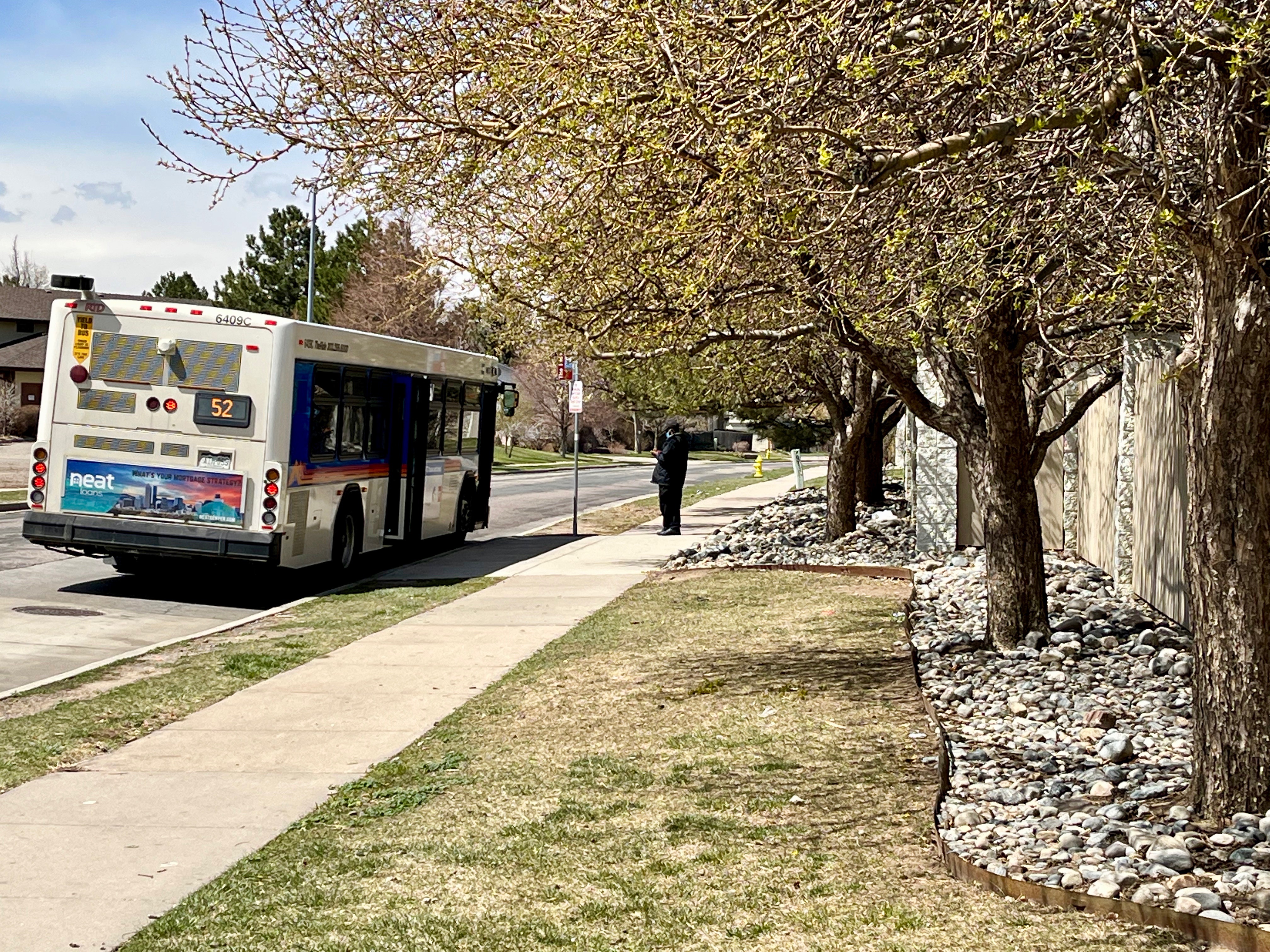
A few days ago I helped a local transit committee conduct their first Safety Audit on a bus stop near my home – the first audit of its kind in Colorado. 

What we found was fascinating. We discovered an isolated and remote bus stop location with few nearby opportunities for natural surveillance. We learned that bus drivers reported disorderly incidents on this route and that this stop was the end of the line and was nowhere near restroom facilities. We also uncovered a nearby shopping mall with numerous crime incidents, including a recently burglarized restaurant when we discovered a jimmied front door (we called the police). 

Thus, we were able to report a crime before the owner learned about it. I spoke to him when he arrived and, naturally, the poor fellow wasn’t happy! He was the latest victim of crime in this shopping mall next to our bus stop. 

As this transport committee learns how to use the Safety Audit process, they will eventually have the capacity to conduct other safety reviews across other parts of the transportation system. 


Metro Denver bus stop location a few days ago during our Safety Audit
- many similarities to other cities


SIMILAR AROUND THE WORLD

Safety audits are not new to this blog. Seven years ago, Tarah blogged on how to teach high school students the art of the Safety Audit in Every time they want to count you out – use your voice.

Four years ago I blogged on safety audits in A Tool for the Archeology of Fear. I described the mistake CPTED practitioners make when they confuse safety audits with CPTED surveys or visual checklist inspections. Some conflate Safety Audits with Jane’s Walks or Night-Out-Against-Crime. They too are wrong.

Then, two years ago, Mateja blogged on how she digitized our Safety Audit process for measuring fear in downtown Saskatoon.

What struck me this week is not how much the committee members enjoyed the Safety Audit process. That is a comment SafeGrowth advocates hear commonly during our training. Rather, the most striking thing was how similar design and location problems arise over and over at bus stops here and elsewhere. 

We have taught audits from Melbourne Australia, Christchurch New Zealand, San Diego California, and Calgary Alberta, to New York City, and Helsingborg Sweden. We usually uncover similar fear and crime opportunity risks in those cities just as they existed in Scarborough during the Paul Bernardo rapes 30 years ago. 

Will we never learn?


Saturday, March 31, 2018

A tool for the archaeology of fear

Safety Audits examine the nighttime city

by Greg Saville

They link neighbors in common cause against crime and they collect data to build fear maps in ways never before possible. And yet community Safety Audits are among the most misunderstood, and misused, tools in CPTED. 

In 2005 the United Nations Habitat program recommended the Safety Audit as a method to assess street crime and fear around the world. Safety Audits originated in the 1980s as a method to assess safety in bus and subway stops during the infamous Scarborough serial rapist crimes in suburban Toronto (ending with the arrest of serial murderer/rapist Paul Bernardo and his wife Karla Homolka).

I took part in those original Toronto Subway Safety Audits in 1988 and published a study about their power to unify residents as they record their perceptions of the neighborhood at night. Properly facilitated and staffed, Safety Audits are unique and empowering and they collect information not available on standard fear of crime surveys.

Parking lots are a frequent target of Safety Audits
MISTAKES

The first mistake is to think Safety Audits are the same as CPTED surveys or visual inspections for crime prevention. CPTED surveys work well on buildings and streets to assess crime opportunities in the nooks and crannies of everyday places. But CPTED experts cannot conduct a properly implemented Safety Audit; rather they can only facilitate residents. It is the native intelligence of residents that is recorded in a Safety Audit, not the assessment of an expert.

Some think Safety Audits are the same as a community walkabout, a Jane’s Walk, or Night-Out-Against-Crime. Those are not a systematic and coherent data collection activity like a Safety Audit.

SAFETY AUDITS ARE DIFFERENT

Authentic community Safety Audits:
  • Use a small group of locals to answer audit questions
  • Are generally conducted at night 
  • Are conducted within a 75 yard/meter radius of a location and then move to other locations to audit an entire area
  • Include women since they experience the night environment different than men.

Police, residents, CPTED facilitators, and others participate in Safety Audits

Unlike CPTED surveys, Safety Audits extend beyond the physical environment and hone in on social factors: How involved are local residents about their neighborhood? What is the history of this place? How might local residents help improve conditions? 

The latest versions of Safety Audits use computer tablets and GPS enabled software to more accurately record fear and map perceptions. A few years ago I recorded a VLOG with LISC Safety coordinator Mona Mangat on how to conduct a proper Safety Audit.  

Safety Audits are the ideal tool for crime archaeology – they help residents dig up fear and perception discoveries of their nighttime city that may be invisible in other crime assessment methods. 

Tuesday, August 11, 2015

Every time they want to count you out...use your voice

Facilitating safety audits with Saskatoon kids - doing it their way
GUEST BLOG: Tarah Hodgkinson is senior researcher in the Integrated Risk Assessment Instrument Group in Vancouver, Canada. She is a member of the International CPTED Association and a certified SafeGrowth practitioner. She is completing her PhD in criminology at Simon Fraser University.
***
Like the lyrics above from the best selling track Sing, too much crime prevention targets at-risk youth, but it rarely consults them. In The End of Education, Neil Postman told a fable of New York City falling into desperation. The streets are in disrepair, people are afraid to go outside and the police are unable to control the ballooning crime problem.

Not knowing what to do, the Mayor’s aide prepares to flee the city, but first reads Thoreau’s Walden, especially the quote, “Students should not play life, or study it merely, while the community supports them at this expensive game, but earnestly live it from beginning to end. How could youths better learn to live than by at once trying the experiment of living?”

SAFETY AUDITS WITH KIDS

I recently participated in a safety audit with local youth in Saskatoon,  Canada. With the help of a local planner and SafeGrowth advocate, Elisabeth Miller and planner Haven Rees, we reworked some of the safety audit to make it more youth friendly. We taught safety audit principles through games and examples. Finally the youth conducted a safety audit in one of Saskatoon’s neighbourhoods.

The experience reminded me how rarely youth are brought to the table when discussing safety, despite their unique experience in the urban environment. This group was particularly interesting, because they were all newcomers to Canada. Many were from countries much more violent and crime-ridden than Canada.  Their experience is particularly unique, because they experience fear and safety differently.

Children from different countries see spaces differently - Safety Audits capture that
For example, while conducting the safety audit one youth exclaimed, “of course I feel safe here! It’s so much safer than Russia!”

The youth in the safety audit told a different story than adults often do about their neighbourhoods. In a Block City exercise they were given the opportunity to build a neighbourhood with schools, shops, homes, and churches. They placed parks and shops very close to their home.

During the safety audit they also noticed things in the neighbourhood that we had missed. We were consistently surprised by their awareness and eagerness to participate. They were excited that we were taking their contributions seriously and genuinely intended to use their feedback.

GIVING VOICE TO YOUTH

I’ve had the privilege of teaching youth throughout my career. I often see their frustration when they are counted out from decisions because they are too young, or not given opportunities because adults feel they haven’t learned enough yet. However, when given the opportunity they can create beautiful and inspiring things. I’ve been impressed by the efforts to include youth here in Saskatoon.

Similar results are reported in this blog by educator Fleur Knight during her work in New Zealand schools.

I hope others will recognize the importance of involving youth in policy and neighbourhood improvements and we will stop doing things to and for youth, but rather with them.

Saturday, May 24, 2014

Community mapping - CPTED goes 21st Century

Community mapping guru, Dr. Wansoo Im

My High Line Park post a few weeks ago happened because of my fascinating new friend and community mapping guru, Wansoo Im. He showed us High Line with the energy of an excited tourist, even though he is an area resident, adjunct professor in urban planning at Rutgers University and founder of inventive initiatives in community mapping. I discovered he brings that energy to his work everywhere.

Wansoo is a pretty cool fellow. He has mapped safe routes to school for kids and helped residents use crowdsourcing to map potholes. Huffington Post describes how he got high school students to crowdmap emergency gas stations to help residents stranded during Hurricane Sandy. The New Yorker featured him using crowdsource mapping to solve the problem of finding public washrooms in New York. And now he's turning to community mapping of crime and fear.

Mapping fear to diagnose community perceptions
I met Wansoo at our New Jersey SafeGrowth training where he is testing his community mapping software called Mappler. It uses Google Earth and GPS and most importantly it doesn't rely on complex GIS mapping - the stuff crime analysts spend months mastering. And it's dead easy to use.

Mappler technology works as a smart phone app. Our class was able to input Safety Audit fear data  directly from their observations and view it in real-time on neighborhood maps. Pretty cool stuff.

Community mapping may be the way to tap into engagement in a direct way. And for Millennials growing up as Internet natives it offers a new way they can use their considerable talents to solve community crime.