Showing posts with label third places. Show all posts

Monday, July 27, 2026

SafeGrowth and 안심 - A shared vision with Korean CPTED researchers

Skyline of Seoul, South Korea, by night. Over 25 million in the metro area, one of the most advanced cities in the world. Leaping ahead with the latest CPTED - photo CC BY-SA 2.0, via Wikimedia Commons.
 

by Gregory Saville

When the Korean CPTED delegation departed Seoul last Sunday to meet us in Denver, they traveled 16 hours and crossed 16 time zones. Twenty-four years earlier, two South Korean scholars published a study applying space syntax theory to evaluate CPTED in the International CPTED Association’s official journal, Volume 1, Issue 1.

Across that distance and span of time, South Korea has quietly become one of the world's most innovative laboratories for CPTED research and practice.

Last week we hosted visitors from the Architecture and Urban Research Institute (AURI), a government research institute in the Republic of Korea, led by Dr Eunhee Kim. The members of the group included: 

  • Dr. Eunhee Kim, Director, CPTED Research Center, AURI; 
  • Dr. Youngweoo Kim, Associate Research Fellow, CPTED Research Center, AURI; 
  • Jaeseok Her, Assistant Research Fellow (Spatial AI and Big Data Division), AURI; 
  • Hongseok Choi, doctoral candidate, City & Metropolitan Planning, University of Utah (former AURI). 

 EARLY CONNECTIONS 

Late last year, AURI reached out to us for some background on SafeGrowth, the International CPTED Association, and our generational approach to CPTED. In May, we collaborated with them in an online webinar with some of their talented researchers. That is when I learned about the astounding progress of Korean CPTED over the past 20 years, especially in a few areas where they have leapfrogged past many other places with CPTED (how many CPTED instructors teach space syntax, or even know what it means?).

Beginning a three-day tour of Denver metro at the Arvada City Hall, Colorado

Before they arrived, we read AURI's recent work using virtual reality to evaluate neighborhood design and a study on using machine learning to explore relationships between urban environments and emergency calls for service. That research reported, “green areas have been mixed in the literature, [but] this study newly demonstrates that green spaces in urban Seoul are associated with reduced 112 [911] call occurrence”. It was a finding that seems to reinforce the Third-generation CPTED environmental principle of biophilia and how green land use can reduce fears and crime rates.

This was an exciting moment! 

Eight members of the SafeGrowth Network appearing virtually from across North America, including some also from the International CPTED Association, joined Mateja and I at the introductory workshop in Arvada in welcoming our Korean guests. Their visit was a professional exchange for research and education, but I suspected they would show us more than vice versa.


THE SITE VISITS

Obviously, the Koreans did not need more evidence on crime hotspots, lighting, target hardening, or access control. They have decades of experience with those concepts. Instead, we toured sites showing a more complex, urban planning side of SafeGrowth and CPTED, especially Smart Growth planning of which SafeGrowth is based and in which metro Denver excels. Smart Growth integrates compact development, walkability, mixed land uses, and transportation into complete neighborhoods.

One of our sites included the successful Transit Oriented Development (TOD) in Arvada’s Old Towne centered on the RTD commuter train station. 

Arvada City Hall meeting with Mayor Lauren Simpson, City Manager Don Wick, and their respective staff members

We met our gracious hosts, Arvada City Mayor Lauren Simpson and City Manager Don Wick, and their staffs to learn about TOD governance and development issues. 

Although the modern term Transit-Oriented Development (TOD) was popularized by planner Peter Calthorpe, transit-centered neighborhoods have existed for many years in cities like Seoul, Tokyo, Singapore, Vancouver, Minneapolis, Stockholm, and London. 

Yet despite their importance, TODs remain one of the least-developed areas of CPTED practice. We spent considerable time discussing how walkability, connectivity, mixed land uses, and human-scale design influence neighborhood safety and crime.

We then traveled to Lakewood’s new downtown, mixed-use development also based on Smart Growth, one of the first in the country, constructed from the ground-up twenty years ago. 

We spent time with artists at the Denver Art Society to learn about the social impact of Third Places on neighborhoods like the Arts District of Santa Fe and then followed with another Third Place, this one an adaptive reuse mall, the Edgewater Public Market. 


We have posted prior blogs on the Third Places crime immunity effects and the Denver Art Society. Third Places have a growing role in SafeGrowth to stabilize troubled areas in a way that no policing or target hardening ever could. 

We spent one morning at the Denver Police Academy with academy Director, Lt. Jessie Campion and Commander Jacob Herrera, from the Operational Innovation Bureau. They kindly permitted us a visit to examine police crime prevention strategies and training, including a CPTED report on the historic Denver Union Station following a crime spike in 2021. 

Police Lt. Jesse Campion toured the delegation through the academy and described tools of the trade in the Denver training programs

We ended our third day with a visit to Harmony Village, a cohousing development in Golden, Colorado. The Denver metropolitan region is home to about a dozen cohousing communities, among the largest concentrations of cohousing developments in North America.

The community gardens at the Harmony Village Cohousing in Golden, CO.

At first glance, the neighborhood looks much like any well-designed residential development, with plenty of natural surveillance and territorial controls, attractive homes, pedestrian pathways, gardens, and shared recreation areas. But the difference lies beneath the physical design. 

Residents own their homes but also intentionally share responsibility for governing the community, organizing activities, maintaining common spaces, and building relationships with one another. They learn conflict resolution techniques and organizing skills. In many respects, the neighborhood functions as a small, self-governing community. This illustrates why second-generation CPTED extends far beyond physical design.

The cohousing visit sparked considerable discussion since cohousing combines private home ownership with intentional community building and resident self-governance. For SafeGrowth, that distinction is important. 


Lorraine Neimela touring the delegates through Harmony Village Cohousing

Strong neighborhoods emerge not only from good design, but also from the capacity of residents to organize and collectively solve local problems. This is what too many Condo Associations and Homeowner Associations lack and what digital platforms like Nextdoor do not always achieve. In fact, studies now suggest they often do the opposite by encouraging fear of strangers, amplifying rumors, and replacing face-to-face interaction. 

Our thanks go to Lorraine Niemela from Harmony Village for touring us and the Koreans to view how cohousing, as with SafeGrowth, strengthens relationships first, so residents develop the capacity to solve problems together rather than simply report them.


안심

Korea has mastered many of the physical and technological dimensions of CPTED. This site visit was a great opportunity to show how SafeGrowth begins where those strengths leave off. It retains traditional CPTED, but it also asks how neighborhoods continue learning, adapting, and governing themselves long after the design work is finished. 

During the visit I learned that the Korean word 안심 best captures the SafeGrowth philosophy. It loosely translates to peace of mind and feelings of safety. That was the SafeGrowth concept we wanted to convey during the three days of their visit.

We were delighted to welcome our new Korean CPTED colleagues and impressed with their intuitive grasp of crime and safety problems in complex neighborhood systems where everything is interconnected to everything else. We barely had time to introduce the latest possible evolution of CPTED theory into complex adaptive systems. Next time, perhaps!  

As we said our goodbyes, I couldn't help but think of the final scene in the classic 1943 film Casablanca: "…I think this is the beginning of a beautiful friendship." 

I am convinced that is so 

Monday, February 23, 2026

When new stadiums arrive, what happens to the life already there?

Public presentation of the new NFL Denver Bronco Stadium - Press from across the country, national media, local reporters, and hundreds of community members came to hear about their proposed future   


by Gregory Saville

We walked across cracked sidewalks and street litter beside the deteriorating railway grounds known as Denver’s Burnham Yard, only a few blocks from the Art District on Santa Fe. I found myself wondering what this place will look like in five years when the massive new Denver Broncos football stadium rises from this worn industrial landscape.

It brought to mind the role of Third Places as community activators, how they are the core of neighborhood life, and how fragile they are. Third Places have made previous appearances in this blog about creating social life out of industrial decline, and how art co-ops lower crime.

Anchoring the Art District is the Denver Art Society (DAS). It stands as a Third Place and cultural anchor that artists built through years of volunteer effort and community commitment, and I could not ignore the uneasy questions that follows so many large development projects across North America: When the stadium arrives, will this cultural nexus survive as part of the new district? Or will it be pushed aside in favor of land uses that generate revenue but leave the streets quiet between scheduled events?


The unique Third Place that is the Denver Art Society
during the monthly First Friday artwalk 


Stadium projects are often justified on economic grounds and those claims depend as much on sustained daily activity in addition to event crowds. When the stadium falls silent after events, what will happen on Santa Fe? Economic vitality cannot depend on rare bursts of activity separated by long stretches of inactivity. Healthy urban districts depend on steady patterns of daily presence that keep streets occupied, like what happens every day at DAS. As Jane Jacobs demonstrated, eyes on the street help keep public spaces alive and safe.

Long before Burnham Yard attracted such interest, artists had already transformed the Santa Fe corridor into a place of daily cultural production. It hosts open studios, exhibitions, music performance venues, and cultural anchors such as Su Teatro Cultural and Performing Arts Center, the Colorado Ballet Academy, and the Center for Visual Art at Metropolitan State University of Denver. 

Through co-ops like DAS, artists mentor young creators and welcome visitors into shared and safe spaces where participation matters.


Denver's First Friday monthly artwalk is among the busiest,
and liveliest, in the country


History warns that when large developments arrive in districts already shaped and restored by artists, the outcome often follows a familiar pattern. Artists transform overlooked industrial areas into places people want to visit and experience. Their presence attracts attention and investment. Rising land values create pressure for redevelopment that favors larger and more profitable uses. The cultural anchors that made the district desirable struggle to survive within the new economic landscape they helped create.


THE PUBLIC MEETING

On Feb 13, I attended a Denver Bronco public presentation that revealed both the scale of public interest and the limitations of conventional participation processes. I stood with hundreds of residents and two city councilwomen to learn about the proposed stadium and its surrounding development. 


Over 700 community members attended the new stadium announcement - one city planner described attendance as the largest he has seen 


We have learned repeatedly in our SafeGrowth work that, if large development projects are to fulfill their economic promise, they must become part of a living district rather than stand apart from it. Protecting and strengthening institutions like the Denver Art Society is not an obstacle to economic development but a prerequisite for its long-term success.


THE CHOICE FOR THE FUTURE

The choice facing Denver is not simply where to locate a stadium. It is whether to build upon the existing cultural foundations on Santa Fe that already support year-round creative life and economic activity, or to repeat a familiar pattern of displacement that replaces community assets like the Denver Art Society with occasional spectacle and inactive streets.

The future of Burnham Yard will reveal whether lasting economic vitality in Denver grows from the daily life of its communities, and whether the cultural institutions that built the Art District on Santa Fe will remain part of that future or become another casualty of progress that failed to recognize the value already present.


Saturday, December 31, 2022

Community hotspots and digital fasts - A wish for 2023

Seeking authentic human connections in a digital age - photo by israel palacio on Unsplash


by Mateja Mihinjac

I rarely watch TV, however, in the spirit of holidays, I was recently drawn into watching one of those predictable Hallmark Christmas movies. Set in a small town where everyone knows each other, idyllic streets and small family-owned shops were decorated in a festive spirit. And there would be no Hallmark movie without a romantic twist of the two protagonists who find each other despite all the obstacles in their lives and live happily ever after.

However, despite a predictable happy ending and the idyllic small-town living that is often far from reality, one takeaway from this movie was the notion of a community hotspot.

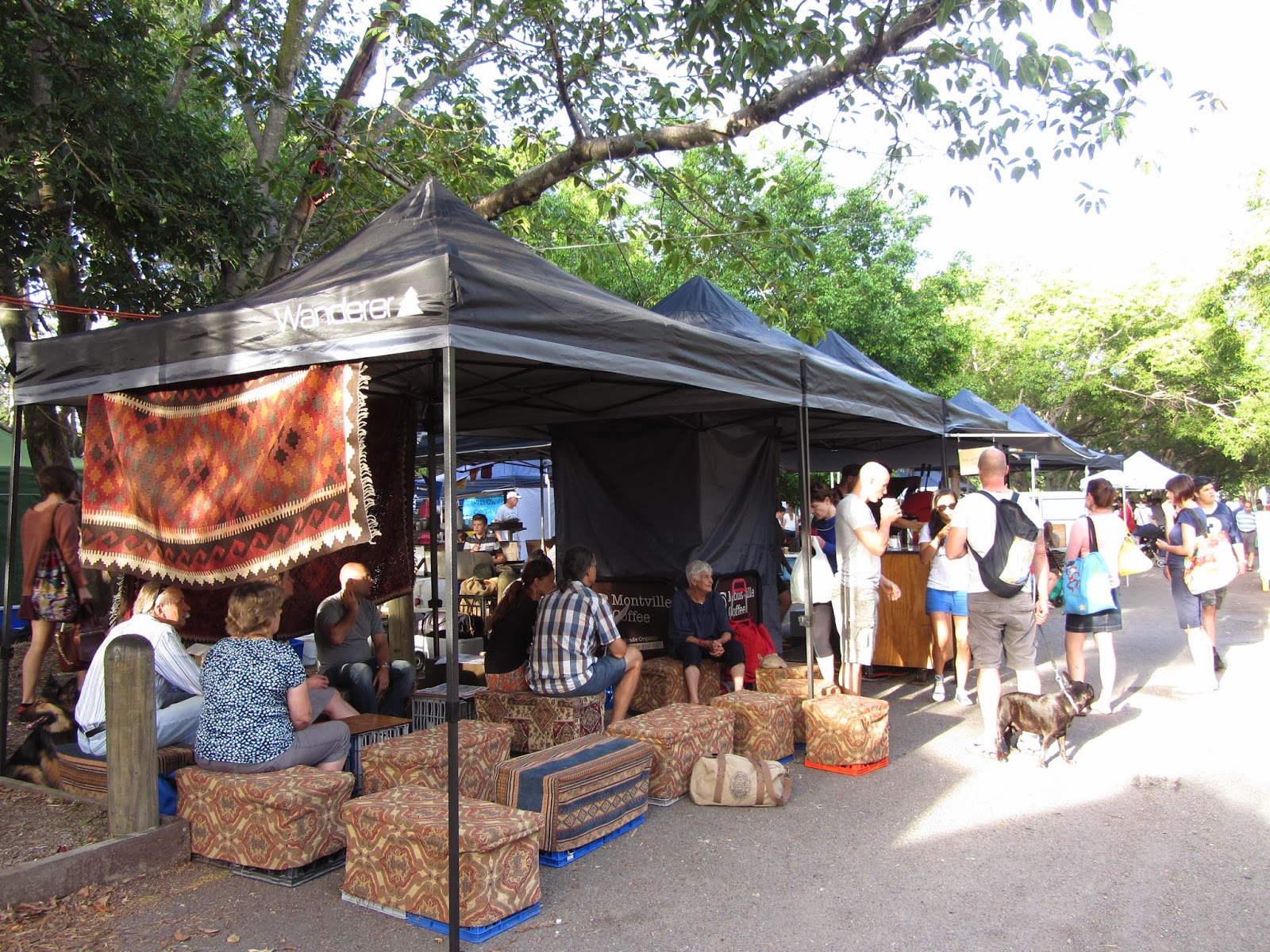
This community hotspot is not a hotspot in a digital sense where you connect your smartphone. It is also not like a crime analyst’s high-crime hotspot. In this film, it refers to a long-standing town café where local residents from all walks of life regularly meet, both intentionally or accidentally. 


Northley Street Organic Market, Brisbane.
This open market provides ample free opportunities for informal socializing 


In a blog this past summer Tarah referred to such places as “third places” — places where people come together, meet and socialise.

In today’s digital era we hardly ever associate a hotspot with anything else than digital connectedness. In truth, connecting online through our devices rarely creates a true and authentic sense of connection. 

What if we intentionally created “community hotspots” and “community hot-times”, designated places and times away from digital devices and purely focused on in-person human connection? What if we intentionally adopted digital fasts as a way of restraining ourselves from digital devices (especially social media), for a specific period of time in favour of real human connection?


Old's Cool General Store, Toronto.
This convenience store opened up the sidewalk with tables and umbrellas as a meeting place


My wish for all of us is that we enter a new year more intentionally and reflect on what brings us closer together with others. For me that includes spending time in nature, connecting with people in real life, and less time staring at dopamine-generating/energy-draining digital devices. 

A true hotspot should be about community and it should bring us closer together, not further apart.

Happy 2023!


Friday, November 19, 2021

Finding third places after the Pandemic

Places like the Capitol Bar in Hamilton, Canada, create a shared
dining space and opportunities for live music and conversation 

by Tarah Hodgkinson

We have written extensively on this blog, and elsewhere about the importance of the “third place”. In Ray Oldenburg’s work The Great Good Place, Oldenburg discusses the importance of the third place: Third places are spaces other than home (first place) and work (second place) where folks can meet, gather, connect and build social cohesion. He names several types of third places including cafes, hair salons, barbershops, pubs, libraries, bookshops and more that are at the heart of any great community. These are spaces that people can spend lots of unstructured time in without having to spend much money. 


The Red Bowler cafe in the west end of Brisbane, Australia, holds seating
for dining and comfy couches and eclectic decor for evening events

In the wake of COVID-19 many of these local places are starting to disappear. Unable to keep up with the rising costs of rolling lockdowns and having to restrict the number of patrons, many of these establishments have either limited the time you can spend in them or been shuttered altogether. This has led to several issues including vacant storefronts, reducing foot traffic and eyes on the street, and increasing monopolies of these spaces by large corporations that are less interested in creating a space for their neighbours and building community cohesion. 

We know that social cohesion relies on third places to bring together people together. We also know that a lack of these places, can reduce social cohesion and increase risks of crime. Never has that been a more prominent issue, than during a pandemic when we are literally more separated than ever before. 

"Third places" draw people together for more than food and dining - they
are gathering places, relaxing spaces, and conversation bases

However, there are some shining rays of hope in neighbourhoods around the globe. In Brisbane, Australia for example, a small café called the Red Bowler, feels exactly like a third place. Here, the café is not only a place to grab a coffee and a bite to eat, but the staff also know the locals, regulars sit down at comfy couches near you to strike up a conversation and the owners hold weekly events including movie nights, live music, and even mobile dog washes. No one is rushed out and as a result, the community builds. 

This is just one example of a commitment to create places that are neutral, inclusive and a home away from home. As we continue to emerge from the seemingly endless impact of COVID-19 on our everyday lives, it is more important than ever that we revive and support these third places. They are the neighbourhood cornerstones of connection that will help us to not only recover but thrive again as communities. 


Saturday, October 16, 2021

The social life of a city bench


by Mateja Mihinjac

As a CPTED professional, I experience the socio-physical environment in a more critical and analytical way than a general person. I observe features that may stimulate pro-social conduct as well as those that may offer opportunities for undesirable behaviour or even promote risk for users of those spaces. And yet, the decisions concerning the planning of public space are not straightforward.

Public benches represent one such conundrum. I’ve written previously that knee jerk reactions, such as removal of public benches, are common in an attempt to eliminate social problems such as unwanted loitering, sleeping on public benches, or vandalism.  

Yet these decisions often come with the realisation that they don’t address the problem but rather displace it. They become tools of exclusion. 

Can a humble public bench become a tool of inclusion?


MORE THAN A BENCH

As Kelsey I. Sagrero writes in her thesis Socializing Public Space: Benches in the Urban Setting, a bench can be more than just a bench. When planned with its function in mind, it can be a tool that attracts people and promotes social interaction in public spaces. Thus, she writes, we should make benches an intentional part of social spaces in which they are situated to promote social interaction and inclusivity of diverse groups. As such, a bench represents an important part of public social life.


One such initiative comes from the UK with strategically placed “Happy to chat” benches. The purpose of those benches is to promote conversation for their users and address the problem of loneliness and alienation, especially amongst the elderly.

In my exploration of the City of Helsingborg, Sweden, I also came across some interesting examples of benches that instantly attracted my attention.


The first was pride rainbow benches painted ahead of the 2021 Helsingborg Pride Festival. The purpose of the benches was to demonstrate that expression of diversity and inclusion are not limited to the LGBTQ community alone and are an important conversation starter in urban space.


The second was yellow friendship benches situated in different areas around the city. They attracted my attention with their happy bright yellow colour and a sign “A hello can save a life”. These benches intend to raise awareness of mental illness and suicide and to offer support through care and respect for one another through informal interpersonal conversations.

As these public benches have become places for promoting social interaction and conversations, and thus a form of third places, they have also become tools of social messaging that reflects societal struggles and sentiments and advances the conversation on important topics such as diversity, inclusion, and mental health. 

It's fascinating how a humble piece of street furniture can serve such an important social role in public life.


Sunday, July 26, 2020

Think of the teenagers

Many claim teens spend all their time on phones. Lacking
physical 'third places', this is where they seek their community

by Tarah Hodgkinson

This week we continue to watch the unfolding of the Black Lives Matter movement. As Portland becomes the new epicentre of unrest, local residents are out in droves standing against federal law enforcement. Federal authorities claim to be protecting statues from toppling and other property damage, though one could argue human life is receiving far less respect.

Residents have taken to the streets to demand a better future for themselves and their kids. Amidst the horror of watching the news about Portland, I have been reading Palaces for the People by Eric Klinenberg, the writing highlighted in Ifeoma Ebo and Greg Saville’s SafeGrowth presentation in Sweden last November.

A BLEAK FUTURE

I’ve always found reading Klinenberg like sitting down with an old friend. I don’t know exactly where the conversation will lead, but it will be engaging and familiar. However, just as I was settling into the accustomed pace of these ideas, a particular quotation resonated with my background thoughts of Portland. Speaking about teenagers and their tendency to shun face-to-face interactions in exchange for online communication, Klinenberg writes,
“According to research by danah boyd, director of the research institute Data & Society, young people spend so much of their social time online because adults – from helicopter parents to hyper vigilant school administrators and security guards – give them few other options”. 
Public places are designed for children, not teens

Right now, as mothers are forming human barricades between the protesters and federal agents, youth are rising up in unprecedented numbers. Sparked by the work done by the “March for our Lives” movement and others, our youth have their heads up and are looking at a pretty bleak future.

There is an ongoing lament about the younger generation. Books like The Dumbest Generation claim that the digital age has stupefied young people and made it so they are unable to engage in deep thought and meaningful conversations. However, this lament is not new. As research suggests, every generation has complained about the one after it. Indeed there is so much complaint about Millennials, most people forget that Millennials like me are in our thirties and forties with full-time careers and kids.

What Klinenberg describes is that when we deny spaces for youths to interact and engage without constant monitoring by adults, we deny them third places. These great good places, where teenagers can put aside family and school, have all but disappeared. Short of a few skateboard parks (that often impose strict rules) and community centres, there are no real places where youth can stumble upon other youth.

Teens need places to socialize

PLACES TO INTERACT AND SOCIALIZE

Young people need these unstructured and unmonitored spaces. These spaces should be flexible, inexpensive, inclusive of all groups, and located in neighbourhoods that do not fear the presence of young people. They should allow youth to meet and interact with diverse groups and grow intellectually and interpersonally. More importantly, in times like these, great good places create ways for young people to plan and engage civically. That kind of work cannot be done alone and online, as demonstrated in Dave Cullen's Parkland.

In a post-COVID world, we need to think about how we build social infrastructure with young adults. They need to be at the table and actively involved in these decisions. Many of our SafeGrowth communities have already worked alongside youth who are a part of local organizations, for example with neighbourhood Hubs in Honduras and while placemaking their own spaces in New Zealand.

More importantly, we need to be even more proactive and involve youth from across the spectrum of neighbourhood needs.

Not only will these third places encourage young people to make new friends and develop socially, but also help to build social capital and connection across diverse racial, sexual and class divides. These spaces will help us to build the better future our young people are already fighting for today.

Saturday, June 17, 2017

Connecting in third places

Australian hostels truly get how to do third places
By Tarah Hodgkinson 

One of the main tenets of SafeGrowth is social cohesion. I recently spent a few weeks in Australia as part of a conference and research trip. During this trip, I spent some time in hostels on the east coast of the country. I was reminded of the importance of shared spaces or third places and their role in encouraging social cohesion.

Third place is a term coined by Ray Oldenberg in his book The Great Good Place. Oldenberg claims that we have three places:

  • The ‘first place’ is the home, shared with those who live in the home. 
  • The ‘second place’ is the workplace. These places are where we spend the most time. 
  • The ‘third place’ then is the place where we find community and social life. He argues these third places are the anchors of community and social engagement. 

COFFEE SHOPS - MORE THAN COFFEE

Examples of the third place include local coffee shops, pubs, rec centers, barber shops, farmer's markets, community gardens and other places where people can come together, meet and socialize.

Third places are more than just a location outside of work and home to congregate. These places must have certain characteristics in order to become a third place. They should be neutral (no one has claim over them), they should be leveling (no one social status matters more), they should be free or inexpensive, they should be accessible to everyone, there should be regular faces and they should promote conversation over everything else.

Australian hostels get how to do third places. They boast numerous shared spaces including shared kitchens, recreation rooms, seating areas, computer areas and cheap cafes. This is ideal for the traveler trying to connect with others.

Gardens and parks - third places with flowers
This is vastly different than hostels in Canada and some in Europe, that operate more as a hotel, where the only shared spaces are bars and restaurants, which are not only costly but don’t encourage natural conversation.

What can Australian hostels teach us about community engagement? Oldenburg claims third places are the center of civic engagement and civil society and necessitate the steps of social change. They do so because they allow people to come together, to share ideas, discuss issues and mobilize for change.

When I stayed in hostels that had third places, I met fellow travelers with ease, learned about fun, entertainment hot spots and made friends, many of whom I am still in contact with. This did not happen in the hotel-like hostels. In neighborhoods, third places trigger social engagement and cohesion and this is the beginning of how we start changing neighborhoods for the better.