Tuesday, February 28, 2023

Reconciling safety and sense of place

The New Jersey chapter of the American Society of Landscape Architects
2023 annual conference - Atlantic City


by Mateja Mihinjac

Safety and crime prevention frequently evoke mental images of CCTV, gates, locks and the police. Crime prevention and security professionals (myself included) are often guilty of putting on the thinking hats of potential offenders as we develop solutions. Instead of focusing on the overall liveability of a place, we too often recommend solutions for places that prevent undesirable activities and produce sterile and uninviting places for desirable uses.

I recently spoke about Crime Prevention Through Environmental Design (CPTED) at the 2023 Annual Meeting of the New Jersey chapter of the American Society of Landscape Architects (NJASLA) in Atlantic City. I made it clear through my keynote address that safety and a sense of place can coexist. The conference’s theme – Sense of Place offered a great opportunity to discuss this conundrum.

While feeling somewhat out of place as a criminologist amongst landscape architects, I was pleased to have had the opportunity to offer some basic understanding of CPTED. I was especially excited to discuss its application to landscape architecture. These professionals are in an ideal position to ensure that places are not only attractive and aesthetically pleasing but also safe, inviting and inclusive thus inducing a sense of place. 


Bright colour, busking, people watching, and fun activities in the Queen Street pedestrian mall, Brisbane, Australia - sometimes a sense of place can involve buskers


SENSE OF PLACE

Sense of place is generally associated with positive perceptions of places. The attributes that contribute to a sense of place deal with the emotional, cultural and historical connection to that place. 

Sense of place is also associated with factors that make it special and unique and that foster sense of belonging to that place. A sense of place emerges in locations where people get attached to the space and where they love to spend time. It is a place that they identify with. 

So how can we create a sense of place through CPTED?

In 3rd Generation CPTED, Greg Saville and I emphasise the importance of designing places and building neighbourhoods that offer more than basic amenities for their users and inhabitants. Traditional 1980s CPTED (1st Generation CPTED) focused on preventing crime opportunities, not on overall liveability, and it often led to target hardening and hostile architecture (in many places, it still does). 

For people to form attachments and connections to places they need to feel part of those places. This can be achieved most powerfully when users are involved in the design and activities of those places.  

Our work in SafeGrowth teaches us that applying all three generations of CPTED offers a more powerful way to integrate the elements for safe, inclusive and inviting places. 


Greenery and places to sit comfortably can offer a respite from
busy streets - Greenwich Village, New York  

THE CPTED LINK

While 1st Generation CPTED helps us address the specific concerns that offer opportunities for crime in small spaces, 2nd Generation CPTED goes beyond that with its neighbourhood focus. It helps us address the underlying social conditions and it deals with the neighbourhood dynamics that lead to disadvantage, disengagement and lack of interactions between people. 

The latest variation on the CPTED theme is 3rd Generation CPTED. It focuses on sustainable liveability outcomes and aims at addressing the advanced-level needs of neighbourhoods and those who dwell there. Because it is directly tied to the highest level of psychological and emotional needs and desires, 3rd Generation CPTED is closely associated with fostering a sense of place. Linked to Abraham Maslow’s hierarchy of needs, (and supported by modern research in developmental biology and neuroscience), the hierarchy of needs is a new way to think about neighbourhood health and safety.

This full, holistic version of CPTED offers a powerful tool for designing inviting places that foster identity, offer ample opportunities for socialising, and create a positive sense of place. This is especially the case when the users of those places are directly involved in the community-building process.


Dismal landscaping will detract from a sense of place - unsafe behaviour can follow 


CONCLUDING THOUGHTS

This holistic CPTED thinking directly translates into one component of SafeGrowth that utilises all three generations of CPTED. However, as a neighbourhood planning method, SafeGrowth takes this a step further. It trains neighbourhood residents and builds their capacity to identify neighbourhood problems and create solutions, thus fostering the local community's sense of place and belonging. 

Landscape architects and planners must become integral members of multidisciplinary neighbourhood teams to help the residents realise their vision for safe and liveable places. 


Wednesday, February 22, 2023

"Stop Dave... I'm afraid" - The latest on AI and crime prevention

AI-driven shape-recognition tech in the Smart City
- photo by Creative Commons courtesy of QueSera4710


by Gregory Saville

With apologies to the deactivation scene of the Hal 9000 computer in 2001: A Space Odyssey, the title above came to mind when I recently read a paper on AI. What is the latest in AI? Our work in SafeGrowth and CPTED often places us face-to-face with suggestions for artificial intelligence as an answer to crime. 

AI appears in this blog in the form of my keynote address to the ICA annual conference in Sweden regarding AI, Smart Cities and CPTED. I have blogged on this topic a number of times including AI in law enforcement and AI and CCTV

I recently read a provocative new research study on AI and Smart Cities. In the paper Understanding citizen perceptions of AI in the smart city, Finnish computer science researcher Anu Lehtiƶ and her colleagues examine public perceptions of AI in relation to Smart City urban planning. The Smart City movement is gaining momentum and it is intricately tied to AI.


RESEARCH FINDINGS

Here are some responses they uncovered:

I don’t need to worry about AI. I trust those who are in control of it. I’ve already seen digitization in other aspects of life. It isn’t so bad, maybe even good!

Some people are happy just letting things happen and they rely on “those who know better” to handle problems. This is an understandable position, given the speed of change today and the overwhelming amount of information flooding our screens.  However, given the catastrophe of other unfettered technologies (nuclear power, for example), this is a poorly thought-out and risky strategy.


Mapping the connectivity of the worldwide internet
- photo courtesy of Creative Commons, By The Opte Project 
  

I’ll avoid AI if I think there is a danger. 

It is difficult to anticipate all the potential dangers of AI. I presented some in my keynote address (see link above). But because AI arrives with so many advantages for us, especially in the Smart City, we tend to look the other way and ignore unanticipated consequences. But in truth, there are many ways where AI might go awry and sci-fi writers have offered some terrifying possibilities. Consider The Terminator, The Matrix, or the beautiful Ava in El Machina!

I don’t like “them” monitoring me. 

In this era of digitization, it is hard to imagine any modern society without extensive digital record-keeping. We are already thoroughly embedded into one database or another. There are motor vehicle databases, government databases, health services, pension, and social assistance databases, not to mention thousands of corporate databases, both virtual and in person, whenever we purchase something.

The fact is that we are already monitored. Further, with AI there is no “them”. Artificial intelligence is literally anywhere there is electricity, a processor, and some AI programming. The public, it seems, is blissfully unaware of the risks posed by AI. 


IT WILL BE NORMAL IN 50 YEARS

The most concerning findings:

The interviewees saw no reason to fret over something that would become a natural part of citizens lives, in time. The younger generation would deem current worries as unintelligible, having grown up in a society where the use of AI was the norm (female, 25). On the other hand, the interviewees presumed that it would still take a long time (“another 50 years” female, 44, personal assistant) before AI was mature enough to operate on a level that was notable enough to bring about significant, concrete changes in people’s everyday lives. 

In other words, don’t fret about AI because it will become normal and it’ll take 50 years before it matters. Talk about clueless bliss.

This is known as the AI effect - the tendency to claim AI is not real intelligence. If you have read anything on AI and its exponential growth you will agree that waiting around for AI to wake up is cavalier and dangerous. We need to be much more diligent.

Ultimately, it seems the researchers too are alarmed. They recommend a form of AI called human-centered AI which is a programming approach based on human ethics and the importance of personal privacy. Not quite Asimov’s 3 Laws of Robotics, but close enough for now.


Tuesday, January 24, 2023

The return of broken windows and other stopgaps


Broken windows theory, often confused with CPTED, is a police strategy to cut crime
- photo by Smallbones, Creative Commons

by Gregory Saville

Last year, in frustration over increasing incidents of violence, the NYPD returned to their broken window theory to cut crime, a much-criticized program from the past.

Can cops really prevent crime? There is a big difference between responding to emergencies and apprehending offenders, versus preventing crime. They are not the same. 

If you ask the Frustrated or the Cynical, they say no! Crime goes up and down regardless of police actions. Even people like urban writer Jane Jacobs said that police, while important, are not the main way to prevent crime – people in the community are. 

If you ask the Supporters or the Optimistic, they say yes! Problem-oriented policing seems to cut crime, at least in some cases. But it is a rare strategy in policing nowadays.

What of other strategies? Consider predictive policing and especially hotspot policing, a tactic that goes back decades. When I was a cop we called this showing-the-flag in troubled areas. Flag showing put cops into high crime areas at just the right time.

Some researchers, like criminologist David Weisburd, are big hotspot policing advocates. He points to research that shows early success. Still, there are plenty of questions. When Denver police tried it, they cut gun crime in 3 of 5 hotspots, but citywide gun crime increased anyway.


POLICE CRIME PREVENTION

What about crime prevention officers? Crime prevention specialists do some good work, but they are a tiny fragment of the total police roster. They split their time between a myriad of disconnected programs and they seldom work within the operational goals of a neighborhood-based safety plan. 

What about technology? The research is not convincing. CCTV in public places, for example, has a spotty record with dubious results. We have blogged on CCTV before. We've also blogged on the problems with Shotspotter Acoustic Gun Detection technology. The NYPD domain awareness system is the latest technology in this regard. Unfortunately, crime in NY is still increasing.

What about tough-on-crime like zero-tolerance enforcement, stop-and-frisk tactics, and broken windows policing? Does it work? The research is inconclusive. In fact, parts of the NYPD stop-and-frisk strategy were ruled unconstitutional by the US Supreme Court. 


TOUGH ON CRIME? 

Tough-on-crime programs rely on what criminologists call deterrence theory – strict prison sentences, mandatory sentencing, and other punishments. Deterrence theory has one of the longest research histories in criminology. It shows that deterrence does not prevent much crime! It might work on minor infractions like speeding. But for hardcore criminals, substance addicts, gang members, and others, it does little. 

Jail is also part of deterrence theory and while it may incapacitate an offender for the duration of the sentence, without intensive programming (like Colorado’s horse whisper program) and post-release supports, results are discouraging. If a convict exits prison and returns to the same blight, poverty, and desperate conditions that led him or her to prison in the first place, not much will change. 

Great programs exist but they are too few and too underfunded. 


Fire prevention...not the same as crime prevention. But close enough!
- photo Hungryogrephotos Creative Commons


FIRE PREVENTION

In the final analysis, stop-and-frisk, hotspot policing, CCTV, tough-on-crime, and many others are little more than stopgaps. They calm the winds, but the hurricane continues. 

Fire prevention takes a whole different approach. Fire officials learned long ago that driving around blindly on random patrol waiting for the fire was futile. They might send fire specialists to places where fires often break out – fire hotspots (pardon the pun), and then dispatch the engines. But those are nothing but stopgap measures.

Instead, they learned about the root causes of fire, the materials, and the types of situations where fire was likely. They developed preventive education about risky situations, like smoking in bed. They created building codes with fire-resistant materials and regulations requiring extinguishers in new construction. That is how they prevent fire. They dug at the roots and used scientific knowledge about the causes.


Paradox: noun - par.a.dox [a statement that is self-contradictory or logically untenable] 


THE CRIME PREVENTION PARADOX 

It may not be exactly the same as crime, but it is close enough! And that leads to the conclusion that all the stopgap measures above have one simple paradox: In order to work, those measures need already-committed crimes. There can be no crime hotspot unless existing crime already makes a place hot. Crime prediction is impossible unless you already have an existing pattern of crime from which to make your predictions.

The paradox gets even worse when you deploy stop-and-frisk, showing the flag, or tough-on-crime, all of which show up in the hotspots where poverty, inequities, blight, and fear already exist. Stopgap programs are unlikely to prevent those things that have existed for decades. You cannot prevent something that already exists. You can mitigate it once you discover it and stop it from recurring. That is all fine and good. But it is not prevention, per se. 

The fire people are right that to prevent something, you must understand and diagnose it. You must have a local, long-term plan with specific goals. 

This deeper and more comprehensive fire prevention method is more difficult with crime because the causes of crime are complex and multi-faceted. Of course, that is no excuse to stay confined within the walls of stopgap measures. There are more collaborative ways to build communities out of crime. 


WHAT NOW?

One answer is to get the police to collaborate with neighborhoods on the kind of community-building we describe in SafeGrowth: Building Neighborhoods of Safety and Livability. This method has been well-established and previous books have outlined early versions, such as Paul Grogan and Tony Proscio’s Comeback Cities: A Blueprint for Urban Neighborhood Revival.

Another answer, also linked to SafeGrowth, is Bill Geller and Lisa Belsky’s Building Our Way Out of Crime. That too describes deeper ways out of stopgaps and towards more comprehensive prevention. 


Bill Geller and Lisa Belsky published their summary of community transformation. An abbreviated summary is at POP Center Library. The full book is available online


All this points toward one particular answer to the question: Can police prevent crime? There are ways for police to prevent crime and all of them start and end with collaborations directly with the community. 


Sunday, January 15, 2023

The streets of Mendoza


by Tarah Hodgkinson

In previous blogs, we have spoken about tree canopy and its correlation with reductions in not only heat, but also crime. Indeed, 3rd Generation CPTED now includes environmental sustainability as a central strategy for safer places. I recently experienced this firsthand during travel to South America.

One of the wonderful things about travel is the opportunity to see beyond your view of the world to another way of doing things. I was reminded of this during a recent trip to Mendoza. 

Mendoza is a city in Argentina home to one of the best wine regions in South America. Beyond the wine, the city itself is really interesting. Situated in the desert, Mendoza is subject to the extreme desert heat. To combat this, the streets are lined with trees. 


Indeed, the streets of Mendoza feel welcoming and engaging. You can instantly feel the difference in heat when you leave the treelined streets and enter one of the city’s many parks. 

This commitment to tree cover exists in the cities and also along the routes to the original olive farms and vineyards. This was done to protect the agricultural produce during transport so it wouldn’t spoil. It also protected the drivers. 


However, it wasn’t the tree canopy that really caught my attention, rather it was the infrastructure that supported the trees. Throughout the city, deep canals collect and supply water to the trees. These “acequias” were originally designed by the indigenous peoples of what is now known as Mendoza. Despite the destruction of much of the Indigenous peoples and culture by colonizers in the 16th century, the canal system remained. 

However, while the canals are imperative to supporting the survival of these trees, and contribute to the liveability of the city, they also pose a huge physical risk. This is because the canal system is wide open. 


PHYSICAL SAFETY

In speaking with local residents about the canals, many told us stories about people walking home at night, missing a step, falling in, and getting hurt. They shared that this was often tourists, or people unfamiliar with the area, but after a few beers, the locals were just as susceptible.  But this risk seemed to be an accepted one, in order to maintain the trees. 

As someone trained to see the city in a particular way, I couldn’t believe that these canals weren’t covered with grates or something else that might protect people from falling in and getting hurt. Coming from North America, where liability is everything, it was interesting to be thrust back into another culture that prioritizes other values. 


It also reminded me that our western view isn’t necessarily the right one. For example, an extensive grate system is quite expensive and may not be achievable. Or perhaps they have agreed to trade one form of safety (physical), for another (heat exhaustion), with the acknowledgment that you can just look where you are going. Either way, the result is absolutely beautiful – albeit a little tricky to navigate. 

So, if you are heading to Mendoza, watch your step! 


Saturday, December 31, 2022

Community hotspots and digital fasts - A wish for 2023

Seeking authentic human connections in a digital age - photo by israel palacio on Unsplash


by Mateja Mihinjac

I rarely watch TV, however, in the spirit of holidays, I was recently drawn into watching one of those predictable Hallmark Christmas movies. Set in a small town where everyone knows each other, idyllic streets and small family-owned shops were decorated in a festive spirit. And there would be no Hallmark movie without a romantic twist of the two protagonists who find each other despite all the obstacles in their lives and live happily ever after.

However, despite a predictable happy ending and the idyllic small-town living that is often far from reality, one takeaway from this movie was the notion of a community hotspot.

This community hotspot is not a hotspot in a digital sense where you connect your smartphone. It is also not like a crime analyst’s high-crime hotspot. In this film, it refers to a long-standing town cafĆ© where local residents from all walks of life regularly meet, both intentionally or accidentally. 


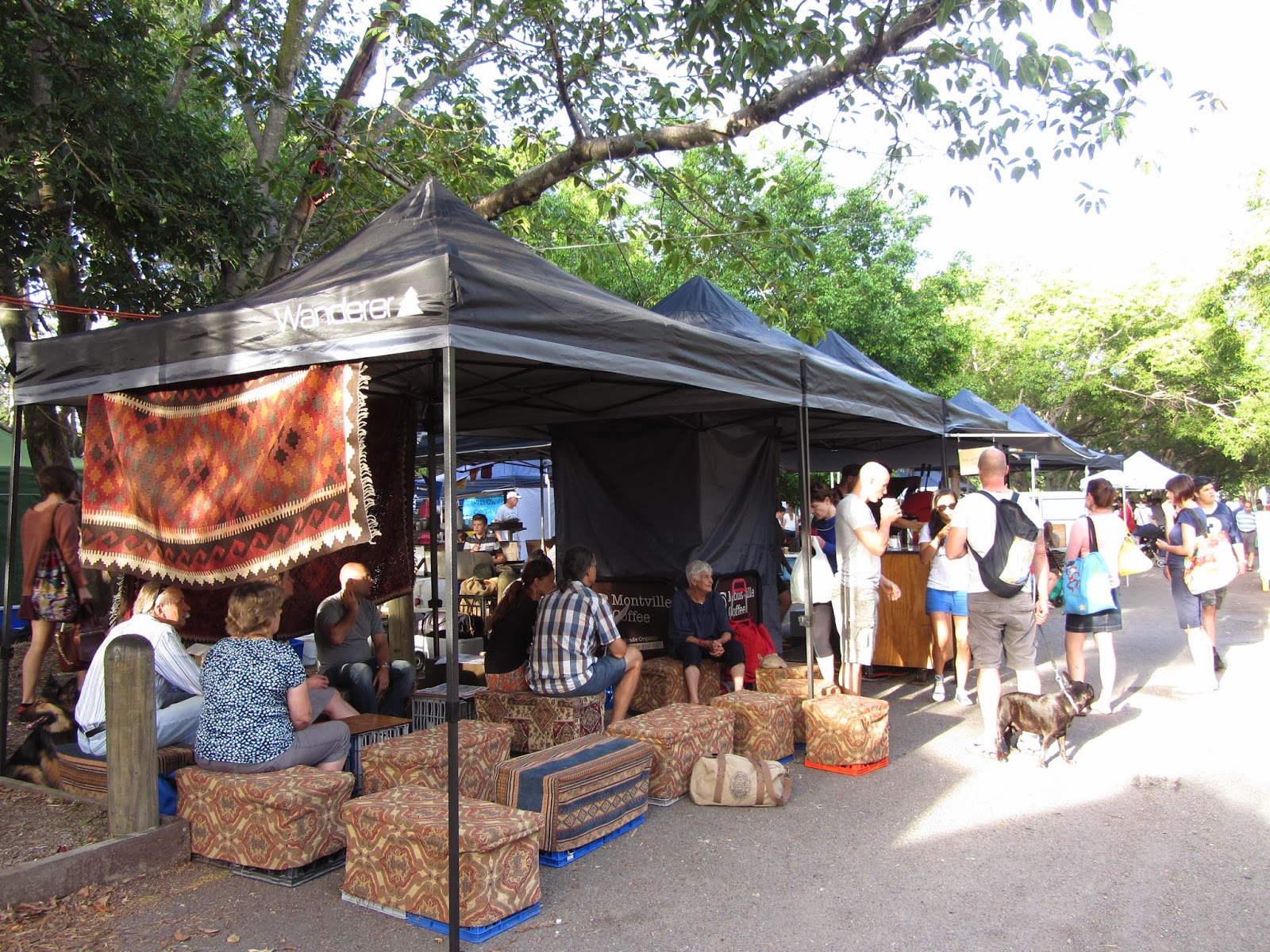
Northley Street Organic Market, Brisbane.
This open market provides ample free opportunities for informal socializing 


In a blog this past summer Tarah referred to such places as “third places” — places where people come together, meet and socialise.

In today’s digital era we hardly ever associate a hotspot with anything else than digital connectedness. In truth, connecting online through our devices rarely creates a true and authentic sense of connection. 

What if we intentionally created “community hotspots” and “community hot-times”, designated places and times away from digital devices and purely focused on in-person human connection? What if we intentionally adopted digital fasts as a way of restraining ourselves from digital devices (especially social media), for a specific period of time in favour of real human connection?


Old's Cool General Store, Toronto.
This convenience store opened up the sidewalk with tables and umbrellas as a meeting place


My wish for all of us is that we enter a new year more intentionally and reflect on what brings us closer together with others. For me that includes spending time in nature, connecting with people in real life, and less time staring at dopamine-generating/energy-draining digital devices. 

A true hotspot should be about community and it should bring us closer together, not further apart.

Happy 2023!


Wednesday, December 21, 2022

Night safety in Sebring - street & sidewalk advocacy

Sebring, Florida - sometimes, getting residents to start working together on street safety begins with a lighting contest and decorating docks for a Christmas boat parade


GUEST BLOG: Jason Tudor is an urban planner and SafeGrowth practitioner living in Florida. Jason was a facilitator of the successful SafeGrowth project in the Hollygrove neighborhood of New Orleans. He is also a co-author of SafeGrowth: Building Neighborhoods of Safety and Livability. In this blog, Jason describes Safety Audits and street activation in his home city.


When I participated in my first safety audit with the SafeGrowth team in 2009, I felt the same thrill many first time SafeGrowthers feel when rational analysis of a space replaces the fear of it. Safety audits have appeared in this blog before. 

For many of us who do not have an academic or professional background in criminology, crime and the fear of crime are so overwhelming that one feels helpless to do anything about it. During a safety audit, you dissect what might seem like a dark street corner with shadowy figures and analyze the lighting, territoriality, and social cohesion. The audit helps residents apply an analytical tool as a way to help them see that crime and fear are not insurmountable.  

I recently leveraged tools like the Safety Audit to help organize my neighborhood in Sebring, Florida.  


SEBRING, FLORIDA

Sebring is in the center of peninsular Florida about an hour south of Orlando. It was developed in the 1920s and it is one of Florida’s most rural cities that services acres of surrounding ranches and orange groves. After moving to Sebring in 2020, I quickly learned the town was still traumatized by the 2009 financial crisis. Half-built neighborhoods and closed shopping centers were common throughout the county of about 100,000 residents. 

Although my immediate neighbors were friendly, Sebring is very insular. It is planned around a large circle and the city radiates out on an arterial spoke system. Residents kept to themselves but were not shy about sharing their bitterness about a town still economically ravaged while Miami, Tampa, and Orlando were booming. Sebring is also still reeling from a mass shooting at a local bank in 2019 in which five people were murdered.

As I met more of my neighbors, I was struck by the comments about how Sebring used to be something, but isn’t anymore. Most Florida towns have had the charm paved out of them by Florida’s Department of Transportation with their ever-expanding highways. The main street leading to the downtown is now a four-lane highway without trees, crosswalks, or bike lanes.  


Sebring Fire Department got in on the community efforts
and lit up their station for the first time


As a planner and SafeGrowth practitioner, tools like the Safety Audit have helped me reframe my thinking about how I interact with space. The feeling of loss and hopelessness in many Sebring residents were the same feelings I saw years ago when I worked in a neighborhood with a violent crime problem. I knew that changing a neighborhood begins with simple steps but what was missing in Sebring was a spark to ignite residents to take action. What was that spark?


THE HOLIDAY DECORATIONS SOLUTION

My first Christmas in Sebring provided the answer. While driving downtown I saw several men setting out decorations. Within a few days, the little town circle transformed into a sparkling decorated Christmas village. The next weekend I heard boats on the town lake blowing their horns to announce the arrival of the town’s holiday boat parade. The following week the city hosted its annual Christmas parade with crowds along the parade route. These were all volunteer-organized events without any commercial or governmental support. 

Then it hit me! This town loves Christmas, but you wouldn’t know it by walking along residential streets outside the circle. Houses and businesses were dark during the holidays. What better way to meet your neighbors and get more people involved then having a friendly competition to encourage residents to decorate their houses and businesses.  

The following year I met with neighbors and asked if they would help organize a neighborhood holiday decorating competition. Six of us met at the local Elks Club and came up with Light Up Lake Jackson. 

The residents, many of who had never met although they lived in the same neighborhood most of their adult lives, wanted Light Up Lake Jackson to encourage participation through a holiday lighting competition.   

One of the committee members offered to help us contact residents who lived along the main street. Another resident offered to design and decorate postcards, yard signs, and flyers. I built a website and everyone knocked on doors to hand out flyers talking about the competition. In just a few months, six residents had a complete plan for a neighborhood holiday decorating contest.  


The lighting decoration Christmas contest idea took off among residents.
It led to changes in street activation and also roadway safety

RESIDENTS RESPOND

The response from the neighborhood was incredible. We got 27 entries in that first year with residents decorating their palm trees, apartment buildings, churches, and docks on the lake. The dark streets of Sebring during the holidays began to light up. The success of Light Up Lake Jackson encouraged the committee members to do more the following year. 

The next year the residents recruited more neighbors to volunteer. Local civic organizations created a calendar of activities to connect existing activities with new ones, activities that included a Christmas market, a Christmas festival, food trucks, and live music. The committee hosted another light-up competition which brought some of the most over-the-top decorating the neighborhood had ever seen.

As residents walked around town to see the lights they noticed how unsafe the streets felt with the four lanes of traffic speeding through town. According to one resident, it was a “shame” we can’t safely cross the street when walking to enjoy the Christmas lights. The neighbors asked to meet with the city to find out how to calm the speeding traffic. This led to the Florida Department of Transportation recommending a speed reduction and prioritizing the street for wider sidewalks, crosswalks, and bicycle lanes.  

The SafeGrowth philosophy is premised on the collective power of activated residents driving change in their own neighborhoods. Getting residents to recognize their collective power is the first step. Finding a reason, like a Safety Audit, to bring your neighbors to the street and see their neighborhood from a different perspective is all you need to do. The collective imagination of residents is a powerful force.