Showing posts with label hotspots. Show all posts

Saturday, July 15, 2023

A voice from the past warns... Do not misclassify risk!

A Netflix documentary on the serial murders in Long Island, New York. 
Shannon Gilbert may have been one of his victims.


by Gregory Saville

This week, I resumed Zoom meetings with my fabulous writing team, Mateja Mihinjac, Jason Tudor and Carl Bray. Since Covid began, we’ve been writing a book on SafeGrowth. We are now about to launch the final phase in publishing what has been an exhilarating journey, digging into the research, re-examining our many projects, and asking questions about the future. 

Our manuscript examines the SafeGrowth work by ourselves and other members of the SafeGrowth Network over the past decade. The book looks at how different cities attempt to prevent crime and build resilient neighborhoods. It offers a new way forward in crime prevention and urban planning. 

In one chapter, we unveil the myth that wealthy neighborhoods do not have crime because the wealthy have resources to protect themselves while poor neighborhoods, with all their crime “hotspots”, have no resources to tackle their problems. All we need, according to this myth, is more money. As we show in our book, the reality is something different. 

Consider swindlers like financier Bernie Madoff or the white-collar criminals who triggered corporate scams like the 1989 savings and loan crisis or the 2008 global financial crisis. These events, documented in The Global Financial Crisis and White-Collar Crime, destroyed millions of jobs, lives, and livelihoods. This is not the simplistic story of a drug addict robbing a corner store. It is a very different, and hidden, class of (as yet) ignored hotspots. 


Screenshot of news coverage of police investigating body drop locations on Long Island


In our book, we describe a more logical and ethical way to think about crime and prevention and we describe how SafeGrowth provides a new philosophy of neighborhood development to guide future community-building. 


SHANNON GILBERT

Two days ago, authorities in New York announced the arrest of an alleged serial killer in the famous Craigslist serial murders near Giglio Beach on Long Island in New York State. More to the point – and related to our thesis about crime “hotspots” in poor neighborhoods – this suspect may have murdered Shannon Gilbert in a wealthy one.

To say Shannon Gilbert led a troubled life is an understatement. There are reports of bipolar disorder, exposure to abuse and violence, and drug addiction in her life. Apparently, she was an aspiring singer and actor, but fate did not treat her well. She eventually became a sex worker who advertised through Craig’s List to wealthy clients. 


Police crime location map of Giglio Beach, not far from where Shannon Gilbert went missing - photo Creative Commons


Twelve years ago, I wrote a SafeGrowth blog about a possible serial murderer at work near the gated community where Shannon Gilbert fled. The story was brought to light via a late-night call to 9-1-1 by a terrified Shannon. She told the dispatcher that someone was after her. The residence she was fleeing was in a gated community in the wealthy town of Oak Beach, only a mile from Giglio Beach where the bodies of 8 other victims were later found. 


INVESTIGATION STALLED 

A year and a half later, Shannon’s body was found not far from that gated community in a marsh near the ocean.

The FBI behavioral analysis unit later concluded the available evidence did not show Shannon was murdered. Some claimed she drowned accidentally after stumbling into a marsh. A later independent autopsy contradicted those findings and suggested there were signs of strangulation. 

But there was suspicion of a serial murderer in the area since a number of young women had already been reported missing, many of whom were found strangled to death by the so-called Craigslist serial murderer. Today we know that this horrific case of murdered women includes at least 18 victims found around wealthy beach communities. 


Screenshot of a recent BBC news headline about the Long Island serial killer


WEALTH DOES NOT MEAN SAFETY

Shannon’s tragic story, and this recent arrest, reminded me of our manuscript discussion about neighborhood safety and how easy it is to misclassify where risk exists. 

This week’s arrest points to the reality of an active serial murderer at work during the time of Shannon’s death, and that he was active in a wealthy part of Long Island, New York, including the gated community where she called police for help. The truth is that the entire sordid affair took place in wealthy beach communities. In fact, it turns out the arrested suspect is an architect with an apparently normal family life living in a community 20 miles from the beach area.

It seems, at least in this case, that wealthy communities are also vulnerable to crime and potential breeders of a special sort of criminal. We write in our book that wealthy, leveraged neighborhoods do not provide an answer about how to create safe neighborhoods. Equally, we should not classify poor neighborhoods as high-risk, and beyond revitalization, simply because they have limited funds.

I concluded my blog 12 years ago by saying I hope Shannon will be found safe. As this case comes to a close, we now know she was not. Any illusion that Shannon might have held about safety in a wealthy neighborhood was shattered that night. Our book is a reminder that a tragedy like Shannon’s calls out to all of us and pleads that we must not look in the wrong place for safety. 


Saturday, December 31, 2022

Community hotspots and digital fasts - A wish for 2023

Seeking authentic human connections in a digital age - photo by israel palacio on Unsplash


by Mateja Mihinjac

I rarely watch TV, however, in the spirit of holidays, I was recently drawn into watching one of those predictable Hallmark Christmas movies. Set in a small town where everyone knows each other, idyllic streets and small family-owned shops were decorated in a festive spirit. And there would be no Hallmark movie without a romantic twist of the two protagonists who find each other despite all the obstacles in their lives and live happily ever after.

However, despite a predictable happy ending and the idyllic small-town living that is often far from reality, one takeaway from this movie was the notion of a community hotspot.

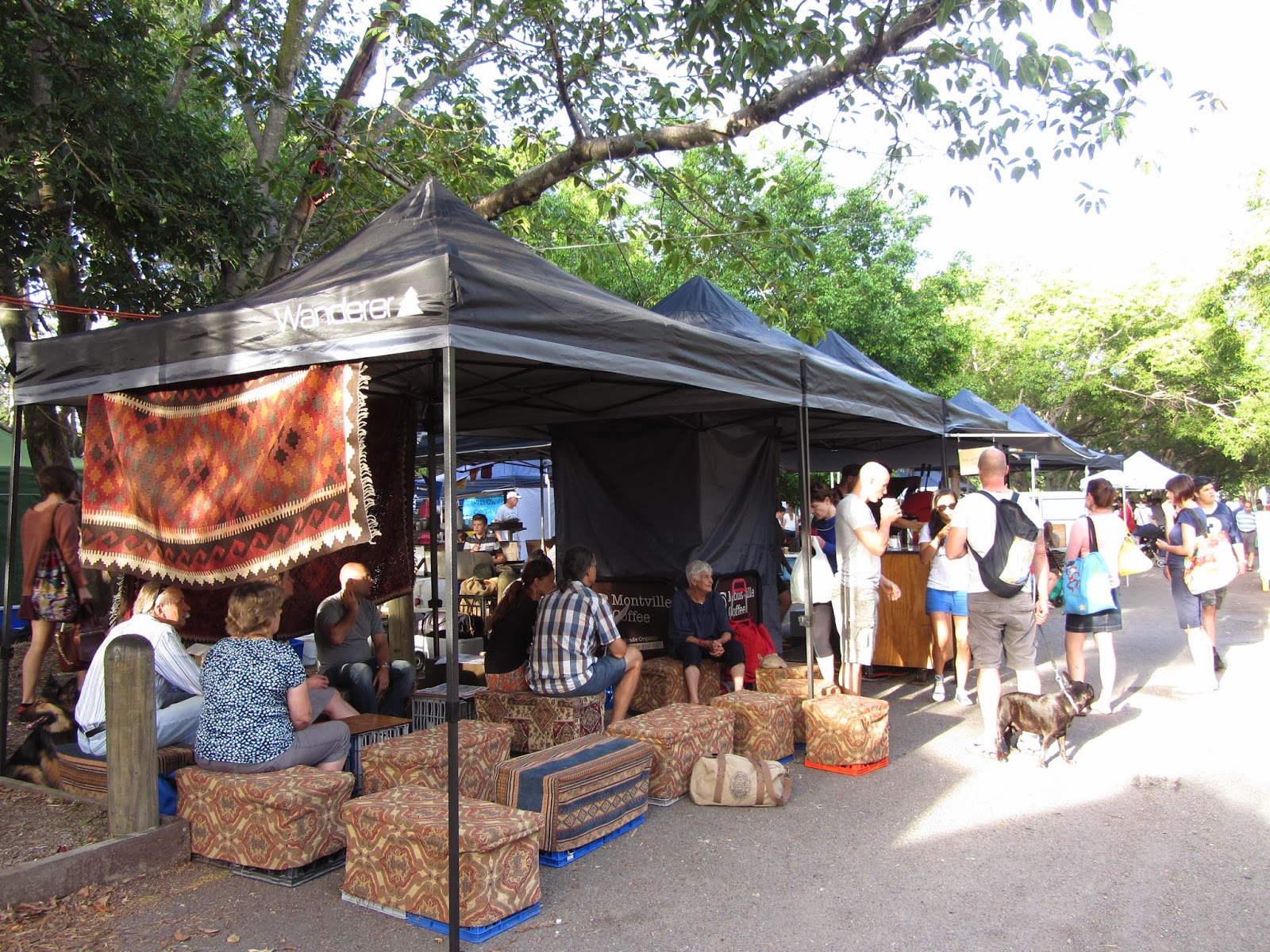
This community hotspot is not a hotspot in a digital sense where you connect your smartphone. It is also not like a crime analyst’s high-crime hotspot. In this film, it refers to a long-standing town cafĂ© where local residents from all walks of life regularly meet, both intentionally or accidentally. 


Northley Street Organic Market, Brisbane.
This open market provides ample free opportunities for informal socializing 


In a blog this past summer Tarah referred to such places as “third places” — places where people come together, meet and socialise.

In today’s digital era we hardly ever associate a hotspot with anything else than digital connectedness. In truth, connecting online through our devices rarely creates a true and authentic sense of connection. 

What if we intentionally created “community hotspots” and “community hot-times”, designated places and times away from digital devices and purely focused on in-person human connection? What if we intentionally adopted digital fasts as a way of restraining ourselves from digital devices (especially social media), for a specific period of time in favour of real human connection?


Old's Cool General Store, Toronto.
This convenience store opened up the sidewalk with tables and umbrellas as a meeting place


My wish for all of us is that we enter a new year more intentionally and reflect on what brings us closer together with others. For me that includes spending time in nature, connecting with people in real life, and less time staring at dopamine-generating/energy-draining digital devices. 

A true hotspot should be about community and it should bring us closer together, not further apart.

Happy 2023!


Tuesday, April 26, 2016

The sky-people and two-way streets


There is a group I call the storytellers-in-the-sky. They are researchers who tell stories of predicting and analyzing crime from the vantage point of far above the reality on the street - usually employing Big Data to slice and dice stats and find some mysterious crime patterns that will, presumably, help us resolve crime.

We’re still waiting for that last part. In the meantime there are others who do street research - action research - the hard work that makes a difference block by block. Evaluations of this action research is slower to arise and tedious to collect. But it is promising and shows real results.

Now and then, the sky-people and the street people meet up. Such was the case with some decent research lately uncovering what street research types like SafeGrowth and CPTED practitioners have been saying all along! If done properly, converting one-way streets to two-way streets cuts traffic speeds and crime at the same time.

TWO-WAY STREETS

A recently published online study in the Journal of Planning and Education Research shows how to reverse unsafe conditions on one-way city streets. And even though traffic flow increased on the two-way converted street, traffic accidents went down.

The study, Two-Way Street Conversions discovered road safety improved with two-way streets and simultaneously revealed impressive crime declines in both auto thefts and robberies by over 30 percent.

Two-ways vs one-ways to cut crime
Action-based research like that is exactly what we need to transform neighborhoods. We don’t need more macro, sky stories, for example research trying to figure out if crime is a social epidemic.

The epidemic hypothesis is simple, if duh-inducing: A high crime area infects nearby neighborhoods like a virus which, if untreated, spreads to other neighborhoods.

It’s the obvious implication that gets sky-like: To fix the situation we need to come up with a vaccine to protect unaffected neighborhoods. Presumably we then treat the sick neighborhood with some preventive cure. I’m not sure if that’s exactly how the sky-plot goes but if so, I’m reminded of Sheldon’s line from Big Bang: Bazinga!

CRIME BY INANIMATE OBJECTS

Sadly, sky-storytellers see crimes as inanimate objects with no social history. They call them crime generators and crime hotspots, presumably to better measure such things and remain objective like the scientist studying the lab rat. Hotspots and crime generators are real things of course, but they definitely do have a cultural and social history not to be ignored.

More to the point, crime generators are places like fast food restaurants frequented by the indigent and drug addicted looking for cheap food. Crime hotspots are places like taverns frequented by the poor and jobless looking for alcohol-relief.

The message lost on the storytellers-in-the-sky is that the conditions creating such places are the very conditions that trigger both crime motives and opportunities in the first place. That’s the message of action-researchers and it’s as simple as a two-way street.