Showing posts with label toronto. Show all posts

Monday, August 17, 2026

The curious case of the falling murder rate

Toronto, Canada - Toronto's metro is generally considered among the safest in North America, with a combined population of 7 million and a total homicide rate of less than 1 per 100,000 - photo Tamjeed, Pixels


by Gregory Saville

Two years ago, I wrote A Shot in the Dark: Murder Under U.S. Presidents about crime statistics and the curious habit of politicians taking credit when crime falls and blaming someone else when it rises.

This year, as has been the case since the 1990s, the U.S. homicide rate has continued to fall, aside from a blip during Covid. I have been writing about crime rate trends for 15 years. Five years ago, I wrote In the peaks and valleys of crime. And now, having read the latest about declining homicide rates, here we are again. 

This time, before anyone takes credit, and before researchers delve into potential causes like tough laws, crime crackdowns, more security cameras, or goodness knows what, let’s take one extra step! 

Let’s not tune into the ideological bleating about tougher incarceration or the enforcement of illegal immigration. Let’s do a little experiment. Let’s look elsewhere and consider what has been happening to homicide outside the U.S.


San Francisco, California. "The Bay" metro area comprises numerous jurisdictions just under 5 million population. Its combined homicide rate is 3 per 100,000 - three times higher than Toronto.


THE EXTRA STEP

Criminologists often use homicide as one of the more reliable measures for comparing crime trends. I have written previously it is not perfect. All official crime statistics are surrogates for a much more complicated reality, and reporting and recording practices differ. But homicide suffers less from the non-reporting problems than other crime statistics.

That makes the North American comparison interesting.

Between 1990 and 2007, homicide rates (the number of homicides per 100,000 people) declined in all three North American countries:

  • Mexico: 17.3 → 8.1 = 53% decline
  • United States: 9.3 → 5.7 = 39% decline
  • Canada: 2.37 → 1.82 = 23% decline

Therefore, by the end of the 1990–2007 period, Mexico's homicide rate was actually below the homicide rate the United States had experienced during its own peaks.


Numerous sources were drawn for this chart, including: Canada — Statistics Canada, Homicide Survey, Table 35-10-0068-01; the United States, FBI Uniform Crime Reporting data; The United States, FBI Uniform Crime Reporting data; U.S. Bureau of Justice Statistics - Homicide Trends in the United States; the UNODC Intentional-Homicide Series, distributed through the World Bank; and the Mexican historical series data.


Three countries with very different governments, policies, policing systems and social conditions. All experiencing substantial homicide declines during roughly the same period. Most strikingly, Mexico experienced the largest decline of the three! 

I wrote a while back that we should not do what Mexico is doing. This suggests I was wrong!


Mexican military in Michoacan, activated in the War Against Drug Trafficking - photo Diego Fernandez, public domain, via Wikimedia Commons


THEN THINGS CHANGED

Then Mexico's rate explodes in 2007 from 8.12 to 23.5 in 2011. What happened? 

Beginning in late 2006, the Mexican federal government launched a massive police and military crackdown against the drug cartels. The decades-old cartel ecosystem destabilized, traditional cartels fragmented, rival groups fought over territory, and homicide exploded. In 2015, another crackdown destabilized the situation again.  


Mexico City - the capital of Mexico has over 20 million population and the city proper 9 million. The homicide rate in the city proper is 8 per 100,000, over twice that of San Francisco and eight times higher than Toronto - Photo Alcantara, Pixels

The upshot was after declining for almost two decades, Mexico's homicide rate nearly tripled within a few years. This unintended consequence of state action is well documented by numerous sources, including Oscar Contreras Velasco


MEANWHILE, NORTH OF BORDER... 

All this time, Canada continued its long-term downward trajectory just like the U.S. Except for a blip during Covid, the homicide rate in both countries declined. Now, Canadian and American homicide rates have again fallen dramatically in step with each other. 

This is in spite of the fact that Canada has no U.S-style community violence interrupter programs, growing incarceration rates, nor immigration crackdowns. Yet the homicide rate still declines. In spite of the fact that Canadian police have generally cleared a substantially larger proportion of homicides (70%) than police in the United States (54%), both U.S. and Canadian rates decline.

As for Mexico, note that, after the 2007 – 2017 decade of murder, homicide rates there too are falling as well, just as they were prior to the decade of murder.

Setting aside the 2007-2017 decade of unintended consequences, Mexico, Canada, and the newest U.S. figures simply add another chapter to that same story that has been going on in all three countries for a very long time.


With the exception of the Mexican decade of Murder, homicide rates in all three countries had an overall declining pattern - sources in above graph 


HOW CAN THIS BE? 

Here is the question this extra step asks: How can three different countries with very different governments, criminal-justice systems and social systems end with the same homicide reduction trend?

Let's be clear: Leaders make decisions that matter and governments implement policies that can help or hurt. Yet when similar declines appear across borders and across governments of very different political stripes, perhaps we should be cautious about congratulating the person standing beside the graph.

Here is a more interesting question: What does the graph itself tell us?

Homicide has been declining for a very long time. The crime decline began in the early 1990s and continued under leaders of all political parties and in different countries. Canada and the U.S. experienced similar long-term declines and in 2025, their homicide rates fell again.

None of this means governments and presidents are irrelevant. Policing, prevention, economics, demographics, and countless other factors matter.

Maybe macro trends within societies over the long periods of time affect crime trends beyond borders, governments and political parties. And maybe those kinds of trends are not found in national crime policies or statistical blips.

Perhaps leaders deserve a little less credit, and criminology deserves a little more curiosity.


Monday, May 2, 2022

New principles for building safe neighborhoods


Bloomberg study on Intersection Repair tactical urbanism 

by Gregory Saville

I recently spent time in downtown Toronto and found some great street designs, including Dundas Square - a walkable/event square surrounded by flashing billboards and shops of all sorts. It is like a kind of mini-Times Square, following the pedestrianization of former New York planner Janette Sadik-Khan.

Between the flower pot decorations, the latest tunes from loudspeakers and an evangelical huckster announcing his wares on one side, and a fashion photographer capturing the stylish gaze of his model on the other, Dundas Square seems chaotic at one glance and at another, deliciously exciting. It might generate plenty of activity, but there is nothing inherently crime-generating about this downtown corner. 

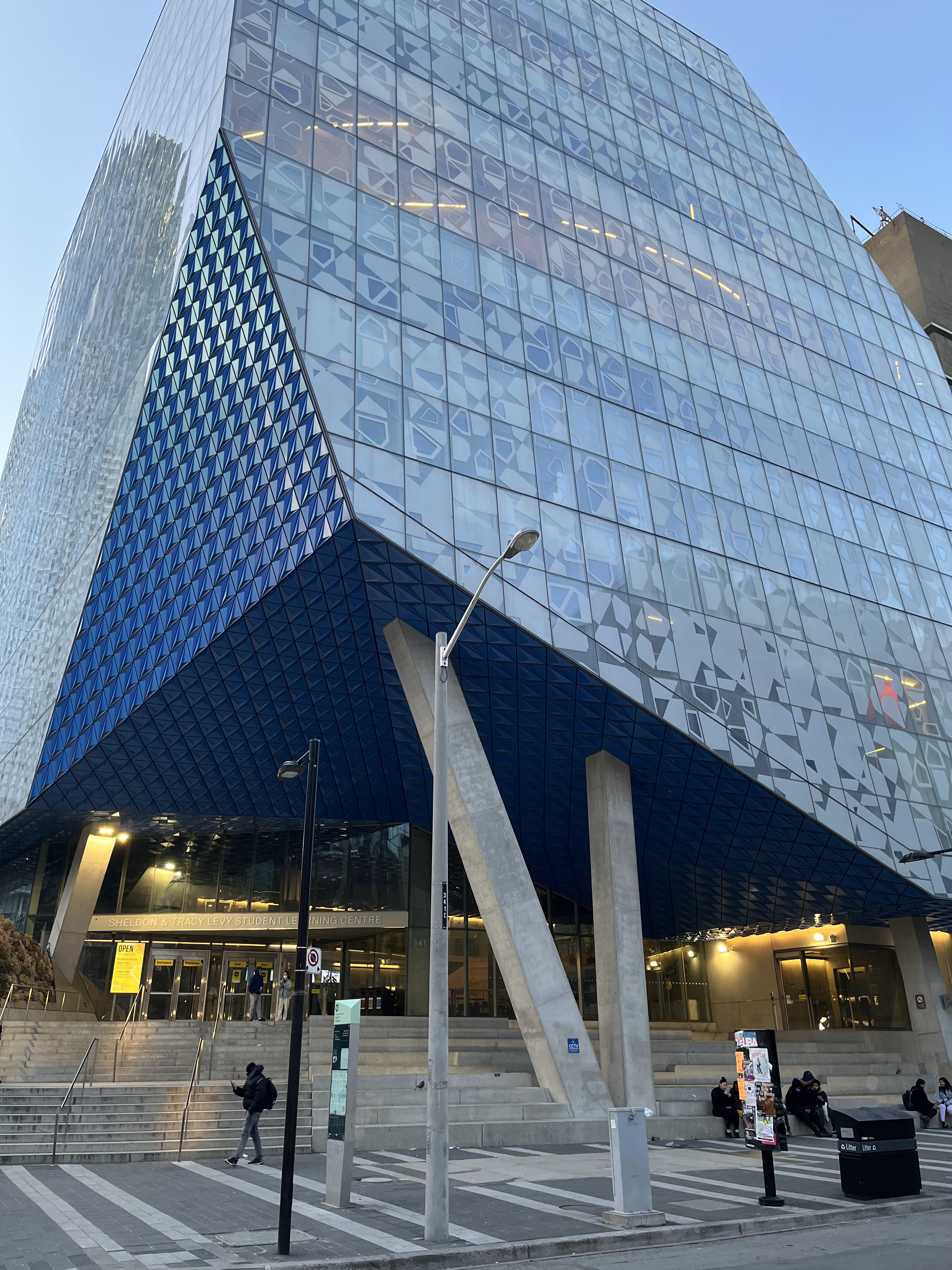
Unique Toronto architecture near Dundas Square


Dundas Square is an example of two ideas in SafeGrowth related to community design that have a huge impact on safety – or the opposite – and yet we seldom use them when we aim to build livable and safe places. 


SOCIAL STABILIZERS & CRIME DISRUPTERS

One is the concept called social stabilizers. The term was first coined as part of neighborhood livability in the late 1960s. The idea originally referred to people whose presence and activities help reduce disorder in a neighborhood. Today we draw the term from 2nd Generation CPTED to refer to safe congregation areas for pro-social activities and balanced land uses that minimize places that can tip an area into higher disorder or crime. 

The other concept is called crime disrupters - a term that is related, but different, from stabilizers. While planners can design social stabilizers into new neighborhood plans, for those who live and work in a community, it might be too late to add new designs. So they can use crime disrupters to alter problem areas. 

Street furniture, flowerpots, and plenty of
pro-social activity - stabilizing a downtown area


One example of crime disrupters is pop-up placemaking, sometimes called tactical urbanism. Because it is done by local residents, shop owners or property managers, tactical urbanism cannot only disrupt crime but also stabilize the safety of an area. 

I recently received a Bloomberg research report from my architect friend Mark Lakeman about the stabilizing effect of intersection repair programs on traffic accidents and neighborhood safety. 

Stabilizing neighborhoods and disrupting crime is as much a part of urban design and community building as any other activity. As we create livable communities, and as crime rates rise in our post-Covid era, we should tap into the urban design and community-building tactics at our disposal.


Saturday, July 13, 2019

We the north - Twenty years later

The pedestrian entranceway built at San Romanoway

by Gregory Saville

Some high crime neighborhoods seem to remain that way forever, like a horror film that won’t end. Grandparents in those places share flashbacks with their grandchildren about ‘the old days’ of gangs and guns, while their grandkids still face those same neighborhood profanities decades later!

There is a theory in criminology called ‘deviant places’ that goes something like this: High crime neighborhoods persist for decades regardless who, or what generation, lives there.

Yet the San Romanoway apartments in north Toronto, a place we revisited a few months ago, is living proof the deviant places theory needs rewriting. It should be called the ‘reclaimed places’ theory because, if you know the incredible success at the San Romanoway neighborhood, you’d know that those chanting ‘it will never change’ are wrong.

Locally-led, non-profit, SRRA - two decades of community-building

SAN ROMANOWAY - HISTORY OF CHANGE

Read the history of SafeGrowth and you will learn that in 1999, not long after we created 2nd Generation CPTED, Gerard Cleveland and myself were asked to work with an urban design and crime prevention team to review conditions at a high crime apartment complex in the infamous Toronto Jane/Finch corridor. This was the San Romanoway apartments, a story that I published a decade ago, and now consider an embryonic version of SafeGrowth.

Food programs in the community dining hall
Since those early years, plenty has happened at San Romanoway where 4,000 residents live in 3 huge apartment towers. Most significantly, the crime and violence that plagued that troubled community has subsided considerably. It hasn’t vanished – last year they had a homicide. But, as SRRA program manager Cathy McCulloch told us, that was a rare event. In fact, on whole, crime is down and livability is up. It's a far better place than what we found 15 years ago during interviews and surveys. San Romanoway is no longer a horror movie; it’s a coming-of-age film about turning night into day!

Childrens play areas and sports programs are still thriving
Credit goes to the residents and the local organizers who have done all the hard work to transform the neighborhood, especially the non-profit, San Romanoway Revitalization Association (SRRA) – a group that still chases funding dollars but, somehow, keeps many of the programs running. Sadly, it hasn’t kept them all running and it hasn’t been easy! They have faced financial cuts, labor disputes, and defunded programs. As one of Canada's most successful crime prevention and community-building projects ever accomplished, they still don't get nearly the funding they deserve!

SRRA program manager Cathy McCulloch shows off
art by local photographers - a celebration of life at San Romanoway

In spite of it all, somehow, the SRRA persists and residents, along with leaders from the property owners, community leaders, and police, keep disproving the ‘deviant-places-never-change’ theory. As the photos from our site visit illustrate, places can change.

Toronto basketball fans just celebrated the 2019 national championship Toronto Raptors with a “We The North” chant. I’m reserving my chant for the supporters, leaders, and members of the SSRA. You are truly "We The North"! You rock!

San Romanoway community gardens at the start of planting season

Saturday, March 31, 2018

A tool for the archaeology of fear

Safety Audits examine the nighttime city

by Greg Saville

They link neighbors in common cause against crime and they collect data to build fear maps in ways never before possible. And yet community Safety Audits are among the most misunderstood, and misused, tools in CPTED. 

In 2005 the United Nations Habitat program recommended the Safety Audit as a method to assess street crime and fear around the world. Safety Audits originated in the 1980s as a method to assess safety in bus and subway stops during the infamous Scarborough serial rapist crimes in suburban Toronto (ending with the arrest of serial murderer/rapist Paul Bernardo and his wife Karla Homolka).

I took part in those original Toronto Subway Safety Audits in 1988 and published a study about their power to unify residents as they record their perceptions of the neighborhood at night. Properly facilitated and staffed, Safety Audits are unique and empowering and they collect information not available on standard fear of crime surveys.

Parking lots are a frequent target of Safety Audits
MISTAKES

The first mistake is to think Safety Audits are the same as CPTED surveys or visual inspections for crime prevention. CPTED surveys work well on buildings and streets to assess crime opportunities in the nooks and crannies of everyday places. But CPTED experts cannot conduct a properly implemented Safety Audit; rather they can only facilitate residents. It is the native intelligence of residents that is recorded in a Safety Audit, not the assessment of an expert.

Some think Safety Audits are the same as a community walkabout, a Jane’s Walk, or Night-Out-Against-Crime. Those are not a systematic and coherent data collection activity like a Safety Audit.

SAFETY AUDITS ARE DIFFERENT

Authentic community Safety Audits:
  • Use a small group of locals to answer audit questions
  • Are generally conducted at night 
  • Are conducted within a 75 yard/meter radius of a location and then move to other locations to audit an entire area
  • Include women since they experience the night environment different than men.

Police, residents, CPTED facilitators, and others participate in Safety Audits

Unlike CPTED surveys, Safety Audits extend beyond the physical environment and hone in on social factors: How involved are local residents about their neighborhood? What is the history of this place? How might local residents help improve conditions? 

The latest versions of Safety Audits use computer tablets and GPS enabled software to more accurately record fear and map perceptions. A few years ago I recorded a VLOG with LISC Safety coordinator Mona Mangat on how to conduct a proper Safety Audit.  

Safety Audits are the ideal tool for crime archaeology – they help residents dig up fear and perception discoveries of their nighttime city that may be invisible in other crime assessment methods. 

Tuesday, July 5, 2016

Cities provide something for everybody...when they are created by everybody


Toronto neighborhood corner store - re-imagined
Today is America's Independence Day - the time for celebrating a government by and for the people. Sadly, local governance seems a long way off in the rhetoric that comprises this election season. So for solace, I turn to local governance on the street in the form of placemaking.

There are plenty of amazing street designs, laneway experiments, and examples of tactical urbanism that enliven and activate the street. The more people who walk and enjoy what Jane Jacobs called the street ballet the easier it is to humanize our neighborhoods and reduce fear and crime. This is the magic that is placemaking.

But did you ever notice how some versions of placemaking seem too expensive for the average person? Who has the time or money to redesign a laneway or install fancy lights, landscaping and pavement treatments?

LOOK TO THE LOCALS

An answer surfaced on recent trips to Toronto and Colorado Springs. The former took form in a small corner convenience store in a Toronto residential neighborhood.

Sitting areas, barbeques, relaxing space for socializing - A corner store with a purpose 
After suffering a burglary last fall and installing window bars, the owner decided to explore some inventive placemaking of her own. She transformed the front and side of her shop into a mini-market and outdoor gathering place and then invited locals to enjoy.

Inside the store she brings in local artists and artisans with samples of their work. With a vested interest in seeing their own work, and the chance to visit with others, locals and families frequent the corner store and create their own neighborhood nexus with very little cost to the storeowner.

Walls for local artists to show their stuff - free of charge!

LANEWAY LIFE

Another answer appeared along a downtown laneway in Colorado Springs. In this case locals used color and paint to enliven an otherwise dead space.

Colorado Springs laneway made fun with paint highlights
Rather than an alley with dead spaces, poor lighting and droll walls, these shopowners painted walls, installed local art, and used overhead colored LED lights to bring some energy to the space. When a few people located their shops along the alley, the space turned into a social gathering place.

Dull wall space transformed with paint
It really is not difficult to trust locals and work with them in coming up with ways to turn spaces into places. Jacobs said it 50 years ago: “Cities have the capability of providing something for everybody, only because, and when, they are created by everybody.”

Adjacent restaurant getting in on some laneway action with colorful ad-art

Wednesday, December 16, 2015

Why go downtown at all?

Shanghai at sunset, as seen from the observation deck of the Jin Mao tower.
The sun has not actually dropped below the horizon yet, rather it has reached the smog line. Photo Suicup - Creative Commons 

Unpleasant, polluted, and uninteresting downtowns trigger an exodus of legitimate eyes on the street. Without that it's impossible to achieve a critical mass of fun things to do: play chess in the park, go to bars, bicycle to music events, lounge on street furniture, listen to music from buskers, and people-watch during a relaxing stroll.

What empties downtowns?

For one thing, pollution. This week, yet again, there were more headlines about life-threatening smog choking Chinese cities, smog that comes from, no surprise, polluting industries and millions of gas guzzling, carbon emitting vehicles.

Madison Square Gardens streetscape. New York has worked on improving the downtown experience. Colors and lights play an important role. 

Tied to air pollution is suburban sprawl, another poison to downtown life. Bound as it is to excessive driving and greenhouse gas emissions, American sprawl triggered the exodus from downtowns and led to inner city crime.

Today a friend sent a YouTube of a historic video from the 1960s. It tracks the genesis of the expanding suburbs long before we knew the impact of large expressways and acres of free parking on acres of asphalt surrounding thousands of new shopping malls.

Toronto enhances the downtown pedestrian experience with modern and attractive light rail options. Photo Kallan Lyons

The video shows life at the very beginning. City centers were in rapid decline, crime was skyrocketing, and after a decade of romance with drive in eateries, there was a new love affair with convenient drive-in everythings. Nobody walked anywhere!

It was the beginning of the sprawl generation. The video is set in St. Louis. Ferguson is a 17 minute drive away. How little some things change.


Sunday, June 14, 2015

Toronto tops safe cities index - but should it?

Night in Toronto - Rated best?
GUEST BLOG: Kallan Lyons is community development coordinator for a Toronto non-profit organization that provides affordable housing and support services for the homeless. In 2013 she spent six months in Ghana as a media trainer at the African University College of Communications. Prior to that she was contributor to the editorial board of the Whig Standard, the daily newspaper in Kingston, Ontario, and a reporter for Queen's Television. She has also blogged for Journalists for Human Rights.  

*****

This year The Economist ranked Toronto one of the best places to live in the world, topping the charts in the 2015 Safe Cities Index.

I’ve called Toronto home for the past three years and recently moved to a newly gentrified neighbourhood in the west end. Crime rates have dropped and the local mall and subway station have been revitalized. Dufferin Station commuters now boast about the beautiful glass building and well lit buses that give their neighbourhood the glam it never had.

Interior wall foyer of new Dufferin Subway station
A 2009 survey revealed that 93 percent of Canadians feel safe from crime, and thus immune to crises in the United States such as the 2012 mass shooting in Aurora, Colorado.

Yet in 2012 an armed man opened fire at a downtown Toronto mall killing two people and injuring several others. One woman who escaped was a young American who blogged: "Gun crimes are fairly common where I grew up in Texas, but I never imagined I'd experience a violent crime first hand." Tragically she was killed in the Aurora shooting just months later, a fate she almost encountered in Toronto.

STREETCAR SHOOTING

In 2013 Toronto again made national headlines. In my own recently gentrified neighborhood police shot to death an 18-year old Syrian man – Sammy Yatim – while he was alone on a streetcar after he drew a knife. What resulted echoed the aftermath surrounding the shooting in Ferguson. Torontonians erupted into a public outcry. Support poured in for the victim as faith in those who safeguard our community dwindled.

The result was a second-degree murder charge for the officer who killed Sammy Yatim.

This all emerged during a controversial "carding" program – contact information cards filed by police after street checks. Many minority community members denounce carding as a racially discriminatory program.

Toronto's revitalized Dufferin transit station
Safety is not just about gentrification. It’s about community and collaboration. There needs to be more community driven action and dialogue. Toronto may be rated one of the safest cities but we have a long way to go before public trust in our police is restored.

Friday, October 26, 2012

The un-planning of crime coolspots

Graffiti and murals at home together - Toronto's Annex

Sometimes a successful neighborhood just grows organically with gentle nudging from planners. It isn't really planned. In fact, Jane Jacobs tells us, the best neighborhoods rarely are.

At this week's International problem-oriented policing conference I mentioned to my audience they should begin understanding prevention not by analyzing high-crime hotspots, but rather by looking at low-crime coolspots. Those are the places where we learn what to do right.

Toronto's Annex neighborhood, where I strolled today, is the proof. Well-known in the city, it is a busy, sometimes gritty, and successful neighborhood. It is neither trendoid and expensive like The Beaches in the south, nor coiffured and rarified like wealthy Forest Hill to the north.

Bikes dominate, cafe patrons keep an eye

There are street people and graffiti. But the graffiti is artistic and interesting and the street people seem less desperate than elsewhere. It's certainly not a crime hotspot.

Shops, restaurants and bookstores line the street for students and tourists. Grocery stores, postal stations and dentist offices mix in for locals. There are street watchers from sidewalk cafes, proliferate bike racks, and lovers glancing down from rooftop perches between smooches. There's just enough disorder to make things interesting and just enough eyes on the street to make it safe.

This is where Jane Jacobs lived most her life. I can see why.

Lovers gazing on the sidewalk between smooches

Sunday, July 15, 2012

Anti-crime and government cash


A hot and muggy Toronto summer night. Crime in the city.
I'm back in Toronto this week pondering recent shootings and how things have changed in this city. Like everywhere, crime is down here too. Is shifting demographics or the economy the cause? Better policing? Crime prevention?

In 2005 Toronto experienced the "summer of the gun" - rampant shootings and gang killings. The government responded with a $200 million social development program, the so-called neighborhoods strategy. From what I can see it was implemented on a wide range of social programs, focused on high crime hotspots. No doubt some great individual stories and anecdotes arose.

Today a Toronto Star news article reports the program is running out of government cash. So local politicians just decided to refund it. Incidentally, without hard evidence.

That's right: After 7 years of operation the Toronto Star says "hard data on the campaign’s impact does not exist...They are working on a plan to track progress this time around."

What? Almost a quarter billion dollars and no hard evidence? It took them 7 years to figure out evidence is not a trivial matter?

TORONTO'S SAFEGROWTH LESSON: IGNORED

Ironically (or more to the point, intentionally) our 2000 - 2011 San Romanoway SafeGrowth project in that same city was intensely researched and tracked.

We saw crime declines, minimal displacement, and neighborhood capacity building. Results were published in scholarly journals and released for scrutiny. Now 12 years later, residents there run and fund programs themselves.

Yet, in the same city a few miles away no one thought to track nearly a quarter billion dollars for a 2005 anti-crime social program?

Next blog: A better way. Frank Zimring's book "New York's Lessons for Crime and it's Control."

Monday, May 28, 2012

Shooting sprees and neighborhood grants


Seattle sunset (photo: manleyaudit, Creative Commons)

"Too often, when there’s crime, people think ‘more police.’ That isn’t the solution.” (Jim Diers, "Neighborhood Power")


It's interesting to see a story about your new home city in the eyes of someone from your old home city. 

I just received a link from Seattle Police Sgt. Cindy Granard. (Cindy is an exceptional community cop and CPTED expert. Though no longer tasked with CPTED, she has won national awards for cutting crime with local residents and organizations like LISC). The link was to a Toronto Star column about Seattle's Neighborhood Matching Grants program. 

The columnist wrote enviously on Seattle's program that helps residents take ownership of their neighborhoods to enhance livability. Since 1988 it has distributed $49 million in grants to 4,000 neighborhood projects like building community gardens, painting murals, etc.

Toronto, says the columnist, could learn from Seattle. (I think most cities can learn from Seattle's example in this regards.)

Nevertheless, columnists can get it wrong (or, in this case, half right). City comparisons lead to non sequiturs and monkey wrenches. The grass isn't really all that much greener. 

Toronto sunset (photo: paul[dex], Creative Commons)
Monkey wrench #1 - Toronto has long been renown for over 200 distinct and lively neighborhoods, 25 in the city center alone. One reason those neighborhoods work is because Toronto has a safe, well-used street-car and subway system. Seattle, by comparison, doesn't. (Both have trolley's and light rail, though in Seattle the latter is limited to a recent line to the airport.) 

Wrench #2 - crime. Though less than half Toronto's size, Seattle's 2011 murder rate was double Toronto's (3.3 vs 1.7 per 100,000). Worse still; a rash of shootings in which, last night, Seattle suffered its 16th homicide this year (there were 21 in all 2011). Toronto's homicide rate is still falling.

In truth (shooting spree's notwithstanding) Seattle and Toronto are both relatively safe cities. In fact, Toronto had its own "summer of the gun" a few years ago. 

Jim Diers is right! There is no mystery to untangle. Because both cities focus on neighborhoods, they are both exceptional and vibrant. No doubt their exceptional neighborhoods play a big role.

Monday, March 5, 2012

Tackling vertical crime - History in the making

Resident youth composing in the new San Romanoway sound studio
Reminiscing always gives me the willies. Are memories exaggerated? Ignored? Still, now and then, a memory surfaces worth shouting aloud. I recently came across this one.

Disclaimer: Some of this is probably not even my memory - at least not latter parts of it - but rather stories of others doing remarkable work. I doubt many of them even know my name. It's doesn't really matter. It's a fantastic story for turning troubled places back from the brink. It's also probably one of the birthplaces for tactics that later became SafeGrowth.

Yesterday I discovered a recently posted YouTube (see below). It shows another success at the San Romanoway apartments in Toronto's infamous Jane/Finch corridor. I have written about San Romanoway elsewhere.

Here's my memory of the project: 12 years ago myself and Ross McLeod assembled a team to review and recommend ways to reverse endemic violence in some high crime apartment towers.

In late 2000 we wrote the San Romanoway Revitalization plan. The plan had steps for research surveys, a community association, gardens, and lots of CPTED. Community organizer Stephnie Payne was then hired to start outreach, raise funds, administer the association, and get things going. She did that magnificently. McLeod's security company worked with her to tackle crime.

The rest, as they say, is history. The video tells the latest chapter in this story.


Sunday, May 22, 2011

Solving vertical poverty


What happens when you build low income residential units upwards and not outwards? Those familiar with CPTED will recall Oscar Newman's Defensible Space work in the 1970s and 1960s describing how this is usually a bad idea.

In places that do just that sort of thing like New York, Chicago and Toronto, you end up with vertical poverty.

The United Way in Toronto has just released a fascinating study called Vertical Poverty documenting disparity in 3-D urban space. Toronto has for decades tried to make the sprawling and cost inefficient suburbs more efficient with high rise residential. Vertical Poverty tells one chapter in that sad tale.

It also describes the San Romanoway apartments solution that led to some of the earliest breakthroughs in SafeGrowth. Check it out HERE.

Saturday, May 14, 2011

Sidewalk sleeping in Toronto


I'm with a Jeckel-and-Hyde Toronto this week. Like many successful cities, in some places there are vibrant and hip streets that absolutely fizzle with energy. In others, the homeless and indigent remind us nowhere is perfect.

Homelessness shows up in my SafeGrowth blogs on Vancouver, Seattle, and Houston.


I've also posted local solutions to homelessness in Portland and Colorado.

Walking downtown Toronto this week I saw more absolute homelessness than I've seen in a long time in this city.

In 1998 mayors across Canada declared homelessness a national disaster. Since then it hasn't improved. In many other countries, like the US, it is even worse.

In 2008 the University of Ottawa's Institute for the Prevention of Crime published a study called Homelessness, Victimization and Crime: Knowledge and Recommendations - a rather sterile title that seems to understate the tragic drama of an ignored person asleep on a sidewalk grate.

Luckily the report thoroughly lays out the dimensions of homelessness for Canada and urban places everywhere.

It reveals how homeless people are more likely to become involved in, and victims of, crime (mostly minor crime like public disorder). And while many homeless are incarcerated, a high proportion suffer from mental disorders and addictions rarely treated in the prison system.

...ignored in front of City Hall

The report offers up solutions like housing, shelters, social assistance, mental health treatment, and addiction programs. It offers controversial solutions like repealing laws that prohibit children with behavioral problems from attending mainstream schools. (It's those same kids who end up on the street.)

Sadly, as a walk in downtown Toronto and most other large urban cities confirms, four years after their report too many downtown streets are still the home of sidewalk sleepers.

Solutions on the page do nothing for tragedy on the stage. We need to do more.

Read their report HERE.

[NOTE: SafeGrowth's host site, Google's Blogger, has been offline this week for repairs]

Saturday, May 15, 2010

Walkability - the first step to safety

Discovering fun things during Jane's Walks

I spent a few days this week enjoying the fascinating streets of Toronto where dozens of neighborhoods flourish in ethnic and class diversity. Treed sitting areas, fruit and vegetable stands and street performers of all kinds; thriving streets in famed Jane Jacobs' hometown (at least in the non-suburban, bicycle friendly neighborhoods between the expressways).

Every first weekend in May the Jane's Walk event shows up in streets across the city. Starting in 2007 in Toronto, the Jane's Walk phenomenon has gone viral. Over 400 Jane's Walks now occur in 70 cities around the world. They are named after Jacobs, who was the CPTED pioneer before CPTED existed (she would probably not acknowledge that). Jacobs believed that the best way to get to know a neighborhood is on foot. I think she was right.

HOW WALKABLE IS YOUR HOOD?
Check out how walkable your own neighborhood is using the Walk Score. The Walk Score website allows you to type in your own home address (no spams result later on) and find out how your own neighborhood walkability compares to other cities around the world.

You can rate walkability to amenities such as grocery and hardware stores, restaurants and coffee shops, transit stops, schools, drug stores, parks and other destinations one might actually want to walk to.

HOW ACCURATE IS IT?
I typed in my former addresses to see if it worked. For example homes in Port Moody, British Columbia and Tallahassee, Florida both rated a Car Dependent 15 - a very poor walkability score. It's true that the Tallahassee neighborhood offered nothing of walkable interest though the Port Moody home did have a beautiful bike trail near the ocean. Still, I think they both deserved low walkability scores.

My current home in a small town in Washington State scored a Very Walkable 75 which I figure is about right. It is across from a seaside park, near a bus stop and less than a 15 minute walk to restaurants, library, drug stores, and coffee shops. In fact, all but one amenity here is less than a mile away. No wonder it scores high.

Walkability alone doesn't determine safety. The website rated some highly walkable neighborhoods very accurately, such as obvious choices like Soho and Greenwich Village in New York (same as when Jacob's lived there), the University District in Seattle, and downtown Portland. Unfortunately it rated others less accurately. While Seattle's Pioneer Square scores high, my own SafeGrowth students discovered walkability there is safe in daytime but far less so in nighttime. There are other questionable choices on the walkable cities list.

Obviously, walkability alone does not determine safety. It is, however, an excellent place to start creating it.

Click here for and rate your home on The Walk Score website.

Tuesday, May 19, 2009

Lighting and crime: Toronto the beautiful


This week I spent time in Toronto, a city with a terrific downtown and dozens of vibrant and healthy neighborhoods. It is also a city with a lighting mish-mash. Bright, glaring halide lights line some streets while yellowish sodium lights line others. There seems no rhyme or reason as far as I can tell.

A decade ago local activists convinced policy folks the bright halide's were the way to go. Their research suggested halide's white color made it easy to see faces at night and reduce pedestrian fear. I’ve never been able to find those studies so I’m unclear how robust they were.

Halides are everywhere on Toronto’s streets. Frankly, in some cases their sharp and glaring impact looks awful. Someone has forgot that, as with all urban designs, one size does not fit all. Some tactics work in one place but not another. Why switch from one lighting form to another without knowing specifically what is actually needed at that place?

The lighting-for-safety debate is decades old. A famous 1981 UK study made the definitive claim that lighting did not decrease crime. Case closed! Or so they thought. Science by definition always challenges assumptions, even well established ones. Lighting studies since then have done precisely that.

In 2004 criminologists Brandon Welsh and David Farrington's in-depth study on CCTV vs lighting concluded: "Improved street lighting is an effective form of surveillance to reduce crime in public space and it has few if any perceived harmful social consequences (unlike CCTV), and may attract less public resistance than CCTV surveillance cameras." Is that the final word? Unlikely. Nor should it be.

Lighting in some places will make places safer. That much is fairly obvious. But when and where? There comes a time when practitioners must act. Smokers may, if they unwisely choose, continue to smoke regardless of the medical research showing it will kill you. Yet we still wisely legislate against media images promoting teenage smoking.

Similarly, perhaps we should start legislating for a proper crime diagnosis in specific places and then installing the proper lighting to fit? We have engineering standards for lighting levels in traffic intersections. We have the Dark Sky folks who want to cut light pollution that drowns out starlight. Why not pressure our local politicians to legislate for a neighborhood by neighborhood diagnosis of proper lighting for safety?

It is not a case of more-light-is-better. Crime is not simple. The lighting-for-safety equation isn't simple. The devil is in the details. Local ordinances and by-laws need to be carefully drafted, not in some generic fashion. But we need to act.