Showing posts with label livability academy. Show all posts

Monday, June 1, 2026

Returning to Vancouver - projects survive, but the neighbourhood worsens

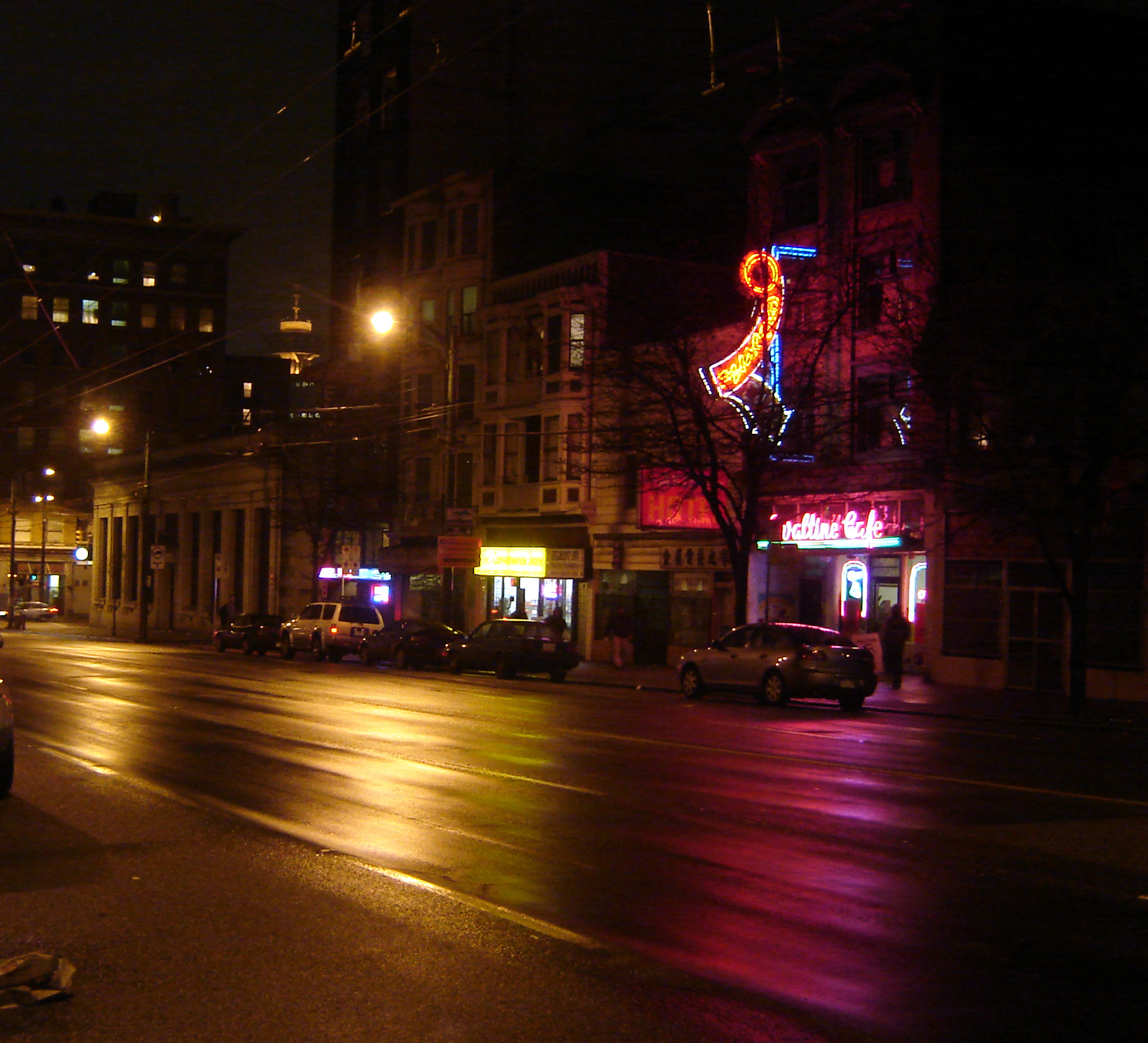
Vancouver's Hastings Street - the Downtown Eastside, one of
the most challenged neigbourhoods in Canada.
Photo CC Wiki Commons 


by Gregory Saville

This week I returned to Vancouver's Downtown Eastside, often described as Canada's largest skid row, to work with members of the SafeGrowth Network and several of the city's Community Policing Centres (CPCs). We were there to prepare local instructors for Canada's first SafeGrowth Livability Academy. 

It was a milestone. Three Vancouver CPCs participated in the training: the Strathcona CPC, the Chinese CPC, and the Aboriginal CPC. Along with their SafeGrowth and CPTED training last year, Vancouver has now become the first city in Canada to move this far along the SafeGrowth pathway.

Yet the visit was also deeply personal for me.


A PERSONAL JOURNEY

More than thirty years ago, my former business partner and I conducted traditional CPTED projects in this same neighbourhood. While preparing for this week, I looked back at some of those projects. To my surprise, many are still holding up. The lighting improvements, design modifications, and site-specific interventions remain visible decades later.

That should be encouraging. Yet I could not escape another conclusion. Those projects improved places, but they did not substantially improve neighbourhood life.


Vancouver's Chinatown is among the most exciting and
fascinating communities in the country

I found myself once again walking through areas adjacent to Vancouver's notorious Hastings Street in the Downtown Eastside. Decades have passed since I first co-taught problem-oriented policing to British Columbia police officers. Decades have passed since criminologists, sociologists, urban studies researchers, and community development analysts began studying crime, addiction, homelessness, and social disorder in Downtown Eastside. Entire careers have been built examining the Downtown Eastside. Hundreds of reports have been written. Countless interventions have been launched.

A few crime stats have been declining of late (as they have everywhere), yet the situation remains bleak on most categories. The corridor still accounts for a large portion of the city’s serious assaults and robberies. Mental health calls for police service increased, overdose incidents remain high, and from what I could see, street disorder has displaced and is spreading. And, making matters worse, homelessness has been increasing.


Homeless rates concentrated on Downtown Eastside from
the metro population demographics and annual homeless counts


The homeless numbers tell part of the story. In the early 2000s, Vancouver's homeless count was approximately 56 people per 100,000 residents. Today, that figure is approaching 200. Even after accounting for population growth, homelessness has increased dramatically over the past two decades.


WHY DON'T HOTSPOT TACTICS LAST?

For those of us who have spent careers studying crime prevention and community safety, these trends force uncomfortable questions.

Why have decades of hotspot interventions failed to produce lasting change? Why have the various social programs, such as a safe injection site or the many social service agencies here, not prevented the worsening spread of the problem? 

Why have so many individual projects succeeded, such as a recent police crackdown and our prior CPTED work, while the broader neighbourhood ecology continues to struggle?

Why has so much effort yielded so little transformation?

I could see that some of the original CPTED improvements we helped design are still functioning. Yet, standing on Hasting Street today, it felt like our earlier work was all for naught. It brought to mind three principles in SafeGrowth planning: 

  • Neighbourhoods are more than collections of hotspots
  • Communities are not simply the sum of their crime locations
  • A city cannot solve deeply embedded social problems by repeatedly treating symptoms while neglecting the health of the larger social ecosystem.


The Downtown Eastside remains home to thousands of people living
with addiction, homelessness, mental illness, and profound social isolation. 


A NEW THEORY ON COMPLEXITY

Since last year I have been working with new colleague, a talented oncological medical researcher, regarding complex adaptive systems. We are studying the power of these systems, (like the Downtown Eastside), and how they exhibit distributed adaptive behavior near critical thresholds. It now seems possible this may be the reason why street disorder continues to displace and spread in spite of enforcement actions. We have learned how small perturbations can produce disproportionate, scaling-law effects that deteriorate stability. This, in turn, may explain why complex adaptive systems such as tumors or high-crime neighbourhoods resist interventions rather than underlying system conditions.  

In other words, hotspot policing alone cannot tip the neighbourhood far enough on its own. Much more collaboration and a strategic long-term action plan is needed, and that is where the Community Policing Centres and their neighbourhood-based Livability Academy might better address the conditions they face every day.

Walking in and around Hastings Street it was clear; there are too many dysfunctional activities, crime hotspots, crime generators, and too few social controls and social stabilizers to help those who suffer and those who work and live there. There is simply no way to arrest, imprison, or hotspot our way out of this disorder. 

Downtown Eastside has long ago scaled out of control. I left Vancouver today feeling both discouraged and encouraged at the same time.

I was discouraged because the visible suffering remains. The homelessness, addiction, and disorder that have characterized parts of the Downtown Eastside for decades continue unabated despite enormous investments of effort and resources. 

I was encouraged because something wonderful remains. I refer to the dedicated and passionate residents, community workers, business people, and CPC members attending both our SafeGrowth problem-solving training last year and the Livability Academy instructor's course this week. 


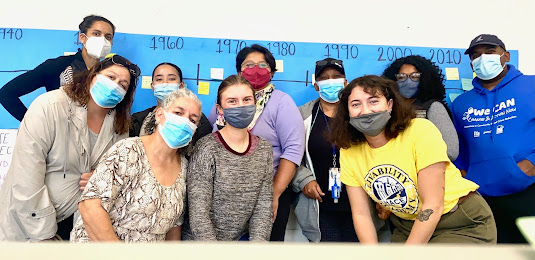
Instructors and some students of the recent Vancouver Livability Academy
Instructor Training celebrating their graduation


GOOD NEWS

I am also encouraged by the Vancouver Police Department's continuing support of their Community Policing Centre’s illustrating both persistent and intelligent leadership.

Those CPCs are staffed by committed, highly capable people. They understand the neighbourhood, the relationships on the street, and the kind of inclusion needed for successful problem-solving. I was impressed by their professionalism and organizational skills. They asked difficult questions. They challenged assumptions. Most importantly, they were already thinking about how to engage people and build long-term neighbourhood capacity.

They are the ones who best represent the heart of SafeGrowth. They know their goal is not simply to reduce a statistical crime blip next month or to remove a hotspot next year. They want their neighbourhood stronger, more resilient, and capable of self-help.  

Thirty years ago, I co-taught CPTED and problem-oriented policing in Vancouver. This year, I returned with some SafeGrowth friends to help launch Canada's first Livability Academy. The problems are still here. But so are the people willing to confront them with new skills, a new action plan, and deep connections to the social roots of their community.

After everything I saw this week, I believe the next chapter will not be written by its problems, but by the people working together to solve them.


Sunday, December 26, 2021

"It takes the whole village to raise this community"

Philadelphia's Benjamin Franklin Bridge
Skyline views at night mask the reality of neighbourhood life 
- photo Jeffrey Phillips Freeman Creative Commons Wiki

by Mateja Mihinjac

At a time when a rising tide of violent crime infects Philadelphia and so many other American cities, one small pocket in that city has discovered a different way forward. A few weeks ago, community teams from the HACE Livability Academy presented preliminary plans for improving livability in their neighborhood. It was like an early holiday gift to their city and their neighborhoods and I was enormously impressed with their plans. 

The HACE SafeGrowth Livability Academy has been underway in the Fairhill and Kensington neighborhoods for a few years and – although applied only to these two neighborhoods and severely challenged by the COVID pandemic – academy classes continued unabated thanks to the amazing work of HACE, the non-profit community development organization.

COVID has made life miserable for community development work. In 2020, we were forced to suddenly transition to a virtual environment that was not conducive to collaborative workshops. But a year later we’ve managed to better adapt to this new reality. Training from afar is not ideal, but the virtual environment does have advantages and we can now reach a wider audience.


WHAT IS THE LIVABILITY ACADEMY?

Over the past two months, I had the pleasure of co-facilitating the latest online cohort of HACE Livability Academy participants. 

HACE has been successfully running Livability Academies twice a year since 2018. Last year, the HACE team modified the curriculum to run virtual-only sessions. This year we were able to offer both face-to-face and virtual modalities. 

The Livability Academy is a 6–8-week program developed by AlterNation LLC  – the company behind SafeGrowth® – in which local residents and community representatives learn skills in community leadership, SafeGrowth and CPTED, community organizing, and project management.

The Livability Academy is an integral part of the SafeGrowth philosophy and it provides a constant flow of community leaders into neighbourhood problem-solving teams to address local issues. I found it empowering to see the kinds of complex issues that the latest cohort decided to tackle in their project work. 


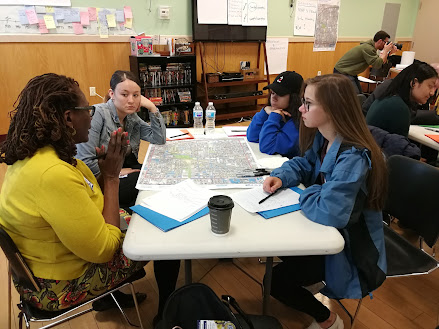
Team project planning from a previous Philadelphia Livability Academy class


2021 PROJECTS

During training, participants identify an issue and in work teams they tackle a small-scale, real-life project in their neighbourhood. In this training, the in-person, face-to-face team produced one project proposal while the online virtual team chose to divide into two project teams. 

This past week all three teams presented their preliminary plans of the work they’ve done over the past few months. All three teams created inspiring projects directly within their neighborhood and they tackled persistent problems that were made worse during COVID.


Cover of the project report from the Fairhill United for Livability team

Fairhill United for Livability 

The first team’s project focused on activating the neighbourhood park to create a space for people to come together and build connections. They envisioned a more united neighbourhood that fosters community pride, strengthens connections between residents, and partners with neighbourhood groups, schools, and businesses to promote livability. 

They divided their plan into 3 phases over the next year: outreach, clean-ups, and community celebrations. The goal is to create a movement of people to fix broken social connections, a problem made far worse by COVID. The team concluded with their slogan: “No one can do alone what we can do together”.


Literally Literacy (Increasing Adult Literacy)

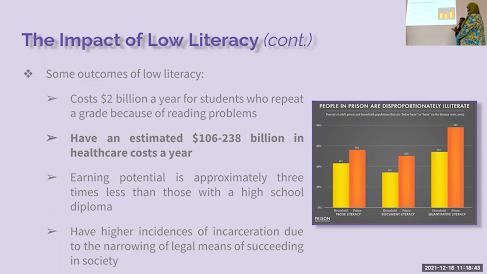
This team chose adult literacy as a key liveability issue. They identified low levels of literacy as a key barrier to job access, high earning potential, and access to better healthcare. Illiteracy is one of the major contributors to overrepresentation in the criminal justice system. Illiteracy is an obstacle to personal growth and this team decided to do something. The main objective of the project is to empower adults to seek assistance with reading and increase their self-esteem while eliminating the stigma associated with illiteracy. 


Data from the Literacy team's research project


The highlight of this team’s presentation was their inspirational personal stories. 

  • One member shared how her aunt learned to read late in life because she was unable to visit school as she had to prioritise caring for her family. 
  • Another member shared the experience of returning to college in her senior years and helped her expand her knowledge and reading capabilities. 
  • Another member recollected how it was once illegal for African Americans to read and she had to self-learn how to read. 
  • Finally, one member shared a story about how she remained a single young mother when she left her illiterate partner who was unable to provide for the family aside from selling drugs. 

They summarized their stories with the phrase: “You can be all that you can be; all you have to do is take the first step.”


Teen Trauma

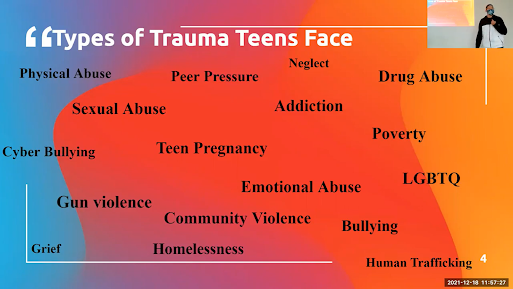
This team focused on the struggles of youth that (if not addressed early) can cause long-term damage to a young person’s life and the neighbourhood quality of life. They outlined multiple consequences of trauma such as emotional and behavioural issues, internalised stress, engaging in unsafe behaviours, substance abuse, and mental illness. 

They proposed a 6-week program with various topics to address traumatic events. They also proposed creating a safe space with a support group for teens experiencing trauma. Two young team members, who themselves went through traumatic events, were especially inspiring in their quest to help their peers turn a new leaf. The team summarised the objective of their program: “To go from dysfunction to function.”


Research chart on trauma from the Teen Trauma team


A HOLIDAY GIFT 

I was extremely proud of all three teams for the work they completed within this short time. It is amazing how a group of people who know little, if anything, about each other, were able to take steps together and share the common purpose of improving life in their neighbourhood. 

This is the true spirit of SafeGrowth and the Livability Academy. There is no better holiday gift to Philadelphia, to their community, and to themselves.

As one Livability Academy participant concluded: “It takes the whole village to raise this community.”


Congrats to Philadelphia's 2021 HACE Livability Academy grads!
(photo courtesy of Sierra Cuellar)


Wednesday, December 7, 2011

A Gift for the Holidays


Back in New Orleans this week talking at a crime summit hosted by Louisiana AARP. The topic is how SafeGrowth and the Hollygrove success story might work throughout the city.

The highlight was meeting old friends from Hollygrove
and watching them tell their story to groups from throughout the city. A 78% decline in crime rates this year is quite a story, especially when crime elsewhere in the city is plateauing.

Recently there has been an increase in New Orleans homicides. Hollygrove's homicides have declined from 20 to 4.

HOW DID THEY DO IT?

How, they were asked, did they turn things around?

Difficult to spell out in clear steps. Certainly plenty of early steps were underway soon after Hurricane Katrina. A garden center was reinvigorated by volunteers (see photo). The city began a program of condemning and demolishing blighted properties (over 35% of all homes were condemned when we did our first SafeGrowth session 3 years ago. Today that's down to just under 20%).

Then AARP Louisiana came to the table with their Livability Academy and training. Change sped up considerably.


For me this neighborhood continues to improve due to the soul and gumption of some local residents. They started their own non-profit organization and now claim ownership for making changes themselves.

Here's a few things the residents did:

1.Installed their own street lighting when they could not get the city to do it
2.Could not get official street signs so used politicians signs from the last election to make their own (see…politicians can help troubled neighborhoods!)
3.Quadrupled attendance at Night Out Against Crime walks
4.Cleaned and swept their own streets.
5.Absent landlords refused to move lawns, local residents did it
6.Partnered with police and the city to shut down a drug house
7.Created a seniors walking group - the Soul Steppers - to take back their streets. Soul Stepper groups are now throughout New Orleans
8.Got a problem bar to get rid of drug dealers
9.Bus department would not repair a bus shelter so they built their own with recycled materials

And so on.

That's how you start to turn a place around.

To my friends in Hollygrove, congratulations! It's a great way to start the new year.