 |
| Impression of tiny houses - photo by Tiny Homes Foundation |
Not long ago we blogged about Dignity Village from Portland, the first organised tiny housing homeless community. Similar villages have expanded elsewhere across the US and, together with Housing First strategies, have contributed to a drop in homelessness.
These villages offer more than just housing. They also foster a sense of community within a supportive, respectful and usually self-governing environment that empowers the homeless to rebuild their lives. Social cohesion emerges from respect for shared goals and each other’s well-being. Connectivity helps to integrate the homeless with the local community and outside service providers.
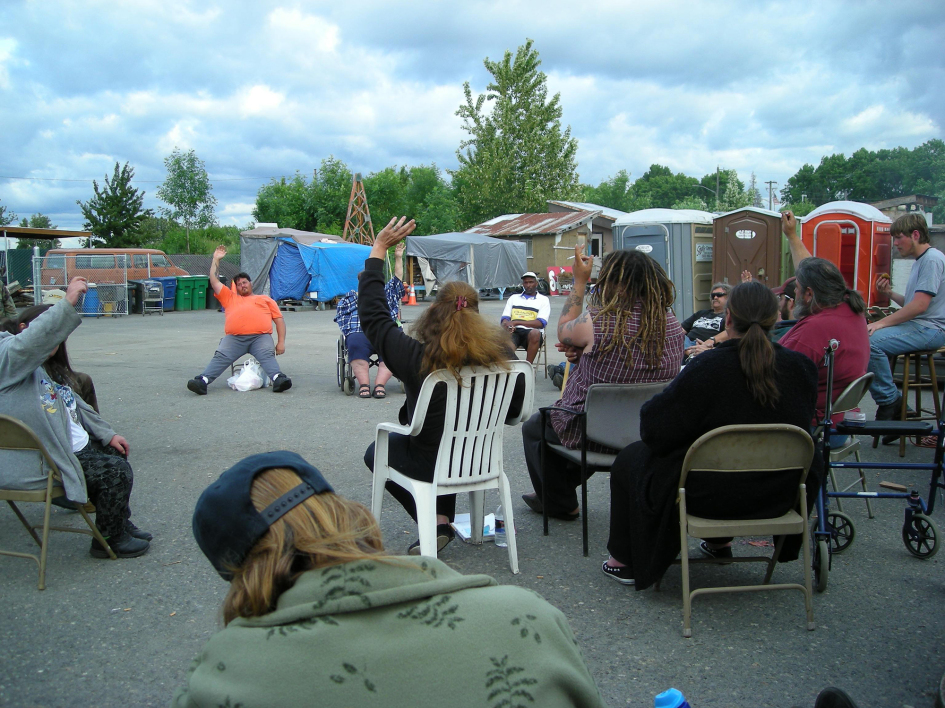 |
| Volunteers and local community are integral to success - photo by Kwamba Productions |
Australia has recently introduced its first homeless village projects. The Tiny Homes Foundation from NSW received an approval for a 2-year pilot project to build 4 self-contained houses and communal areas while the Victoria-based Launch Housing announced it will build 57 tiny homes on a currently unused VicRoads land.
Tiny Homes Foundation is a blueprint for other Australian projects. It has forged strong collaborative relationships with service providers, volunteers, and local communities and it helps homeless people transition to permanent housing, employment, and society.This will ensure that the project remains true to “housing first, not housing only” approach.
LESSONS LEARNED
Experience from existing projects provide some lessons as a step for solving the homelessness crisis:
- community-driven groups with mixed expertise are integral to planning, delivering and running the project such as charities, non-profits, and other social groups
- engage local residents in the process to avoid NIMBYism
- charities, volunteers, private donations, fundraising, and crowdfunding represent the most common project initiators and supporters
- close relationships with local government to secure special zoning arrangements and building code restrictions
- villages should be integrated into the society with easy access to the city, work, and social services
- aesthetically pleasing architecture of the structures secures public support
- media and publicity can be effectively used to draw donations and secure ongoing public support
 |
| The community works together to create homeless shelters – photo by Kwamba Productions |
FINAL THOUGHTS
Homelessness is a human rights issue. It should not exist in the first place or be allowed to progress. Social policies need to reflect this if Australia (indeed countries everywhere), wishes to reach the goal of halving homelessness by 2025. Support for tiny house villages is the first step towards realising that goal.


