Sunday, January 26, 2025

Do something! Northern Star's fight against school violence


James Fuller, director of operations at the non-profit Northern Star, explains why the organization was formed 


by Gregory Saville

I first met James Fuller a few years ago at a dinner in Dallas after co-teaching a leadership program with a colleague. He shared how he and a group of ex-military veterans had embarked on a bold mission: tackling the pressing issue of school violence and shootings. James passionately described why he took on this tough, uncertain journey. You can hear his full story in the video above.

Their non-profit, Northern Star: Community and School Safety Initiatives, is focused on offering free anti-violence and school development programs. As their website puts it, their vision is to “Unite under a common mission to combat community and school violence at its roots.”

They were looking for some training and specialist expertise in crime prevention, CPTED, socio-emotional learning, and a range of other school safety approaches to offer schools across the nation. 

There could be no higher cause in this journey and we agreed to provide some research and training to help. 


School shooting data shows alarming increases 
Chart courtesy of Rogova247, CC0, via Wikimedia Commons


SCHOOL VIOLENCE

There is no shortage of strategies and research on school violence and shootings. On this blog, we have been writing about school safety for over 15 years. We’ve had school safety experts like Tod Schneider from Oregon, my blogs on school CPTED lighting, Mateja’s blog on crime in European schools, and sexual assault in schools, and a New Zealand teacher’s work to involve students in their own crime prevention.

Then there was the International CPTED Association school guidebook called CPTED in Schools, co-edited by school safety expert Gerard Cleveland.


Sudbury Secondary School
A high school with new renovation and updated architecture - photo Google Earth

SO MANY STRATEGIES, SO LITTLE IMPLEMENTATION

The problem is not a lack of viable strategies. It is a way to put them into action. In the field of urban planning, there is a CPTED concept known as the urban village versus the urban fortress

The idea is that there are hard and soft styles of architecture and planning. In a school setting it is the difference between a school that looks like a prison – tall gates, barbed wire, CCTV, armed guards – and a school that looks like a village – open campus design with ample natural surveillance and opportunities to prevent crime.  

I pointed this out in an interview with NPR a few years ago about school redesign: “the best practices can take a decade or two to permeate through the public narrative.” 

Northern Star is not willing to wait. The key for knowing which style is most appropriate comes down to the school context and the quality of their safety plan. That is where the Northern Star methodology is different from other prevention approaches. 


The urban fortress versus the urban village - we cannot allow our schools to become fortresses but we must still create safe environments

INCLUSIVITY

The first thing I noticed about Northern Star is their inclusivity. They brought in school violence experts, mental health specialists, educators, criminologists, women’s empowerment leaders, researchers, law enforcement, and many others. They are an impressive group clearly committed to mitigating the plague of violence and shootings in one of the most vulnerable places in society – the school.

The Northern Star approach is similar to the collaborative neighborhood plans in SafeGrowth, except they are focused specifically on schools and school violence. They base their Community-based School Safety Action Plan Development and Implementation methodology on a bedrock of evidence-based strategies. 

Accordingly, they are regularly apprised of findings from powerful databases such as the K to 12 School Shooting Database by criminologist David Reidman, assistant professor at Idaho State University and also the Averted School Shooting Database, initially funded by the Department of Justice COPS Office 

It has been a pleasure to work with this group over the past year, along with other colleagues, helping them develop their unified action plan. 


Wednesday, January 15, 2025

Does nudging work in social media

Hectic, stress-inducing airports can nudge calm behaviour. The Long Beach airport in California uses quiet areas, plenty of greenery, and a playful environment

by Larry Leach

In my last post, I related the concept of nudge. In relation to SafeGrowth, the concept from behavioral economics suggests that human choices and decisions are triggered as much by physical designs as by education, legislation, or enforcement. 

While there are scientific disputes about nudge theory, there is little doubt the concept has mileage in contemporary community-building, whether the community is physical or virtual. This will increasingly become concerning as augmented and virtual reality devices expand. 

The concept of CPTED has always been led by a form of nudging. We see it in 1st generation CPTED. You improve the beautification, cleanliness, and image of an area and you nudge offenders away from that location by making it difficult for them to offend with impunity! 

In 2nd Generation CPTED, you engage neighbours in local cultural, art, and music festivals, and nudge them towards caring more for their community as they get to know each other – what sociologists call collective efficacy. Research shows how collective efficacy can nudge crime out and positive activities in. 


Portland enhances collective efficacy by nudging people outdoors to common street gardens where they can socialize and meet neighbours in a positive way


NUDGING IN THE WILD WEST OF CYBERSPACE

If nudging works in the physical environment, what about cyberspace? I recently attended Calgary’s Cyber Summit with Law Enforcement and Cyber Security with companies from all over the world. Can the concept be used online since it is humans who mostly control social media?

Popular opinion is that social media is a cesspool! It’s destructive to mental health and can lead to crime. It continues to be a Wild West when it comes to regulation and the damage filters into the real world.

Those developing social media do not always understand the psychology of impulse behavior and its negative effects. Or perhaps their motives are only about sales or power and not about the harmful impact on daily life? Either way, the damage has been done. That means it’s up to us to carefully choose and decide how we should behave.

Can we use the concept of nudge to influence online behaviour?  Cyber security experts have been attempting to nudge their clients to adopt cyber security habits like using 2-step verification to protect our identity or installing security updates at a regular time. 


Cybersecurity experts are constantly attempting to nudge safer online habits


In other cases, it is possible to add “trigger words” to your preference sections of apps to filter out what you see. Your preference sections are probably filled with swear words, but you can choose to filter out other words that emerge with online scams. 


CYBER POWERBROKERS

What else might we do to limit the impact of negative nudging and enhancing civil behavior online? Perhaps we can assemble a community of informed online users who advocate filtering out trigger words that contribute to harmful behaviors? That would prevent negative nudging before it began. Perhaps we can prevent cyber threats like spoofing, deepfakes, and phishing by populating our preferences to avoid risky trigger words? 

We are waiting for the regulations of lawmakers, or the voluntary compliance of platform owners and powerbrokers, to figure out how to govern cyberspace. People should take the powerbrokers out of this equation and democratically decide how to govern each other online. 

There are obviously pros and cons to filtering words, but we need to have this important discussion about how cyber nudging can help, or hinder, our online experience. 


It is practically impossible to find any social space where people are not fixated on their phones or their computers - online behaviour matters in the real world


NUDGING A SAFER, MORE CIVIL WAY?

Are we capable of producing online communities that are there for the community and not for profit? These would be communities that don’t use your personal information for profit.

We should start with some stronger guardrails from our favorite online platforms. Imagine if each of us could adhere to the simple principle of being the positive change you want to see in the online world. If the owners of a platform put up their own guardrails, then the community would not need to call out the bad behaviour. Perhaps we can find some responsible platform owners and showcase how they focus on setting the example of what we all want to see in our online world? 

I am not advocating for a perfect, everyone-should-be-happy scenario. I am advocating for careful attention to the cyber nudges that cause harmful behaviour and responsible guardrails to protect the online community. What about more serious consequences for those who do harm for profit (scammers, deep-fake fraudsters, ID thieves)? 


An online community of civil discourse.
Showcasing responsible platform owners.


How about more information about the negative triggers that nudge behaviour in harmful directions (like suicide and harassment)? We already label the harms of tobacco. What about the online harms?  

How about creating a savvy user-base who participates in civil discourse. If this user-base ever comes to pass, we will offer up a quotation attributed to both Nobel Laureate writer George Bernard Shaw and US Supreme Court Judge Ruth Bader Ginsberg. It is a concept we also teach in our SafeGrowth classes - it is possible to disagree without being disagreeable. That is the basis of a civil society. Otherwise, we end up with what we see online every day.


Tuesday, December 31, 2024

Let's talk CPTED in the desert surrounded by palm trees

Back in the USA after many years, the International CPTED Association, and the US and Canadian chapters are running an exciting conference on the latest in CPTED 

by Gregory Saville

We end this year with an exciting announcement – following our 2023/24 SafeGrowth training in Palm Springs, California, I am pleased to announce that the international Crime Prevention Through Environmental Design conference will be held in that city on May 11-14, 2025. 

This event was rescheduled from earlier this year and it is now expanded considerably. The theme is COMMUNITY BUILDING AND EMPOWERMENT: A HOLISTIC CPTED APPROACH. The CPTED conference is co-sponsored by CPTED USA, CPTED/PCAM Canada, and the International CPTED Association (ICA). It is the inaugural event for both the Canadian and USA chapters! 


A TIME OF TURBULENCE

This is the first ICA CPTED conference in the United States in many years. It comes at a critical time for CPTED with new discoveries, theories, progress, and threats. Here are just a few that will show up in conference discussions: 

These are challenging times. There is much to discuss!


A desert retreat in the city, the Palm Springs Hilton Hotel
will host the 2025 CPTED conference

THE CONFERENCE

This unique, world-class event will feature training sessions with site visits to nearby neighborhoods, followed by experiential design sessions with some of the world’s top CPTED urban designers.  

The conference will feature training sessions on how you can become CPTED certified and how to access accredited courses.  

The first keynote speaker is Police Chief Andy Mills from the Palm Springs Police Department. He has an impressive background that includes graduating from the FBI National Academy and Indiana Wesleyan University. He played a vital role in introducing CPTED to Palm Springs and will share insights on how CPTED and law enforcement together are tackling today’s challenges.


The second keynote speaker is Shamichael Hallman, director of Civic Health and Economic Opportunity at the Urban Libraries Council in Washington DC. Shamichael will describe the untapped potential of libraries as vibrant community hubs that foster connections and enhance public safety. At a time when neighborhoods face toxic drugs, homelessness, and street crime, Shamichael’s innovative ideas offer CPTED practitioners fresh opportunities for creating assets to cut crime. 


One of the few remaining cities to use the dull glow of
low-pressure sodium lighting for streets in Palm Springs
- a tactic often discouraged by CPTED experts

THE CITY – PALM SPRINGS 

The CPTED conference is held at an outstanding tourist destination, favored by Hollywood celebrities and featuring Mid-Century Modern architecture. It offers stunning desert landscapes, endless sunshine, and options for architectural tours and hiking through breathtaking canyons. 

The conference venue is the Palm Springs Hilton Hotel and it is considered a desert retreat a few minutes walk from downtown shops, restaurants, and entertainment. 


The conference will feature site visits and training design sessions
on areas in Palm Springs - including the Baristo neighborhood park

REGISTER BEFORE DISCOUNTS EXPIRE  

ICA members qualify for a membership discount. Conference registration discounts are available here until February 28.

See the latest in CPTED and community empowerment, and exciting new technologies. Meet CPTED practitioners, researchers, writers, police, security, community members, and urban designers. The extensive list of presenters will soon be posted in the program on the ICA website


Tuesday, December 17, 2024

What makes a competent CPTED practitioner?


Certification in CPTED comes down to some essential learning and practical skills -  it all begins with reading and studying  

by Mateja Mihinjac 

When working with clients in SafeGrowth we often get asked: “How do I know what CPTED expert I should hire?” 

Our response: “Make sure their expertise is certified by an independent and widely recognized third-party professional organisation.”

In practice, this is not so black and white. Many consultants claim they have knowledge or experience practicing Crime Prevention Through Environmental Design (CPTED). It is not uncommon to have CPTED consultants self-proclaim themselves “CPTED experts” after entering the job market directly from University, with no practical experience in the field. 

Other consultants are well-seasoned individuals who have been practicing in the field for years and convince themselves they know everything there is to know about CPTED. They don’t read, write, or publish in technical or scientific journals about CPTED. Consequently, they provide the same simple CPTED advice throughout their career with little reference to recent research or modifications to CPTED theory.


Assessing the same environment at night and day
- an essential data collection skill for the competent CPTED practitioner


Class learning or field experience? Neither group is populated by the best example of competent CPTED expertise. This arises due to several reasons:

  • College/university education might provide foundational knowledge (theoretical understanding, how to collect and analyse data). While it is important to have advanced knowledge, that alone will not work without considerable practical experience. In the real world of preventing crime, theory cannot function without practice, and vice versa.
  • CPTED experience might help a practitioner understand a problem, the environment, or how people behave. However, a CPTED practitioner should never believe they know everything due to their experience. There are many cases when past experience does not explain changes in offending behaviour or prevention methods. Theories evolve to respond to those social changes and only by keeping up with recent findings and new theories can a practitioner truly master the complex field called CPTED. 

All experts must constantly refresh themselves with new theoretical concepts. Our physical, social, and administrative environments change as society changes. That means crime and safety threats evolve. CPTED theory, policies, and other legal and regulatory documents must evolve to reflect those changes. That means a competent CPTED expert constantly reads, attends conferences, and writes about such things.

That leads to an obvious question: How can we ensure CPTED consultants possess the knowledge, skills, and experiential abilities needed in the field? 


Outdoor research tours are an essential ingredient for CPTED training


CPTED CERTIFICATION FOR INDIVIDUALS - ICCP

This year the ICCP (ICA’s CPTED Certification Program for Individuals) is 20 years old. 

Those unfamiliar with professional certification sometimes confuse the content of CPTED with the practice of CPTED. While theory and practice are interconnected, the primary measure of the certified expert is their competency in how they practice CPTED. That is obviously reflected in their background knowledge, what ICCP terms core subjects. This places the ICCP as a competency-based certification program. 

On the ICA’s website, the ICCP is described as:

“Certification in the field of one's choosing is a way of indicating to yourself that you have arrived. You have achieved a level of expertise … Certifications provide a raised bar to which those new to the field can strive. Certification also serves to lock out charlatans claiming to be "trained" or "certified" by merely attending a course or taking a test.“

The competency units within the ICCP program are on the website. 


The International CPTED Association website hosts the ICCP Certification Program information. It also lists additional learning resources like webinars and guidebooks


PROFESSIONALISING THE FIELD

While CPTED doesn’t need the same level of certification as medical and engineering professions, CPTED does respond to personal threats to property and lives. These are important matters and the ICA is pleased to have contributed to the advancement of CPTED over the past decades. 

All this has led to exciting new initiatives:

GLOBAL CPTED STANDARDS

Another movement forward, that certified professionals must know, is that CPTED now has its own European Standards and international ISO Standards.

CPTED-GRANTS

Many CPTED-related grant proposals in North America now require a certified CPTED professional on the submission team. 

EXPERT WITNESSES IN COURT

CPTED experts, including ICA CPTED-certified members, are now regularly called as expert witnesses in criminal and civil trials. 

COURSE ACCREDITATION

In 2019 the ICA launched an accompanying program – the Course Accreditation Program (CAP) – to accredit CPTED courses that teach the KSAs – the knowledge, skills, and abilities of novice CPTED practitioners. 

As such, CAP offers an accelerated pathway towards obtaining CPTED certification. One example is our SafeGrowth program which is CAP-accredited and several graduates have already successfully pursued the ICCP. 


CAP accredited CPTED courses include urban design sessions

WHAT IS A CERTIFIED CPTED EXPERT?

It is reasonable to ask why CPTED warrants a professional-level certification. As you can see from the discussion above, a competent CPTED professional knows that their decisions can prevent crime and their recommendations impact people’s quality of life. They can save lives. Those recommendations come with equity and ethical implications. 

In some cases, those recommendations might even mean the difference between life and death. Certification matters!


Friday, November 29, 2024

Opportunity Lost? The RCMP and the future


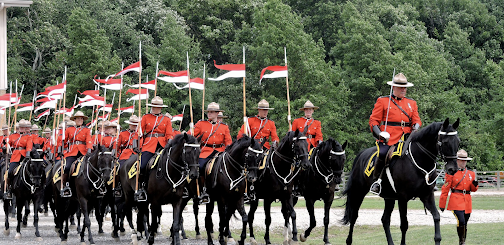
The Royal Canadian Mounted Police - the Mounties and their worldwide famous musical ride. The RCMP is the national police force of Canada - photo Andrea_44, Leamington, Ontario. CC BY 2.0 via Wiki Commons

by John Lyons

John Lyons spent many years as a patrol officer living and working in northern Canadian communities. A member of the Royal Canadian Mounted Police for 28 years, he served as a major crime investigator. For 10 years he was an international crime analyst with Interpol Ottawa. Post policing he consulted government on health care fraud. Now he brings his extensive experience to SafeGrowth, particularly in conducting search conferences to prevent crime and build collaborative networks.

Sometimes it is worth opening a door into the past to see how things repeat themselves.

Over the years, this blog has written about problem-oriented policing, like the 2002 project to cut street drug dealing by the Royal Canadian Mounted Police in Burnaby, British Columbia. We have also described the street disorder and tragedy of homelessness and street drugs plaguing so many cities, especially in my last blog on Prince George, BC 

What does a look back in history teach us?

LOOKING BACK

Some of us remember how economic stagflation and increasing crime rates decimated police resources in the 1970s. Like today, police leaders were told to do more with less, despite increases in crime. Then, as now, there were studies on how police services ought to be improved when officers were overworked and understaffed. Officers were facing intensive stress levels, a well-known problem reported in books and psychological studies

In that environment, problem-oriented policing (POP) emerged as a re-think about how to deliver police services. POP was seen as a way to cut street crime and decrease workloads during a time of high stress and under-resourced cops. Successful case studies began to appear at the annual POP conference pointing to a new way forward. Things seemed bright, indeed.

The Canadian Parliament buildings in Ottawa. The RCMP - Gendarmerie royale du Canada - was established by the Canadian federal government in 1873 as Canada's national police.

ENTER THE RCMP

Throughout the 1990s, the Royal Canadian Mounted Police launched a nationwide program to retrain its officers and introduce POP methods. They modified the curriculum at the national training academy incorporating a problem-solving model called CAPRA. Training teams traveled from coast to coast to teach problem-solving seminars in each RCMP Division. I know this because I was a coordinator and participant in those teams. 

As we traveled coast-to-coast, we noticed an interesting pattern: RCMP detachment commanders and supervisors rarely sat through the training, limiting themselves to guest appearances at the beginning or end. The only Commanding Officer who attended from all the Divisions we trained was in New Brunswick. To make matters worse, no one attended these regional seminars from the national policy center tasked with implementing community policing. 

What did this mean? 

It meant that RCMP commanders lost out on the informed ‘wisdom of the streets’ told by the operational police officers. The officers in our classes described their physical and emotional struggles – the stressors confronting them daily – as they effectively served their communities. They also told us how problem-oriented policing closely aligned with their own experiences – a message commanders did not hear. 

Thus, the major shift required in RCMP culture, from senior positions of command, never truly happened. Then, as now, problem-solving never really became embedded into the operations and organizational structure in cities like Prince George. Except in a few detachments, it did not happen in a systemic fashion.   
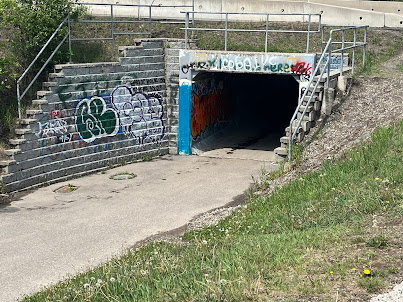
Graffiti on underpass walkway in Prince George

THIRTY YEARS LATER IN PRINCE GEORGE

We have been blogging about the street crisis of homelessness and drug abuse in Prince George, British Columbia. The Prince George Citizen labeled that city the crime capital of British Columbia 

Statistics seem to confirm that conclusion, like a government website showing an increasing crime severity index over the past 7 years. 

Conversely, a city website describes a reduced crime rate due to innovative policing strategies such as "community-oriented policing, increased patrols in high crime areas", and the "utilization of advanced technologies for surveillance and investigation". 

Nevertheless, in 2022 a consulting group was commissioned to produce an RCMP workload and resource study. That study was delivered to the city in 2023 –  the Resource Review of the Prince George RCMP.
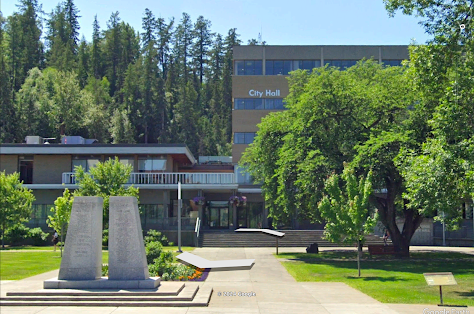
The City Hall of Prince George, BC, employs the RCMP to deliver municipal policing services.

The study recommends adding 19 sworn officers and 12 support staff to improve efficiency. At a time when the city already spends 37% of its budget on public safety, it’s no surprise that city councilors are resisting throwing more money at the problem with no guarantee of success.

The study also indicated 20% of sworn officers were on leave, many for mental health and stress-related issues – an obvious red flag for city and police leaders. It was reminiscent of a similar situation in the 1970s and 1980s during the heyday of POP.

OPPORTUNITIES LOST

My sense of the RCMP community policing problem-solving model in Prince George is that it is more an ideal than a reality. The resource study confirmed this by claiming the Prince George RCMP had “near zero community policing capacity” and that it “does very little proactive, problem-solving policing”

Remember how we introduced problem-solving training and programming to the RCMP in the 1990s? Let’s not forget that RCMP detachments still have good problem-solving bones. Recruits are taught problem-solving through their CAPRA model.

How might they reclaim the lost opportunities of problem-solving that we describe in other cities? Simply adding more officers might seem like a simple fix. But that rarely works without more structural changes. Otherwise, it will fade away as it did before. How might they move forward? 
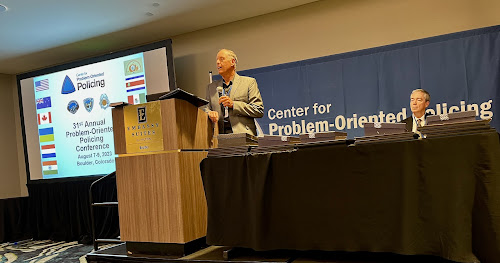
The 2024 International Problem-Oriented Policing Conference - retired deputy police chief, Dr. Ronald Glensor moderates alongside POP Center director, Michael Scott. Years ago, the RCMP submitted successful problem-solving projects at this conference and participated in sessions on crime prevention methods  

OPPORTUNITIES GAINED

  1. No doubt the officers at Prince George, combined with trained support staff, are capable of installing a problem-solving infrastructure and culture. There are already plenty of successful case studies, in-service training programs, and examples where police/community POP has worked across North America. 
  2. Problem-oriented policing projects by the RCMP have already been submitted to the International POP conference by other detachments in British Columbia. This includes projects on retail theft in Langley, BC in 2016, or dealing with prolific offenders in Kamloops, BC in 2010. Clearly, there is no lack of expertise.
  3. Senior commanders and supervisors need help putting such programs into place. This will mean investment in leadership training, resource support, and the assistance of outside organizations (expertise from local universities, retired officers to help in key areas, community partnerships).
  4. Finally, for the past 15 years, SafeGrowth has taught communities, residents, and their police across North America how to problem solve by establishing neighborhood safety plans. Police do not require additional officers to do this since the police do not lead the neighborhood planning process – neighbourhoods, business and downtown associations, and community groups do that. 
NEXT STEPS

The Prince George resource study sketched out a simplified version of this process titled the Community Safety and Well-being Plan. Fortunately, a model has already been tested and implemented in other cities through the SafeGrowth process. There is no need to reinvent the wheel.

One of the strategies included in the 1990s POP training was precisely this type of community safety planning. Sadly, that was lost to history. But it does not mean it cannot be rediscovered, this time with a large toolbox of updated and modern methods. Prince George citizens, its police officers, crime victims, and those suffering on the street deserve no less.  


Tuesday, November 12, 2024

A shot in the dark - murder under U.S. presidents

Detroit viewed from across the river in Windsor, Canada.
Detroit (popn. 649,000), 252 murders last year, murder rate 23 per 100,000. 
Windsor (popn. 229,000), 10 murders last year, murder rate 2.8 per 100,000.
Do national policies cut crime?

by Gregory Saville

Last week’s 2024 U.S. election ended with Donald Trump defeating Kamala Harris. It wasn’t a landslide, but it was not a cliffhanger. Some think crime will now drop, others think it will explode.

I am amazed at how frequently crime becomes a political weapon, a well-placed gotcha for a media soundbite in the middle of a campaign. Politicians love to promise solutions to crime waves but rarely offer practical answers based on research. It’s easy to claim that one president or another will reduce crime, but can a president actually achieve this? How does a president’s term in office truly affect national crime rates?

The data show that crime is declining. There are some upward blips here and there, for example violent crimes against young people are up, and mass shootings and school shootings have increased. However, on the whole, most crime rates are declining.


Detroit police use technology, surveillance cameras,
and other programs to attempt to prevent homicides 


HOW DO WE KNOW?

I examined U.S. homicide data to see if there was a pattern with different presidents. I’m not ignoring recent increases in a few city centers. I’m simply saying that most city centers have declining homicides this year. Denver is one of them.  

I know a few things about weaknesses in crime data. Yet,  even with the limitations, we can learn something. 

I collected homicide data from 1960-2022, and graphed the results and the tenures of 11 presidents. This method obviously bypasses all the other important factors affecting homicide and it only examines a President’s term and homicide rates. Even still, it shows something worth considering.


KENNEDY/JOHNSON

Homicide rates exploded during President Lyndon Johnson’s administration and continued through President Nixon's term. Kennedy and Johnson launched highly-regarded social programs, much of which emerged from criminologists Richard Cloward and Lloyd Ohlin’s book Delinquency and Opportunity

Many of the crime prevention strategies from the Kennedy/Johnson War on Poverty were successful and survive today such as Head Start, Job Corps, and AmeriCorps.


President Kennedy greeting Peace Corps volunteers in 1961 - one of the social programs from his administration - photo Abbie Rowe, CC via Wikimedia Commons


Those programs were founded on the belief that improving access to legitimate opportunities for disadvantaged youth could reduce crime. Crime, particularly homicide, was supposed to decline! It didn’t!


REAGAN

Consider this: a large portion of crime, like homicide, occurs via young male offenders between 18-25 years. The youngest in that demographic born in the War on Poverty decade reached their crime-prone years in the early 1980s. Did those kids  benefit from the War on Poverty programs? After all, the graph above shows that the early 1980s was a period of dramatic homicide declines. By then Ronald Reagan was president! 

Could it be that Ronald Reagan benefitted from Kennedy and Johnson’s War on Poverty? Regan would never admit that, obviously and neither Kennedy nor Johnson were alive to contest it.


President Reagan's inauguration speech, 1981
- photo White House Photographic Collection, CC Wikimedia Commons


Either way, no difference. By the end of Regan’s presidency, the homicide rate began increasing again. Rates climbed through the presidency of George Bush with a small decline in his last year. So much for presidential influence over crime!


CLINTON 

The most dramatic impact on homicide was from 1993 to 2001. Clinton’s tenure saw the largest homicide decline in recorded American history. This decline was across all crime categories, it continued through George W. Bush’s tenure and into Obama's first term. 

Did that crime decline stem from Clinton’s all-encompassing anti-crime campaign called the 1994 Crime Bill

This bill was one of the largest anti-crime efforts since Johnson's 1968 Safe Streets Act. Clinton’s 1994 bill created stricter criminal sentences and violence against women laws. It hired 100,000 community police officers and banned assault rifles. It implemented the National Police Corps, an ROTC-style university degree to improve police education. (Personal disclaimer: that program hire me in 1989 as associate director to launch the Florida Police Corps a few years later. Unfortunately the program was later defunded during the Bush years). 


President Bill Clinton shaking hands with Donald Trump in 2000 - photo Ralph Alswang, Office of the President, CC Wikimedia Commons 


OBAMA

Clinton’s crime bill is now criticized (even by Clinton) as a trigger to mass incarceration of minority populations. To be fair, mass incarceration is a trend that began long before 1994. Ultimately, it is unclear that the Clinton crime bill was responsible for the homicide decline because crime also dropped in other countries where there was no crime bill. For example, Canada’s crime rates started declining a few years before this bill.


President George W. Bush and President-elect Barack Obama on the Colonnade to the Oval Office, 2008 - White House photo, Eric Draper CC Wikimedia Commons


After Obama’s election in 2009, police excessive use of force spread across social media. There were anti-poverty protests, the Black Lives Matter movement, and riots in city centers. It seemed impossible to predict murder rates. In the first half of Obama’s presidency, the homicide rate declined. Then it rose. Exactly the same thing happened to Trump. 

TRUMP

During the first two years of Trump’s presidency, the homicide rate declined from 5.3 to 5.0 homicides per 100,000 people. In his last two years, homicide rates jumped almost 40%, from 5.0 to 6.9. Recent election disinformation claimed otherwise, but the fact is that homicides increased at the end of Trump’s first tenure. Was he responsible? 

By now one thing should be obvious from all these trends: it is difficult, if not impossible, to attribute homicide rates to any president. There are simply too many factors at play. And now, homicide rates are returning to pre-pandemic levels and crime is dropping again.


WHAT NOW?

Nothing here suggests that a forward-thinking presidential administration cannot make a difference. Sadly, few presidents deliberately craft a well-designed, properly implemented crime prevention policy based on proven community-building strategies. Kennedy and Johnson did that, yet it was poorly implemented, underfunded, and it largely failed. Clinton also did that and, to be clear, it might have cut some crime. But unfortunately, there were unintended consequences like exploding prison populations and it’s unclear how much credit that program deserves.

The takeaway? 

There are well-designed, evidence-based strategies, (obviously, I argue that  SafeGrowth is one), that prevent crimes and sustain prevention effects for years. A presidential administration armed with the right tools and strategies can make a meaningful difference, but only through intentional and well-executed policy. History shows without that, it is a shot in the dark!