Saturday, December 31, 2022

Community hotspots and digital fasts - A wish for 2023

Seeking authentic human connections in a digital age - photo by israel palacio on Unsplash


by Mateja Mihinjac

I rarely watch TV, however, in the spirit of holidays, I was recently drawn into watching one of those predictable Hallmark Christmas movies. Set in a small town where everyone knows each other, idyllic streets and small family-owned shops were decorated in a festive spirit. And there would be no Hallmark movie without a romantic twist of the two protagonists who find each other despite all the obstacles in their lives and live happily ever after.

However, despite a predictable happy ending and the idyllic small-town living that is often far from reality, one takeaway from this movie was the notion of a community hotspot.

This community hotspot is not a hotspot in a digital sense where you connect your smartphone. It is also not like a crime analyst’s high-crime hotspot. In this film, it refers to a long-standing town café where local residents from all walks of life regularly meet, both intentionally or accidentally. 


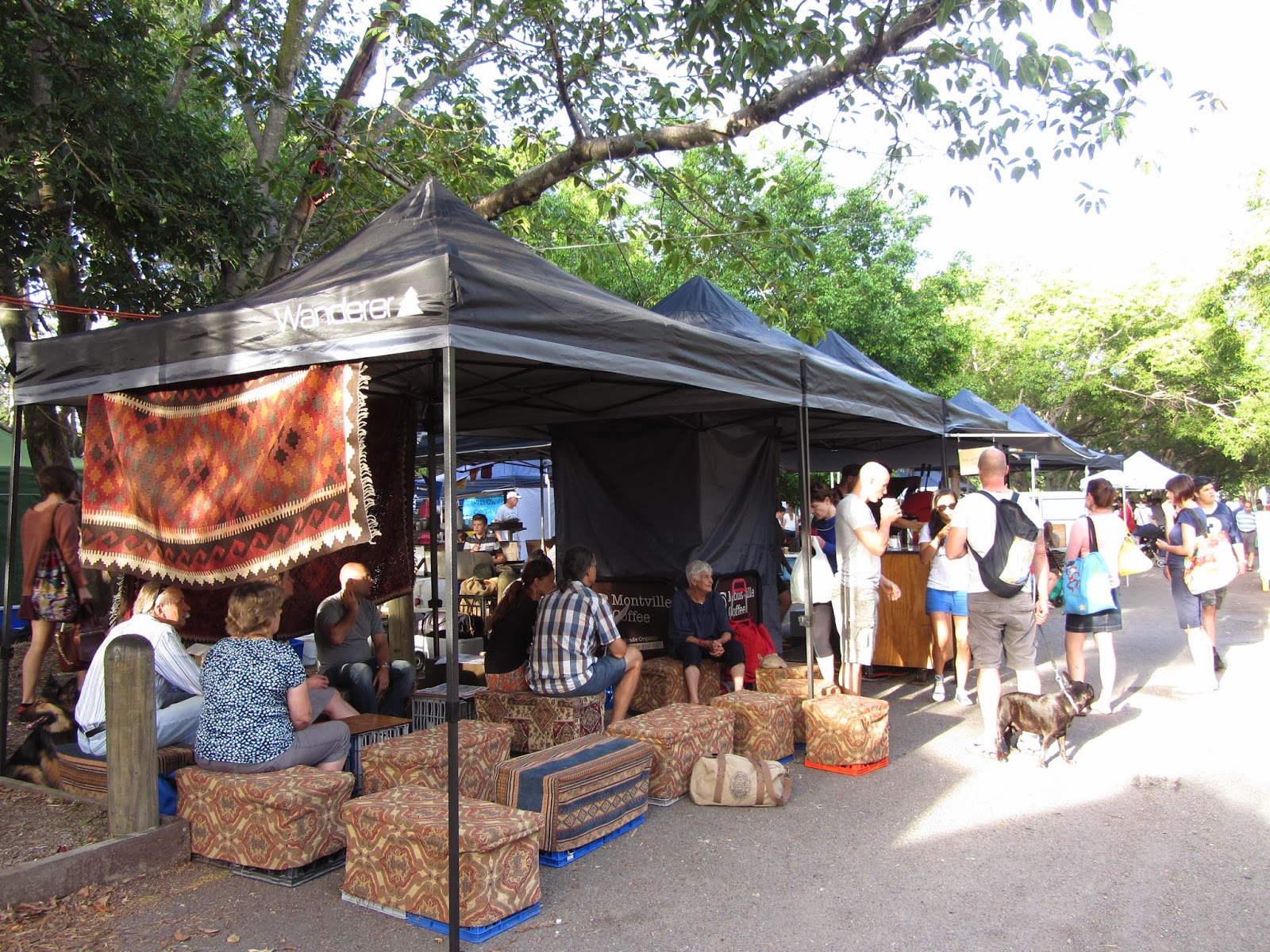
Northley Street Organic Market, Brisbane.
This open market provides ample free opportunities for informal socializing 


In a blog this past summer Tarah referred to such places as “third places” — places where people come together, meet and socialise.

In today’s digital era we hardly ever associate a hotspot with anything else than digital connectedness. In truth, connecting online through our devices rarely creates a true and authentic sense of connection. 

What if we intentionally created “community hotspots” and “community hot-times”, designated places and times away from digital devices and purely focused on in-person human connection? What if we intentionally adopted digital fasts as a way of restraining ourselves from digital devices (especially social media), for a specific period of time in favour of real human connection?


Old's Cool General Store, Toronto.
This convenience store opened up the sidewalk with tables and umbrellas as a meeting place


My wish for all of us is that we enter a new year more intentionally and reflect on what brings us closer together with others. For me that includes spending time in nature, connecting with people in real life, and less time staring at dopamine-generating/energy-draining digital devices. 

A true hotspot should be about community and it should bring us closer together, not further apart.

Happy 2023!


Wednesday, December 21, 2022

Night safety in Sebring - street & sidewalk advocacy

Sebring, Florida - sometimes, getting residents to start working together on street safety begins with a lighting contest and decorating docks for a Christmas boat parade


GUEST BLOG: Jason Tudor is an urban planner and SafeGrowth practitioner living in Florida. Jason was a facilitator of the successful SafeGrowth project in the Hollygrove neighborhood of New Orleans. He is also a co-author of SafeGrowth: Building Neighborhoods of Safety and Livability. In this blog, Jason describes Safety Audits and street activation in his home city.


When I participated in my first safety audit with the SafeGrowth team in 2009, I felt the same thrill many first time SafeGrowthers feel when rational analysis of a space replaces the fear of it. Safety audits have appeared in this blog before. 

For many of us who do not have an academic or professional background in criminology, crime and the fear of crime are so overwhelming that one feels helpless to do anything about it. During a safety audit, you dissect what might seem like a dark street corner with shadowy figures and analyze the lighting, territoriality, and social cohesion. The audit helps residents apply an analytical tool as a way to help them see that crime and fear are not insurmountable.  

I recently leveraged tools like the Safety Audit to help organize my neighborhood in Sebring, Florida.  


SEBRING, FLORIDA

Sebring is in the center of peninsular Florida about an hour south of Orlando. It was developed in the 1920s and it is one of Florida’s most rural cities that services acres of surrounding ranches and orange groves. After moving to Sebring in 2020, I quickly learned the town was still traumatized by the 2009 financial crisis. Half-built neighborhoods and closed shopping centers were common throughout the county of about 100,000 residents. 

Although my immediate neighbors were friendly, Sebring is very insular. It is planned around a large circle and the city radiates out on an arterial spoke system. Residents kept to themselves but were not shy about sharing their bitterness about a town still economically ravaged while Miami, Tampa, and Orlando were booming. Sebring is also still reeling from a mass shooting at a local bank in 2019 in which five people were murdered.

As I met more of my neighbors, I was struck by the comments about how Sebring used to be something, but isn’t anymore. Most Florida towns have had the charm paved out of them by Florida’s Department of Transportation with their ever-expanding highways. The main street leading to the downtown is now a four-lane highway without trees, crosswalks, or bike lanes.  


Sebring Fire Department got in on the community efforts
and lit up their station for the first time


As a planner and SafeGrowth practitioner, tools like the Safety Audit have helped me reframe my thinking about how I interact with space. The feeling of loss and hopelessness in many Sebring residents were the same feelings I saw years ago when I worked in a neighborhood with a violent crime problem. I knew that changing a neighborhood begins with simple steps but what was missing in Sebring was a spark to ignite residents to take action. What was that spark?


THE HOLIDAY DECORATIONS SOLUTION

My first Christmas in Sebring provided the answer. While driving downtown I saw several men setting out decorations. Within a few days, the little town circle transformed into a sparkling decorated Christmas village. The next weekend I heard boats on the town lake blowing their horns to announce the arrival of the town’s holiday boat parade. The following week the city hosted its annual Christmas parade with crowds along the parade route. These were all volunteer-organized events without any commercial or governmental support. 

Then it hit me! This town loves Christmas, but you wouldn’t know it by walking along residential streets outside the circle. Houses and businesses were dark during the holidays. What better way to meet your neighbors and get more people involved then having a friendly competition to encourage residents to decorate their houses and businesses.  

The following year I met with neighbors and asked if they would help organize a neighborhood holiday decorating competition. Six of us met at the local Elks Club and came up with Light Up Lake Jackson. 

The residents, many of who had never met although they lived in the same neighborhood most of their adult lives, wanted Light Up Lake Jackson to encourage participation through a holiday lighting competition.   

One of the committee members offered to help us contact residents who lived along the main street. Another resident offered to design and decorate postcards, yard signs, and flyers. I built a website and everyone knocked on doors to hand out flyers talking about the competition. In just a few months, six residents had a complete plan for a neighborhood holiday decorating contest.  


The lighting decoration Christmas contest idea took off among residents.
It led to changes in street activation and also roadway safety

RESIDENTS RESPOND

The response from the neighborhood was incredible. We got 27 entries in that first year with residents decorating their palm trees, apartment buildings, churches, and docks on the lake. The dark streets of Sebring during the holidays began to light up. The success of Light Up Lake Jackson encouraged the committee members to do more the following year. 

The next year the residents recruited more neighbors to volunteer. Local civic organizations created a calendar of activities to connect existing activities with new ones, activities that included a Christmas market, a Christmas festival, food trucks, and live music. The committee hosted another light-up competition which brought some of the most over-the-top decorating the neighborhood had ever seen.

As residents walked around town to see the lights they noticed how unsafe the streets felt with the four lanes of traffic speeding through town. According to one resident, it was a “shame” we can’t safely cross the street when walking to enjoy the Christmas lights. The neighbors asked to meet with the city to find out how to calm the speeding traffic. This led to the Florida Department of Transportation recommending a speed reduction and prioritizing the street for wider sidewalks, crosswalks, and bicycle lanes.  

The SafeGrowth philosophy is premised on the collective power of activated residents driving change in their own neighborhoods. Getting residents to recognize their collective power is the first step. Finding a reason, like a Safety Audit, to bring your neighbors to the street and see their neighborhood from a different perspective is all you need to do. The collective imagination of residents is a powerful force. 


Wednesday, December 7, 2022

A post-Ferguson wake-up & recovering lost memories - Part 2


Police patrol cars in New York - crime prevention
is considered a primary goal of policing. 

by Gregory Saville

The problem-oriented policing (POP) model has been around for decades successfully teaching police officers how to solve problems in partnership with communities. As I mentioned in last week's blog, years ago I chatted with POP founder, Professor Herman Goldstein, and asked him: When will police adopt a fundamentally better way to work with the community and solve problems?

The Ferguson riots unfolded in 2014, along with subsequent protests about excessive force and racism in dozens of other cities, but few remembered that POP had already pointed to better police methods. Eight years ago we knew very well there was a better, and proven, way forward. 

Yet, it seems that POP faded from police planning and development so much that by the time the federal government published the President’s Task Force on 21st Century Policing a year after Ferguson, there was not a single reference to the POP movement. It is as if the Task Force authors had collective amnesia. It did not mention the successes of POP as a crime-fighting or as a community-building tactic. 

Instead, authors conflated “problem-solving” as a catch-all term under community policing. “Problem-solving” is a ridiculous term that means everything and nothing at the same time. Without a clear definition and coherent steps, the term is meaningless.

Clearly, they lost the plot. 


Finding, and responding to, crime hotspots in parks, apartments, businesses,
and other places is the latest and greatest in police tactics


NEW WINE IN OLD BOTTLES

Why did this happen? Police had already figured how to implement problem-oriented policing. They already knew how to make it part of their regular duties.  And yet the evidence did not sway police leaders and their political bosses. 

Since 1979, when Professor Goldstein first introduced POP, we have seen the emergence of dozens of tactics for police effectiveness:


Each tactic has admirers and detractors, but none have survived the test of time like POP. Many have already been debunked or, at least, challenged on questionable ethics and constitutional grounds. For example, critics claim SQF can exacerbate the crisis of legitimacy and trust. In another example, predictive policing is criticized for “perpetuating systemic racism through the use of biased data”.

 
Hotspots are often locations where crime opportunities flourish,
such as vacant and unsupervised downtown parking lots


And then there are outright failed strategies like the ‘put-a-cop-on-every-corner’ idea. Consider Philadelphia Police who ran “Operation Safe Streets” in 2002 and put over 200 cops on the worst drug dealing intersections 24-7 in the hopes it would stem the tide of drugs and violence. Like all methods that hack at the branches, it did not go as planned. 

One scientific evaluation put it bluntly: There were no city-wide impacts on drug crime, homicides, or violent crimes. 


START SMALL, FINISH BIG

Luckily, some approaches like hotspot policing are re-discovering problem-oriented policing. Hotspot policing is not really a prevention strategy. It is not what police do, but rather where they do it. Crime analysts and patrol supervisors locate small areas of repeat crime and violence and then have officers target that spot. By focusing on micro-locations at apartment buildings, local bars, troublesome parks, or risky parking lots, the eventual goal is for crime to drop across the city at the macro level. 

Arguably, the unstated motto of hotspot policing is: start small, finish big. Of course, there is no guarantee small starts will do the trick, but that’s the goal.  

The concept of hotspots in criminology emerged a long time ago. Studies on auto theft in Peel Region and the Minneapolis hotspot experiment emerged in the 1980s, but not until fairly recently did police do anything with that knowledge. Unfortunately, the fact that one of the worst examples of excessive use of force and racial conflict in recent years arose in Minneapolis, suggests that hotspot policing is not really an answer to some important bigger questions. 

Today hotspots are the popular prevention-kid-on-the-block. There is a flood of studies on every aspect of hotspots: how to find robbery hotspots; how to calculate the “hottest” part of a hotspot; or how to find hotspot schools. Criminologists are renaming whole areas of criminology the criminology of place or place-based policing. Perhaps the best review of the topic is Martin Andressen's exceptional book “Environmental Criminology: Evolution, Theory, and Place”.


Simple prevention signs are one preventive tactic in hotspots  


Insightful researchers are also careful to describe hotspot policing as a deployment tactic, not a community crime prevention strategy. Interestingly, in some hotspot projects police use POP with great effect. 


HAPPILY EVER AFTER?

This brings problem-oriented policing back into the limelight and returns us to 
my conversation with Professor Goldstein in the last blog. I don’t know what he would say about this recent bevy of policing tactics. He seldom publicly aired his views about such things without prudent analysis and careful thought. 

I do know Goldstein was enormously proud and impressed by those officers who, through creativity and perseverance, worked with others in the community, used thorough crime analysis, and made places safer with POP. He loved hearing their stories and talking to them about how they found inventive ways to work with communities. 

And that is as good an ending to this story as I can imagine.

The International Problem-Oriented Policing conference for 2023 will be announced on the POP Center website. Watch for it. 

Monday, November 28, 2022

Police triumph and amnesia - Part 1

NYPD officers are watched by teens. Where is the future of police crime prevention?

by Gregory Saville

Once upon a time, I sat with famed police reformer and law school professor, Herman Goldstein, and chatted about the future of policing. 

“You know, Greg,” he started, “the more change I see in policing, the more it looks like things stay the same.”

“It’s just old wine in new bottles,” I replied, hoping my trite metaphor would impress (it didn’t).

“Will police ever adopt a fundamentally better way to work with the community to solve problems?” I asked aloud, wondering what kind of response I might expect.

We were talking, of course, about the Problem-Oriented Policing movement (POP) a so-called mid-range strategy to prevent crime that Professor Goldstein founded decades earlier. As Professor Goldstein described the program in his writing, “it places a high value on new responses that are preventive. It is not dependent on the use of the criminal justice system, and [it] engages other public agencies, the community, and the private sector.” 
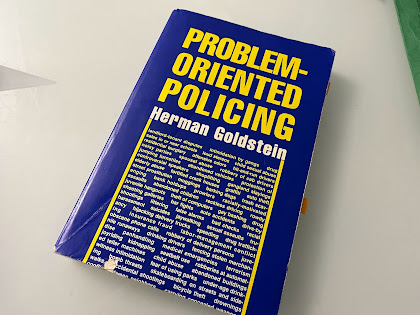
Goldstein's 1990 book, Problem-Oriented Policing, and
his 1979 article by the same name set the stage for successful police strategies  

Echoing urban writer Jane Jacobs a few decades earlier, Goldstein wrote about the need for police to engage the community: “A community must police itself. The police can, at best, only assist in that task.” That is why community engagement is at the heart of the SafeGrowth philosophy.


TRIUMPH IN POLICING 

Professor Goldstein and I noted the ample evidence for POP success and how it offered a powerful crime prevention strategy. Even now, years later, researchers at the Center for Evidence-Based Crime Policy confirm that POP continues to have success in cutting street violence and drug crimes.

Researchers found that most prevention success emanates from a targeted approach at a local micro-level. They analyzed 31 projects of the latest and greatest prevention strategies at a micro-neighborhood scale and discovered half were POP oriented (13 of them had outright successful interventions and the last two were focused on tactics, not crime). 

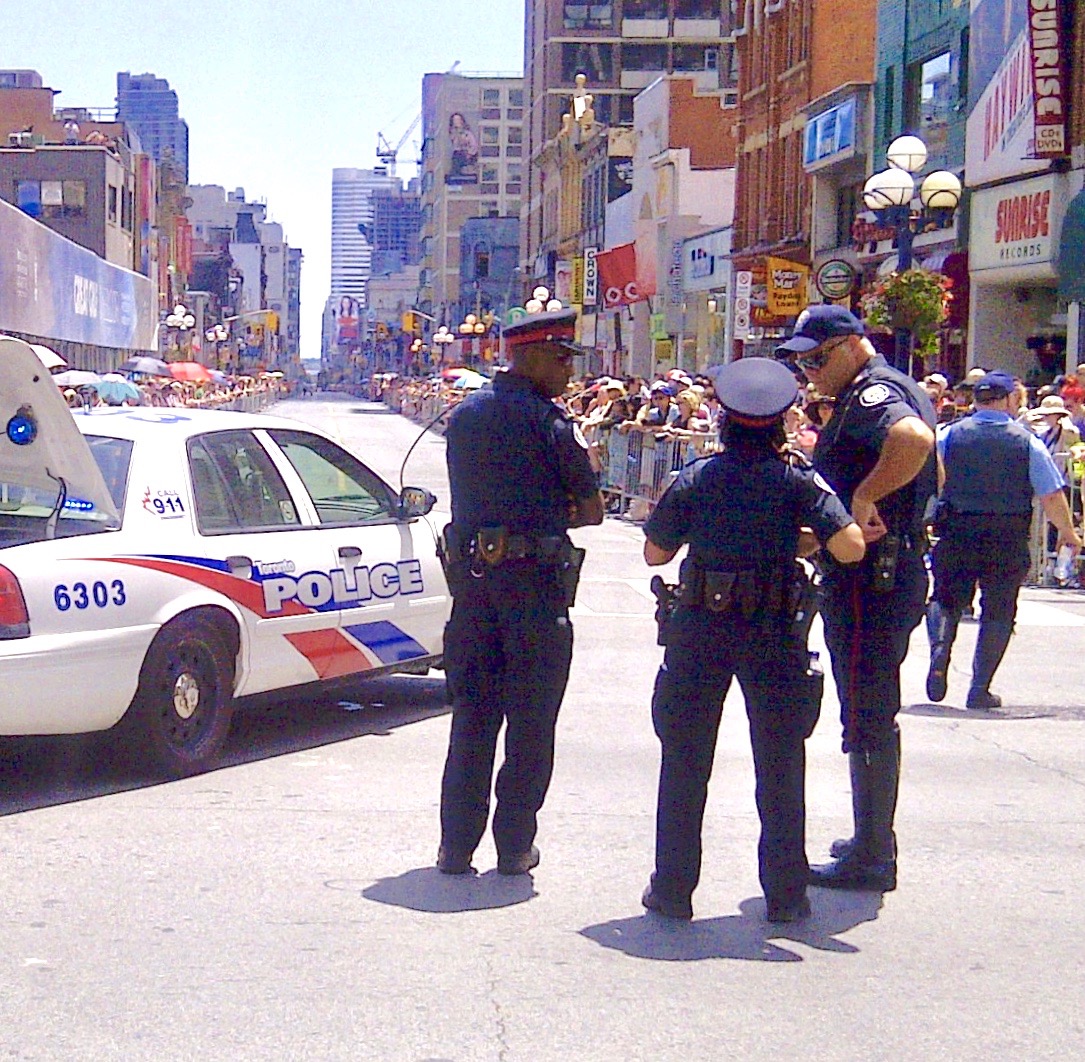
Toronto police at a public event. Have police in Canada (with a few
notable exceptions) also dropped the ball on problem-oriented policing?

In the 1980s and 1990s, the signposts for police triumph were clear. Hundreds of police agencies were trying bits and pieces of the model and reporting good results.

  • Police Chief Jerry Sanders and his agency led the country with POP innovations in San Diego, California
  • Police Chief Darryl Stephens had similar success in his North Carolina city of Charlotte/Mecklenburg
  • The International POP conference drew over a thousand delegates with stories of reduced robberies, assaults, gang shootings, and others
  • Canadian POP projects triggered Canada’s first Problem-Oriented Policing conference in Vancouver in 1995
  • In Britain, a similar POP movement grew (and continues to this day).

Surely, after decades of cutting crime and building community relations, this triumph should lead to positive reform in police service delivery?

You would think.


WHERE IS THE TRIUMPH TODAY?

Somehow, in the intervening years, those efforts fell on deaf ears. Police executives I meet today seldom mention POP as one of their strategies. While the POP movement continues, and the POP conference remains vibrant and relevant, many other POP efforts faded. 

The Canadian POP conference vanished. Police academies rarely teach POP in any meaningful way (or at all). When police leadership in San Diego changed, they eventually dropped POP as an embedded approach, as did many other police agencies. 

In a recent SafeGrowth project we trained 35 NYPD officers alongside community residents. Mindful of the alignment between SafeGrowth and POP, I was disappointed to learn that few of those officers had any experience in POP. In fact, most didn’t know anything about problem-oriented policing. 

It was a sad statement, especially since the annual POP conference, with dozens of innovative crime reduction strategies from around the world, was held later that year a short 3-hour drive north of New York City. 

Of the 40,000 officers in the NYPD, I saw none at that conference. Neither did any of those 35 officers in our training attend and when I asked their Sergeants to drive up, they too were told by supervisors it was not going to happen. That is not to say other police agencies are any different or that others did not attend - they did! At least the progressive ones. But it does make you wonder why success like this does not cling to police organizations?


Disney’s Jiminy Cricket – When you ask about the future of police,
you don't want to hear the sound of crickets
- Image Creative Commons

After four decades, hundreds of POP cases reported on the POP Center website, thousands of officers attending the conferences, dozens of books, and proof of success, when I ask police trainers and leaders today about POP, I get crickets. 

Chirp, chirp. 

It’s a lovely sound on a warm summer night on freshly mowed grass. But in answer to the question of whether police will ever adopt a fundamentally better way to work with the community to solve problems, it is the malady of cultural amnesia.

Why do we find ourselves here? 


NEXT BLOG: A POST-FERGUSON WAKEUP, HOTSPOTS, LEVERS, AND RECOVERING LOST MEMORIES

Monday, November 21, 2022

Turn off the lights?

Lighting for safety is not a simple matter

by Mateja Mihinjac

In our SafeGrowth work, we frequently hear calls from local residents for installing better lighting in their neighbourhoods. It is important that the lighting question is carefully thought through and that urban designers know how to introduce alternative solutions to counter the negative effects of reduced lighting on liveability.

Research on natural surveillance and lighting are some of the most frequent research in crime prevention through environmental design (CPTED). Findings show that improved lighting, either through increased illumination or more consistent lighting increases street activity and reduces fear of crime.

It also leads to increased interaction between the residents and consequently to improvements in neighbourhood social cohesion.

Conversely, reduced lighting, especially when coupled with poor ambient lighting, may lead to an increase in some forms of violent crime.


Many pedestrian walkways are not lit at all


Experienced CPTED practitioners will also recognise that some circumstances or places require eliminating or reducing lighting. Context is everything when it comes to lighting. 

For example, it might be better to redirect people with lighting away from a deserted footpath at night to a busier route. Or perhaps it is advisable to shut down lighting at specific hours to limit the operational hours of a public park thus preventing nuisance behaviour. In both cases, lighting controls can reduce the risk of victimization.

Over the past decade due to the expansive introduction of bright LED lamps, there have been frequent calls from environmental agencies for reducing lighting due to light pollution and its effect on the health of animals and humans.

Greg has also examined the impact of illumination on traffic safety and health, and the importance of assessing the context when deciding whether to light or not to light a place.

More recently, the energy crisis has revived the calls for reducing energy consumption and illumination in our cities.


The city skyline looks well-lit from a distance. Close up, it is not always the case!


THE EUROPEAN ENERGY CRISIS

Europe, especially, has been dramatically affected by the now 9-month war in Ukraine. To help counteract soaring energy prices this winter, the European Commission called for mandatory energy savings by EU countries that need to reduce “electricity consumption by 5% for at least 10% of high demand hours each week”.

As a result, some European cities have reduced the illumination of landmarks, shops, and monuments, decreased illumination levels, or completely switched off or reduced the duration of public lighting.

Slovenia is no exception. Lighting has already been turned off on some motorways and highways where it is legally allowed to do so despite concerns that it might negatively affect traffic safety.


Yellow/orange sodium lighting on a walkway


The mayors of some cities have instructed lights to be switched off before dawn, while in other municipalities promotional digital screens will also be turned off. Some cities decided not to light their downtowns this festive season or will limit festive lights to reduced operational schedules.


IMPACT ON SAFETY?

While the current energy crisis, environmental and health concerns speak in favour of reduced illumination it is uncertain what and if any effects this might have on neighbourhood safety. Many European cities are already poorly illuminated compared to some North American, Australian, or large European cities. 


What is "appropriate" for lighting depends on the context


This is in spite of research that shows poor ambient lighting (that will now replace adequate illumination of some streets) might actually increase safety concerns. Moreover, appropriate lighting is important for improving perceived safety and interaction, especially during wintertime when the sun sets by late afternoon. 

High-quality lighting is the cornerstone of safe design in public places at night. Effective crime prevention means that practitioners and residents must know the proven lighting methods that contribute to safe urban places.


Monday, October 31, 2022

Mental health - COVID's impact

Did mental health reports increase during COVID? 

Tarah Hodgkinson 

We talk about liveability in SafeGrowth a lot. A liveable community is a healthy one. And that includes mental health. 

The COVID-19 pandemic had a significant impact on the mental health of our communities and how we live our lives. While we saw an international decline in most crime types during the initial stages of social restrictions (starting in March 2020), we know less about how these restrictions impacted police-reported mental health. 

There are countless articles and reports raising concerns about the short and long-term impacts on mental health as a result of COVID-19 social restrictions. Most claim that mental health deteriorated across the board, but impacts were particularly acute for disabled, marginalized groups, and women. 


LESSONS FROM CANADA

Furthermore, from Nova Scotia on one coast to British Columbia on the other, there have been calls for increases in Canadian police personnel to respond to the increasing demand for mental health services. In a recent study we published in the Canadian Journal of Criminology and Criminal Justice, we sought to determine if the concerns about mental health were warranted in the Canadian context and if calls for additional resources were necessary. 


The pandemic affected everyone -
A new Canadian study examines mental health impacts


We were able to examine 13 jurisdictions in Canada using a Statistics Canada special survey of police-reported mental health-related incidents. Surprisingly, we didn’t find major increases. 

Rather, police-reported mental health-related incidents were generally stable. More specifically, we found that suicide attempts and incidents generally declined. Apprehensions under the Mental Health Act (a danger to themselves or others), were generally stable with significant increases in only 4 out of 13 jurisdictions. Other mental health-related calls were also generally stable with only 3 jurisdictions seeing a significant increase. 

Counter to widespread concern about the impact of social restrictions, the police-reported mental health-related data shows an unexpected resilience in Canada. When you explore the psychological literature on mental health, this finding is consistent across other contexts.  


WHAT DOES THIS MEAN?

First, it means we may be more resilient than we actually thought. Second, it means that calls for increasing mental health resources to police may be unwarranted.

This is an important point because police are usually not the best equipped to deal with mental health-related incidents. Indeed, because of the de-institutionalization of mental health facilities and cuts to social resources and preventative measures, police have become the only responder left. This isn’t fair. Mental health is not a crime! Police should not be the ones to respond. 


Mental health is not a police issue.
The mentally ill deserve treatment, not prison.


Keep in mind that even though mental health-related incidents are stable, we still have a lot of work to do. And that work shouldn’t be reactive and enforcement-based. Rather, we need to demand our governments invest in evidence-based solutions like basic income, housing, social services, and wrap-around supports. 

These solutions need better funding and neighbourhood-level support to ensure they are appropriate and reach those who need it most. Neighborhood-level capacity-building is precisely what occurs within SafeGrowth programming. We believe this is how we rebuild the kinds of 21st-century neighbourhoods that will help us stay resilient and healthy.