Monday, September 28, 2020

Happy trails

Groomed nature walkway in Singapore

by Gregory Saville

Many years ago I spoke to Paolo Soleri, the visionary (and apparently flawed) architect who created arcology, the marrying of architecture and ecology into a new type of city.

I met him at Arcosanti, his experimental city lab in the Arizona desert, and asked him where, among his artistic walls, curved roof apses, and dense architecture, did he plan to include greenery, parks and nature trails? He replied that arcologies attempt to build high density in every direction, including vertically, but do so by leaving nature alone as much as possible. However, Soleri assured me, access to nature will be easier in an arcology because no arcology dweller will ever be more than a kilometer from nature, untouched and pure – parks, streams, and forests. 

That was an inspiring vision, one that seems far away today. I’m unsure how realistic, or desirable, it is to remove nature from within cities, especially given the many environmental and psychological reasons for walkable green space as Stephen Mouzon reports in his book The Original Green


Path and pedestrian bridge along a Denver creek

As we describe in Third Generation CPTED, nature, parks, trails and greenways have a deep psychological role in creating safe places and they will remain an important asset within large cities – whether it's New York’s Central Park or the massive Stanley Park in Vancouver. This is especially true in a time of COVID when everyone wants to get out from cabin fever. 

What about crime along those trails? Park pathways, greenways and nature trails are known in the CPTED business as “movement predictors”, sometimes called architectural desire lines. It is possible to design movement predictors safely or otherwise (unintentionally), depending on where and how designers construct them. 

A few years ago, we were asked to help design a Rails to Trails bikeway from a California train station through some very high crime neighborhoods. The project never happened, but it became clear to me that the single most important method for designing safe movement predictors is insuring users of those spaces are part of the design process. That's why it is such a central feature of all SafeGrowth programming. 

California rail-to-trail bikeway - never built, still scary

Collaborative design far surpasses the landscape architect’s penchant to: 1) look for published design guidelines; 2) design the trail; 3) show residents the results afterward; and 4) hope for the best. 

Our COVID world is creating a powerful impetus for city dwellers all over the world to take to the trails and experience nature. That is a good thing. Let’s ensure those trails are shared and safe. 


Sunday, September 13, 2020

Suicide prevention and neighborhood livability


by Tarah Hodgkinson

September marks suicide prevention month. Numerous events and strategies are popping up around the world from RU OK? Day in Australia to #Bethe1To in the United States. All of these strategies are attempting to address suicide and mental health. 

In many of the neighbourhoods where we work, suicide and mental health is a common topic. Indeed, I spent time with a rural community a few weeks ago in which residents recounted the loss of several young lives to suicide. This has only been exacerbated by the effects of COVID-19 related to social isolation and financial insecurity. Fortunately, there are suicide prevention strategies that can make a difference.

Suicide prevention can take many forms. Target hardening approaches try to increase the effort to take one’s life in the hopes of saving lives by making suicide more difficult.

Some of these efforts include physical barriers, such as fencing on tall bridges to prevent jumping. Others are somewhat unintentional, such as removing carbon monoxide from domestic gas supplies in the UK that resulted in almost a 100% decrease in suicides by gas poisoning. 


Designing engaging and inclusive outdoor spaces - a place to go for help

HOW, BUT NOT WHY

While these kinds of target hardening prevention strategies are useful, and often successful, they do not address the why of suicide. Suicide is often the last resort, an attempt to escape inconceivable pain and trauma. This pain and trauma do not occur in a vacuum but are influenced by a person’s mental health and their environment. One example is long-term mental health problems arising from adolescent bullying in the neighborhood. Another example is adverse childhood experiences within the family.

Clearly, suicide prevention can do much more than a marketing campaign to tell people to reach out, or by making suicide more difficult. 

While the risk factors for suicide range from individual to ecological, there are numerous ways that we can make our neighbourhoods and communities more resilient to suicide. These include structural changes such as affordable and accessible housing and shelter, paying people a living wage, creating neighborhood opportunities for youth and the elderly and inexpensive access to health care including locally-based, mental health and trauma-informed care. 

If we are to fully address and mitigate suicide, these structural changes are integral in the creation of a healthy neighborhood

Healthy and liveable neighbourhoods, where people are connected, cohesive and cared for play an important role in improving mental health and preventing suicide. And we all have a role to play in that kind of prevention. 


Monday, August 31, 2020

Back to the future


by Gregory Saville

Today I spoke to some colleagues in Europe about teaching a virtual course in SafeGrowth to students at a Swedish Technical University. It was remarkable in a number of ways. First, although cultural differences between countries make it difficult to apply anything from one place to another, I was amazed at the many similarities between different people in different cultures. It seems we are not all that different. 

But it was another dimension to our conversation that struck me as surreal.

We were using Zoom, speaking in real-time, watching each other’s expressions thousands of miles, and many times zones apart. We showed different images on our computer files and used shared digital calendars to plan the workshop. I had never before met one of those colleagues and yet here we were, quite comfortable getting to share ideas and stories.

We dialed into our call as easy as changing chairs in a coffee shop. There was no difficulty or stress in setting up the meeting (aside from me fumbling with the wrong dial-in code). There was no fear of sharing with someone I had never before met in person.

Such is the reality of daily living in, not only a pandemic, but in the second decade of the 21st Century. 

You may think that is all so, well, ho-hum. But it is actually quite remarkable! 

FLASHBACK TO 1961

It's a hot and muggy summer afternoon in 1961 and journalist Jane Jacobs is banging away on her Underwood typewriter in New York’s Greenwich Village. Her ideas will later turn into one of the most famous urban reform books of her generation “The Death and Life of Great American Cities”. Consider the reality of her world at that time, only one lifetime ago.

A typewriter of 1961 - photo Creative Commons

Overseas commercial jet travel was less than a decade old and a rare event for average citizens. Propeller airplanes were commonly used for overseas travel. Passenger ships were popular for commercial passage to and from Europe (I travelled to Britain on one as a kid 6 years later). Television was a novelty and broadcast in black-and-white. TV signals arrived via cumbersome TV “rabbit ears”. 

Suffice to say the internet and computers did not exist for private citizens. Laptop computers would not be invented for decades to come. For entertainment and amusement, kids would go outside and play. Just imagine! Music was unrecognizable compared to what airs today – the Beatles appearance in the U.S. was still 3 years away. 

In many neighborhoods, ice trucks transported huge ice blocks for home freezer boxes. Widely distributed electronic refrigerators were just being manufactured. Milk arrived at the front door of many homes in the form of a milkman placing milk bottles on your doorstep. Newspapers were delivered by the paperboy to each doorstep and the main source for immediate news was radio. 

During hot and muggy days of a New York summer, apartments like those of Jacobs became sweltering ovens, even with fans and open windows. Air conditioning units were far too large for common use – the rotary compressor was invented only four years earlier. 


The Greenwich Village apartment building where Jacobs lived in 1961

Crime flourished in many neighborhood pockets and, in the decades that followed, many American cities, in particular, would experience an unimaginable explosion of urban crime. The justice system of 1961 was, frankly, utterly unprepared for the crime storm on the horizon. 

FLASH-AHEAD

Now fast forward 60 years from today to 2080! 

What new technologies will shape daily lives? How will we travel and how will we communicate? Will this pandemic, or the next, force us into permanent social distances and some futuristic face covering? Will personal intimacy be relegated to staged meet-ups and software date matching? We have worked with the Swedish Helsingborg City 2022 Smart City initiative and they ask these very questions about our cities of tomorrow.

How will we communicate in 2080?

What will our streets and neighborhoods look like? Will we get climate change under control or will the number and intensity of weather catastrophes erase coastal cities and trigger mass migrations like never before in history? Or will renewable technologies create electric vehicles and flying drones to transport us in highways in the sky? Certainly, those technologies are already in our grasp. Will artificial technologies transform our cities into Smart Cities in which we need no longer worry about car crashes, traffic jams, or traffic? Will cars exist?

The technologies we take for granted today would be fantastical to the Jane Jacobs of 1961. As she pounded away at her typewriter in a humid and stuffy hot New York afternoon, today’s world would be as alien as a Martian from the 1950s science fiction film, War of the Worlds

If we are to believe Einstein (I place my bets on Albert), then time travel is quite impossible. So, there is no way to know what will unfold by 2080. Some of you reading these words will be alive to see those times and I wonder what you will see. 

Today, as I chatted with friends far away, with technologies unimaginable long ago, it occurred that the ideas we develop, the actions we take, and the virtual courses we teach, represent an important drop in the proverbial pond of time. Jacobs wrote well. We learn from her words even today. For the sake of our progeny, may we offer the same kind of wisdom for their future!


Sunday, August 16, 2020

Essential spaces for healthy city living


Urban apartments without social or green spaces nearby
- a recipe for trouble

By Mateja Mihinjac

During coronavirus lockdowns, there is much talk about essential and frontline workers and how we depend on their services. Indeed, they have been paramount in supporting us for many months. 

After weeks of the crisis, essential workers are exhausted from working overtime. Many others in lockdown, quarantine, shelter in place, or any other manifestation of physical distancing, experience psychological effects of cabin fever.

Some apartments lack any decent social space


SEEKING REFUGE

In this new reality, many of us experience mental tension and emotional distress, in some cases resulting from the serious psychological impacts of isolation, including depression and anxiety.

It is no surprise that so many of us are finding ways to alleviate these symptoms through nature. Green urban parks are busy offering refuge for local residents during sunny days. In my own neighbourhood I regularly meet walkers and hikers despite being instructed to stay home. Similarly, people in our coastal towns cannot resist outdoor sun craving while lying on the beach – many were fined for doing so during stay-at-home orders.

Others feared the consequences and remained at home.

Pre-COVID green, social spaces in New York

As I noted in March in my blog on Resilience during COVID, in European countries such as Italy, France, and Spain that practice stricter forms of lockdowns, thousands of residents sit on their (often tiny) balconies to enjoy the fresh air, soak in some sun, and connect with their neighbours on other balconies. Yet far too many citizens are deprived of that opportunity as well.

Those living in city apartments without balconies are stuck between four walls. One example is Melbourne public housing towers where residents are ordered to remain in their small apartments for weeks without balconies to resort to in lieu of green space.

Rooftop gardens offer great social spaces

Unfortunately, similar stories of essential space deprivation are common for those living in socially and economically deprived areas. In these places, people are deprived because their neighbourhoods have the least green space and few places to socialize, which in turn contributes to poor physical, social and emotional health. The deficit of essential green social spaces repeats itself across North AmericaAustralia, and Europe.

ESSENTIAL GREEN SPACES

We know very well about the benefits of green infrastructure for health and emotional wellbeing. The effect of green space on alleviating the symptoms of mental tension and improving emotional and physical health outcomes is well documented.

Because of their prominence, I consider green spaces essential spaces. Access to essential green spaces is indispensable and should be widely accessible in all cities. 

Nested between apartment towers and busy streets,
pocket mini-parks offer respite

GREEN INFRASTRUCTURE

Green infrastructure has even been associated with lower crime and has well-known benefits for building social capital. Green urban spaces will help us buffer the effects of negative social impacts that will ensue from this period and they will speed the post-pandemic recovery.

In SafeGrowth we consider these essential green spaces the linchpin for planning safe and livable neighbourhoods, especially those neighbourhoods already employing advanced neighbourhood governance and planning systems like SafeGrowth. 

My hope is that with the many changes unfolding in post-pandemic cities we prioritize essential green spaces over grey spaces of concrete and asphalt. We owe everyone access to essential green spaces in all corners of our future neighbourhoods.


Wednesday, August 5, 2020

Uncovering a message from our past

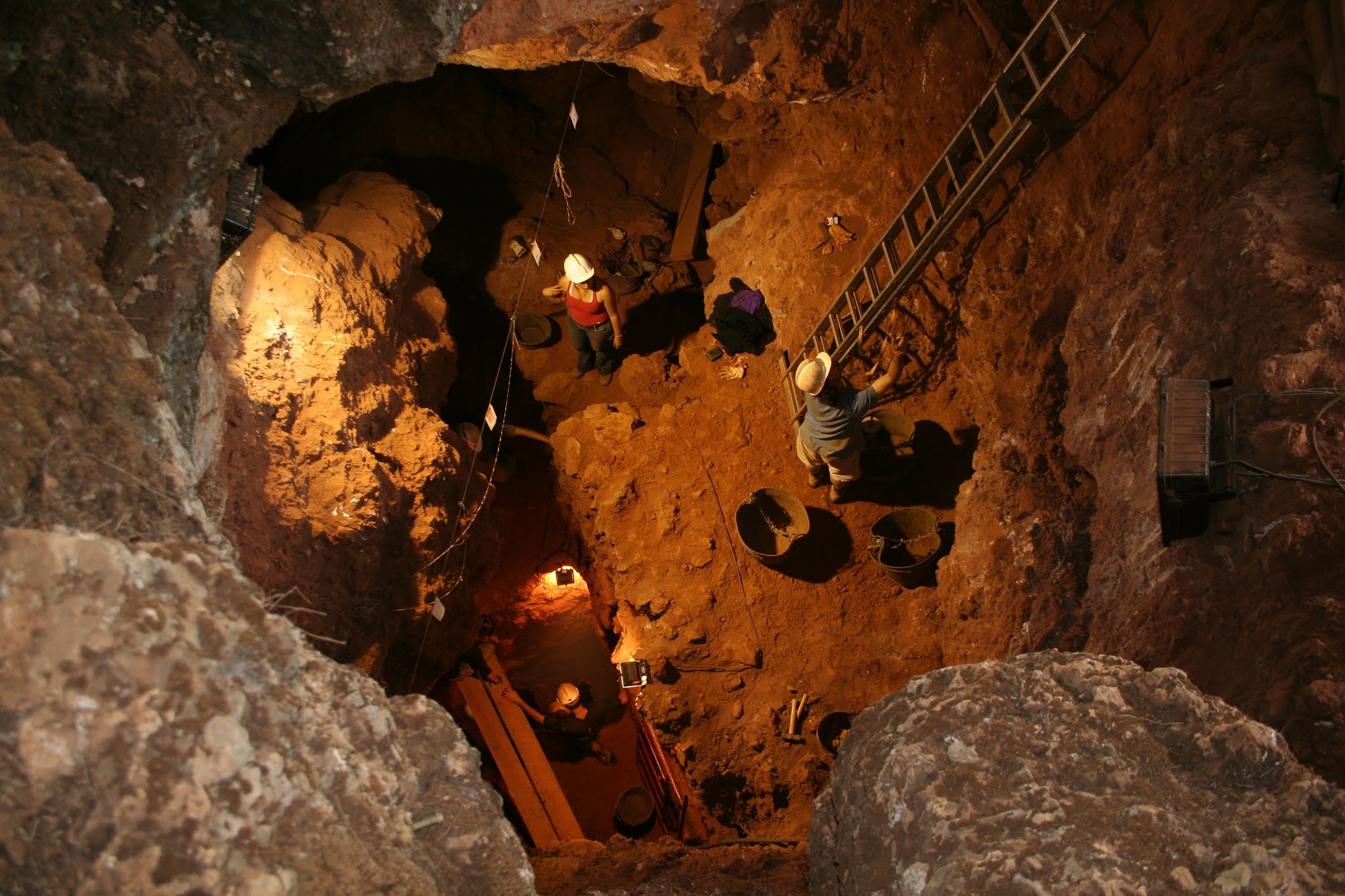
Excavations at the cave of Santa Ana
Photo Creative Commons Mario Modesto

by Gregory Saville

I came across an interesting artifact while digging through some old conference files this week. It brought to mind a story…

He was already a legend when he attended A Crime Prevention Workshop, the 1975 Toronto event that introduced CPTED to Canada. He had been a one-time cat-burglary (until his arrest and prison term) and he was a former Hollywood stunt man on the original Mutiny on the Bounty. University of Alberta’s Professor Gwynn Nettler delivered what must have been the most provocative paper at the event – he questioned how it was possible to do crime prevention with such poor quality science within the social sciences – a topic that would later come back to haunt today’s social sciences. 

By all measures, Professor Nettler, a Stanford trained sociologist and arguably Canada’s most pre-eminent criminologist, was a charismatic, academic iconoclast. Time magazine once called him “a wonderful burglar” and later, the American Society of Criminology awarded him its highest award.

Nettler's classic text: Boundaries of Competence:
How Social Studies Make Feeble Science

In his eulogy, the American Sociological Association wrote he “cherished music, from opera to Ellington, and cut a dashing figure with his presence, the sports cars he drove, and especially the ladies he loved.” He was the Indiana Jones of the criminology world - at least in my quarantine-deprived imagination. 

SEARCHING FOR THE HOLY GRAIL


Nettler often wrote about the impotence of science within social research. “The first part of becoming a scientist…is to be able to recognize rules that merely draw circles and rules that are so phrased that everything that happens confirms them and nothing that happens disconfirms them.” As we outlined a few blogs ago, this is the essential flaw in the Routine Activity Theory of crime. 

Arthur Hughes 1870 painting "Sir Galahad,
the Quest for the Holy Grail" - Photo Creative Commons

Theoretically trained scientists are taught how to recognize the error of logic circles – which is why the holy trinity of a motivated offender/capable guardian/suitable target cannot predict anything with accuracy. And without prediction, Nettler reminds us, it is neither science nor a theory. If we are to move forward in crime prevention, we must have legitimate theories on which to base our work!

For example, it might be attractive to surmise that poor lighting avails criminals to commit strongarm robberies at night when unsuspecting victims walk by. It might – if it were true. But if turning on more lights makes it easier for the crook to locate his victim, (in other words, the motivated offender adapts to the suitability of his target) then lighting provides neither the answer nor the prevention. 

Or worse, as suggested recently in the Black Lives Matter movement, if CPTED controls access into some urban areas in the hope that excluding “outsiders” will prevent crime, it may end up targeting some races and income groups from others. Exclusionary crime prevention theories will not make things better, as we see in today’s racial protests.  

Exclusionary crime prevention?
Even the Great Wall of China didn't work
Photo Jakub Halun

CRIME PREVENTION MUST DO BETTER


While Nettler described some neighborhoods as triggers for crime, he was sceptical of standalone causes, like poverty and ghetto housing. The Indiana Jones of the 1970s knew enough of science to insist on clarity and reliable observations to support concepts. So what does such a theory look like within the crime prevention world today?

I have insisted at each step in our SafeGrowth work that we seize on a well-established concept of social cohesion called neighborhood collective efficacy

Consider for a moment a neighborhood suffering from poverty, inequity, poor relations among residents, dilapidated infrastructure and housing, and hopelessness. It will be of little surprise that in such places you find yourself facing high crime and victimization risks. Incidents of street violence and fear will outstrip other areas in the city, and demands for social services will produce an exorbitant strain on municipal coffers. Locations like this are not the only place of crime, nor do they house all kinds of crime. But there is little doubt crime concentrates in such places. 

Crime concentrates in specific city neighborhoods

Walk a short distance and you will discover neighborhoods with average incomes, adequate basic services, friendliness among neighbors, functioning infrastructure and decent housing, and some degree of happiness. Here you will uncover a fairly safe place with low crime and victimization. Incidents of street violence will be rare and municipal service providers will rarely visit such places. 

Nettler described such places in his classic text Explaining Crime. Research from the geography of crime shows these patterns all over the world; crime hotspots cluster in the first type of neighborhood, not in the second. The consistency of these observations provides a sound basis to build a crime prevention theory. 

So, we have. 

HOW?


In SafeGrowth we put this theory into practice through community development and social cohesion. Our work predicts and produces safer and more livable neighborhoods. This occurs from Christchurch, New Zealand and Toronto, to Hollygrove in New Orleans, New York, and in  Philadelphia.

This is a robust theory of crime prevention that comes close to what Nettler described in his search for the building blocks of a good theory. Few social theories of any kind approach the precision of the general theory of relativity in physics. But collective efficacy and SafeGrowth are among those that aim for that quality.  

When the pandemic threats and racial unrest that plague our streets begin to subside, we will search for ways out of our collective mess. Like the archaeologist seeking answers to long lost questions, we will need answers about how to rebuild safe and livable neighborhoods.

We need not look very far. 

Sunday, July 26, 2020

Think of the teenagers

Many claim teens spend all their time on phones. Lacking
physical 'third places', this is where they seek their community

by Tarah Hodgkinson

This week we continue to watch the unfolding of the Black Lives Matter movement. As Portland becomes the new epicentre of unrest, local residents are out in droves standing against federal law enforcement. Federal authorities claim to be protecting statues from toppling and other property damage, though one could argue human life is receiving far less respect.

Residents have taken to the streets to demand a better future for themselves and their kids. Amidst the horror of watching the news about Portland, I have been reading Palaces for the People by Eric Klinenberg, the writing highlighted in Ifeoma Ebo and Greg Saville’s SafeGrowth presentation in Sweden last November.

A BLEAK FUTURE

I’ve always found reading Klinenberg like sitting down with an old friend. I don’t know exactly where the conversation will lead, but it will be engaging and familiar. However, just as I was settling into the accustomed pace of these ideas, a particular quotation resonated with my background thoughts of Portland. Speaking about teenagers and their tendency to shun face-to-face interactions in exchange for online communication, Klinenberg writes,
“According to research by danah boyd, director of the research institute Data & Society, young people spend so much of their social time online because adults – from helicopter parents to hyper vigilant school administrators and security guards – give them few other options”. 
Public places are designed for children, not teens

Right now, as mothers are forming human barricades between the protesters and federal agents, youth are rising up in unprecedented numbers. Sparked by the work done by the “March for our Lives” movement and others, our youth have their heads up and are looking at a pretty bleak future.

There is an ongoing lament about the younger generation. Books like The Dumbest Generation claim that the digital age has stupefied young people and made it so they are unable to engage in deep thought and meaningful conversations. However, this lament is not new. As research suggests, every generation has complained about the one after it. Indeed there is so much complaint about Millennials, most people forget that Millennials like me are in our thirties and forties with full-time careers and kids.

What Klinenberg describes is that when we deny spaces for youths to interact and engage without constant monitoring by adults, we deny them third places. These great good places, where teenagers can put aside family and school, have all but disappeared. Short of a few skateboard parks (that often impose strict rules) and community centres, there are no real places where youth can stumble upon other youth.

Teens need places to socialize

PLACES TO INTERACT AND SOCIALIZE

Young people need these unstructured and unmonitored spaces. These spaces should be flexible, inexpensive, inclusive of all groups, and located in neighbourhoods that do not fear the presence of young people. They should allow youth to meet and interact with diverse groups and grow intellectually and interpersonally. More importantly, in times like these, great good places create ways for young people to plan and engage civically. That kind of work cannot be done alone and online, as demonstrated in Dave Cullen's Parkland.

In a post-COVID world, we need to think about how we build social infrastructure with young adults. They need to be at the table and actively involved in these decisions. Many of our SafeGrowth communities have already worked alongside youth who are a part of local organizations, for example with neighbourhood Hubs in Honduras and while placemaking their own spaces in New Zealand.

More importantly, we need to be even more proactive and involve youth from across the spectrum of neighbourhood needs.

Not only will these third places encourage young people to make new friends and develop socially, but also help to build social capital and connection across diverse racial, sexual and class divides. These spaces will help us to build the better future our young people are already fighting for today.