Wednesday, June 17, 2026

Can saving a building save a neighbourhood?


The former Denver Civic Theatre, built in 1921 and now home to Su Teatro Cultural and Performing Arts Center, illustrates how a modest historic building can find new life through adaptive reuse and community stewardship

GUEST BLOG: Carl Bray, Ph.D. is principal at Bray Heritage, a cultural heritage planning firm, in Kingston, Ontario. He is a member of the SafeGrowth Network and a co-author of our forthcoming book Hope Rises (University of Toronto Press). He is also adjunct associate professor at Queen's University's graduate program in the School of Urban and Regional Planning.


A few decades ago, residents in a declining Liverpool neighbourhood faced a familiar problem. Empty houses, demolitions, disinvestment, and a growing sense that their community was being written off. Rather than accept the loss, local residents organized, reclaimed vacant properties, created gardens, restored homes, and eventually formed a community land trust. Their efforts helped reshape both the physical environment and the story of their neighbourhood.

We have recently explored how old factories, warehouses, and historic buildings can find new life through adaptive reuse such as community marketplaces. In a few recent blogs, Greg touched on just such a story now unfolding regarding Denver’s new football stadium and an adjacent Third Place arts co-operative

But what happens when local residents take the lead in saving buildings themselves? 

Cover image courtesy of Princeton University Press


In her recent book Preserving with Purpose: Reimagining Buildings for Community Benefit, architect Amy Hetletvedt describes examples of local residents taking over abandoned or dilapidated buildings and transforming them into community assets. While a building alone does not create community, the process of acquiring, renovating, and using a building can bring people together and become a catalyst for neighbourhood revitalization.

Hetletvedt argues that it is not always the most historically significant buildings that offer the greatest opportunity for renewal. In many neighbourhoods, modest and ordinary buildings are more accessible, more adaptable, and more connected to local life. A former shop, school, church, diner, or row of aging houses may hold meaning that goes beyond its market value. Such places help tell the story of a community.


LOCAL CHARACTER

The author describes a range of strategies for preserving threatened buildings. In some cases, communities stabilize structures, provide temporary protection, or relocate buildings to prevent demolition. In Florida, one community group mothballed several houses slated for loss, persuaded the owner to donate them, and then transferred some homes to local residents while holding others for future use.

Liverpool, Granby Market looking toward Princess Road
- phoro by Rodhullandemu, CC BY-SA 4.0, via Wikimedia Commons


One of the most compelling examples comes from Liverpool, England. Faced with years of demolition and neglect, residents formed an association to care for nearly one hundred vacant terrace houses. They began by boarding up buildings, cleaning streets, planting gardens, and preventing further deterioration.

Over time, they created a community land trust and purchased ten vacant houses. Some homes were sold at prices linked to local wages rather than market rates. Others were renovated through collaboration between architects and residents. In one collapsed structure, the community created an enclosed garden beneath a glazed roof, reflecting the neighbourhood's long tradition of gardening.

What makes this example noteworthy is not simply the restoration of buildings. The project unfolded incrementally over several years and depended on local initiative, persistence, and collective effort. Residents were not passive recipients of outside assistance. They became active participants in reshaping the future of their neighbourhood.

On Liverpool's Cairns Street, residents, housing associations, and the city worked together to help revive a neighbourhood marked by disinvestment and demolition.
Photo - Toxteth, Liverpool. Rept0n1x, CC BY-SA 3.0 , via Wikimedia Commons

TAKING ACTION

How easy is this process? Hetletvedt points to familiar barriers: financing, regulations, administrative complexity, and negative perceptions that discourage investment in distressed areas. Any one of these can derail a project.

Yet she concludes that access to technical expertise and professional support can help communities overcome those obstacles. That observation echoes a central principle of SafeGrowth. Outside assistance is most effective when it helps residents build their own capacity to improve where they live.

Revitalizing a building can bring people together around a common purpose. The result may be a neighbourhood hub, a gathering place, or simply a visible sign that local residents still believe in their community.

As Hetletvedt writes in her introduction, professionals from outside a neighbourhood can contribute most effectively when they respect and empower residents to determine the future of their own places.

Sound familiar?


Monday, June 1, 2026

Returning to Vancouver - projects survive, but the neighbourhood worsens

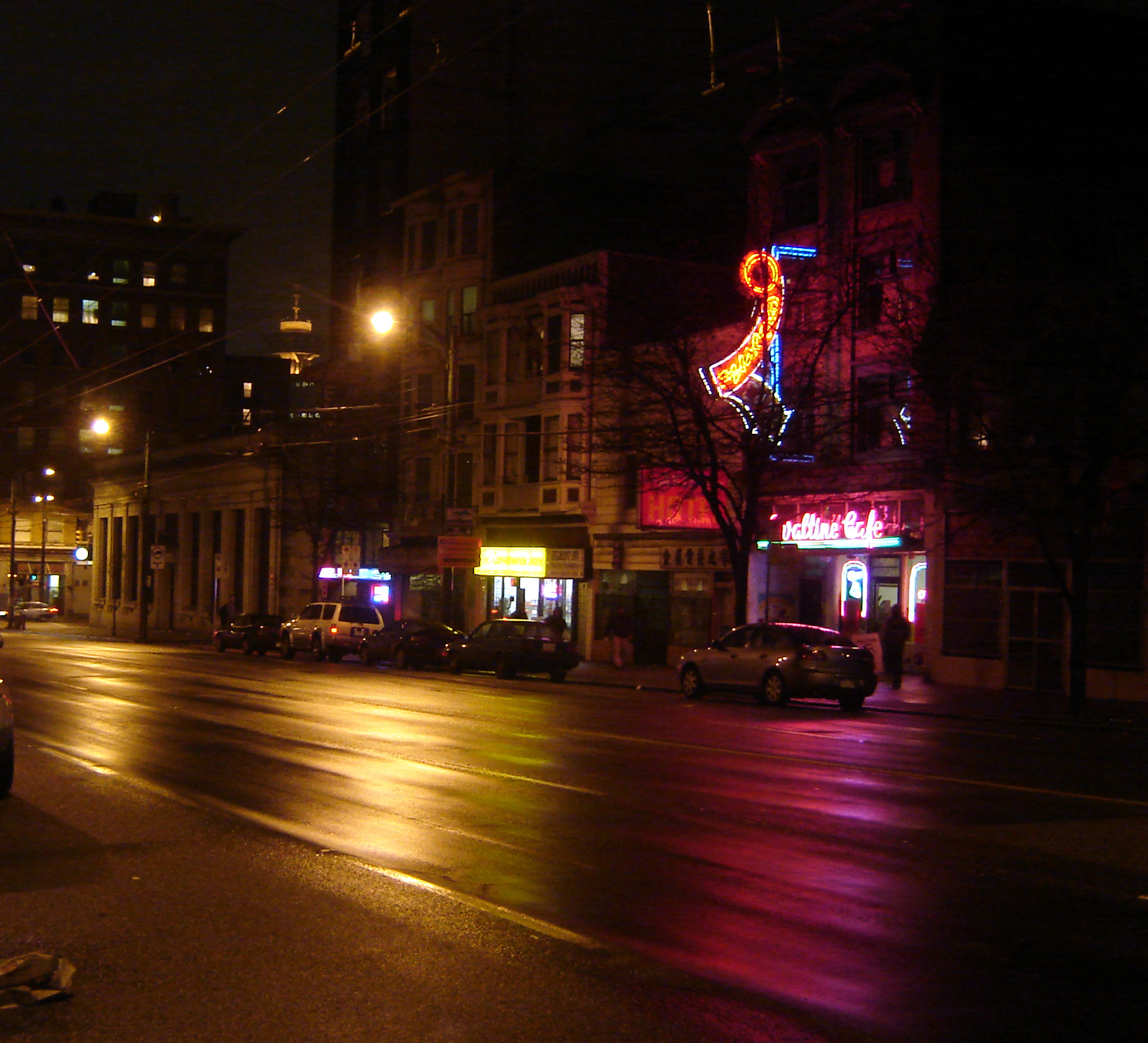
Vancouver's Hastings Street - the Downtown Eastside, one of
the most challenged neigbourhoods in Canada.
Photo CC Wiki Commons 


by Gregory Saville

This week I returned to Vancouver's Downtown Eastside, often described as Canada's largest skid row, to work with members of the SafeGrowth Network and several of the city's Community Policing Centres (CPCs). We were there to prepare local instructors for Canada's first SafeGrowth Livability Academy. 

It was a milestone. Three Vancouver CPCs participated in the training: the Strathcona CPC, the Chinese CPC, and the Aboriginal CPC. Along with their SafeGrowth and CPTED training last year, Vancouver has now become the first city in Canada to move this far along the SafeGrowth pathway.

Yet the visit was also deeply personal for me.


A PERSONAL JOURNEY

More than thirty years ago, my former business partner and I conducted traditional CPTED projects in this same neighbourhood. While preparing for this week, I looked back at some of those projects. To my surprise, many are still holding up. The lighting improvements, design modifications, and site-specific interventions remain visible decades later.

That should be encouraging. Yet I could not escape another conclusion. Those projects improved places, but they did not substantially improve neighbourhood life.


Vancouver's Chinatown is among the most exciting and
fascinating communities in the country

I found myself once again walking through areas adjacent to Vancouver's notorious Hastings Street in the Downtown Eastside. Decades have passed since I first co-taught problem-oriented policing to British Columbia police officers. Decades have passed since criminologists, sociologists, urban studies researchers, and community development analysts began studying crime, addiction, homelessness, and social disorder in Downtown Eastside. Entire careers have been built examining the Downtown Eastside. Hundreds of reports have been written. Countless interventions have been launched.

A few crime stats have been declining of late (as they have everywhere), yet the situation remains bleak on most categories. The corridor still accounts for a large portion of the city’s serious assaults and robberies. Mental health calls for police service increased, overdose incidents remain high, and from what I could see, street disorder has displaced and is spreading. And, making matters worse, homelessness has been increasing.


Homeless rates concentrated on Downtown Eastside from
the metro population demographics and annual homeless counts


The homeless numbers tell part of the story. In the early 2000s, Vancouver's homeless count was approximately 56 people per 100,000 residents. Today, that figure is approaching 200. Even after accounting for population growth, homelessness has increased dramatically over the past two decades.


WHY DON'T HOTSPOT TACTICS LAST?

For those of us who have spent careers studying crime prevention and community safety, these trends force uncomfortable questions.

Why have decades of hotspot interventions failed to produce lasting change? Why have the various social programs, such as a safe injection site or the many social service agencies here, not prevented the worsening spread of the problem? 

Why have so many individual projects succeeded, such as a recent police crackdown and our prior CPTED work, while the broader neighbourhood ecology continues to struggle?

Why has so much effort yielded so little transformation?

I could see that some of the original CPTED improvements we helped design are still functioning. Yet, standing on Hasting Street today, it felt like our earlier work was all for naught. It brought to mind three principles in SafeGrowth planning: 

  • Neighbourhoods are more than collections of hotspots
  • Communities are not simply the sum of their crime locations
  • A city cannot solve deeply embedded social problems by repeatedly treating symptoms while neglecting the health of the larger social ecosystem.


The Downtown Eastside remains home to thousands of people living
with addiction, homelessness, mental illness, and profound social isolation. 


A NEW THEORY ON COMPLEXITY

Since last year I have been working with new colleague, a talented oncological medical researcher, regarding complex adaptive systems. We are studying the power of these systems, (like the Downtown Eastside), and how they exhibit distributed adaptive behavior near critical thresholds. It now seems possible this may be the reason why street disorder continues to displace and spread in spite of enforcement actions. We have learned how small perturbations can produce disproportionate, scaling-law effects that deteriorate stability. This, in turn, may explain why complex adaptive systems such as tumors or high-crime neighbourhoods resist interventions rather than underlying system conditions.  

In other words, hotspot policing alone cannot tip the neighbourhood far enough on its own. Much more collaboration and a strategic long-term action plan is needed, and that is where the Community Policing Centres and their neighbourhood-based Livability Academy might better address the conditions they face every day.

Walking in and around Hastings Street it was clear; there are too many dysfunctional activities, crime hotspots, crime generators, and too few social controls and social stabilizers to help those who suffer and those who work and live there. There is simply no way to arrest, imprison, or hotspot our way out of this disorder. 

Downtown Eastside has long ago scaled out of control. I left Vancouver today feeling both discouraged and encouraged at the same time.

I was discouraged because the visible suffering remains. The homelessness, addiction, and disorder that have characterized parts of the Downtown Eastside for decades continue unabated despite enormous investments of effort and resources. 

I was encouraged because something wonderful remains. I refer to the dedicated and passionate residents, community workers, business people, and CPC members attending both our SafeGrowth problem-solving training last year and the Livability Academy instructor's course this week. 


Instructors and some students of the recent Vancouver Livability Academy
Instructor Training celebrating their graduation


GOOD NEWS

I am also encouraged by the Vancouver Police Department's continuing support of their Community Policing Centre’s illustrating both persistent and intelligent leadership.

Those CPCs are staffed by committed, highly capable people. They understand the neighbourhood, the relationships on the street, and the kind of inclusion needed for successful problem-solving. I was impressed by their professionalism and organizational skills. They asked difficult questions. They challenged assumptions. Most importantly, they were already thinking about how to engage people and build long-term neighbourhood capacity.

They are the ones who best represent the heart of SafeGrowth. They know their goal is not simply to reduce a statistical crime blip next month or to remove a hotspot next year. They want their neighbourhood stronger, more resilient, and capable of self-help.  

Thirty years ago, I co-taught CPTED and problem-oriented policing in Vancouver. This year, I returned with some SafeGrowth friends to help launch Canada's first Livability Academy. The problems are still here. But so are the people willing to confront them with new skills, a new action plan, and deep connections to the social roots of their community.

After everything I saw this week, I believe the next chapter will not be written by its problems, but by the people working together to solve them.