Showing posts with label Philadelphia. Show all posts

Friday, July 4, 2025

The mastery of tradecraft in crime prevention - Why quick fixes fail

Independence Hall where the Declaration of Independence was signed in Philadelphia


by Gregory Saville

On this July 4 Independence Day, I discovered something worth celebrating emerging from Philadelphia. And it wasn't the Declaration of Independence. 

Last week, I was dealing with a failed air conditioner during a brutal heatwave. Calling an A/C technician was fascinating. He was energetic, hurried, and confident (overconfident – it turns out). He glanced at the unit and announced it was too old to repair. He didn’t test the refrigerant, didn’t run diagnostics. He jumped quickly to a simple conclusion - it likely had a Freon leak requiring a full system replacement. The going rate? Over $8,000!

That was declined.

The next day, I called in a different HVAC technician — someone calm, experienced, and focused. He listened carefully as I explained the background of the A/C issue, then got to work. In under an hour, he had diagnosed the real problem, tested the system, checked the wiring, bypassed a strange connection, and replaced the dirty filter. The result? Cool air again — and all for under $200.


Something worth celebrating on July 4 - it all started with an air con


He also went a step further – he pointed to a website that ships replacement filters automatically, provided some education on how to self-diagnose simple AC problems, and made sure other parts of the system were not at risk. “That way, you can prevent future problems and self-repair when necessary.” 

That is mastery of tradecraft.


PRACTICING CRIME PREVENTION

It made me think, too often in CPTED, we meet the first kind of technician — fast talkers selling quick fixes at a high cost. What we need are more like the second — grounded pros who diagnose carefully, teach as they go, and work with the client, not around them.

Nowhere is the contrast between shallow fixes versus deep tradecraft more visible than in Philadelphia — between the neighborhoods of Kensington and Fairhill/St. Hugh.


Philadelphia's Kensington neighborhood remains among the highest
crime communities in the city 


Kensington is infamous — a high-crime zone marked by open-air drug markets, encampments, and a long history of short-term government crackdowns. One of the most aggressive was Operation Sunrise, a year-long police campaign launched in 1998 that promised zero-tolerance enforcement aimed at gangs and drugs. Authorities were confident (overconfident, as it turned out).

The effort made headlines. It felt bold, but it didn’t last.

Early criminology research praised Operation Sunrise and its “place-based policing” model, highlighting short-term drops in crime and minimal displacement. But later analysis challenged the no-displacement finding and warned of widespread unintended consequences. One study concluded the operation failed to sustain lower crime rates and instead produced a “generation of fugitives” and widespread collateral harm.

Today, government research concludes that Operation Sunshine’s zero-tolerance policing and hotspot crackdowns failed to deliver sustainable safety.


The business towers of downtown Philadelphia.
Not far away, some of the nation's highest crime neighborhoods. 


MASTERFUL CRAFTSMANSHIP MISSING

There’s nothing masterful about these strategies. They are the equivalent of replacing the entire HVAC system when the real problem is a dirty filter, a lack of client knowledge and no self-capacity to resolve problems.

When you leave Kensington and travel a half mile north, you arrive at Fairhill/St. Hugh, a primarily Hispanic neighborhood anchored by the vibrant El Centro de Oro commercial corridor. 

In contrast to Kensington, the St. Hugh neighborhood has been growing and improving for a while and, while Fairhill has some crime and disorder challenges similar to Kensington, there is something very different happening. 

It is difficult to get the full picture from stats, and violent crime rates are notoriously difficult to measure, much less calculate. But by at least some estimates, the violent crime rate in Fairhill/St. Hugh is lower than in Kensington.

For example, one source claims Kensington's violent crime rate of 9.3 per 1,000 residents is 55% higher than the 5.9 rate in Fairhill/St. Hugh. Unfortunately, stats like this are bound to be imperfect and imperfect stats rarely tell the full story.


2023 Crime Density map for Philadelphia - Map from GIS Geography

Kensington and Fairhill neighborhoods overlay onto crime density map
- crime stats are notoriously difficult to calculate and tell only a small part of the story. In this version the dark red suggests higher crime rates in Kensington 


THE HACE STORY

Enter HACE, a community development corporation working in Fairhill/St. Hugh for over three decades. HACE was formed to combat disinvestment and preserve community culture. Their approach? Place-based strategies not limited to law enforcement. Instead, they use long-term investment, community leadership, neighborhood planning and strategies grounded in SafeGrowth.

Long before HACE adopted SafeGrowth, their results were stunning:

  • Over $100 million in local investment
  • More than 450 new housing units built
  • 400+ vacant lots rehabbed and greened
  • A community-run food distribution center
  • Housing counseling programs that build generational wealth

Even more impressive, HACE now adopts SafeGrowth and crime prevention principles within their ten-year Goodlands 2025 plan — not as add-ons, but as core pillars of community design.

The neighborhood plan focuses on major areas of development activity, including housing, commercial corridor revitalization, improving the quality of life, and crime and safety. 


Celebrating the birthday of a Livability Academy member - a local police officer


They also train residents through SafeGrowth Livability Academies, helping locals become leaders in problem-solving, safety design, and civic engagement.

Academy classes lead local projects — clearing encampments, building safe walking trails, and working with police. Cops don’t arrest their way out of crime; communities and police build their way out, together.


PREVENTION TRADECRAFT

Masterful prevention tradecraft has a look: practical, visible, and led by the people who live there. It is grounded in self-help, local knowledge, rooted in evidence, and police are partners, not enforcers of one-size-fits-all solutions.

It’s patient work, unlikely to reveal itself to 6-month evaluations. Instead, it requires patience like slowly melting ice from frozen A/C lines. Like tracing faulty wiring until the real problem is clear.

And in neighborhoods, as in A/C systems, the difference between a temporary fix and a long-term solution is rarely visible at first glance — but unmistakable over time.

Sunday, December 26, 2021

"It takes the whole village to raise this community"

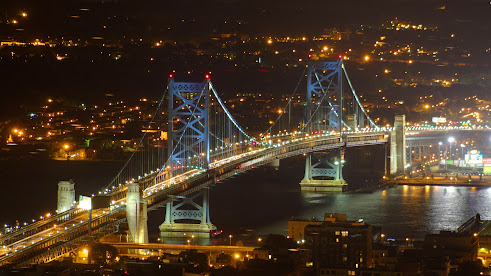
Philadelphia's Benjamin Franklin Bridge
Skyline views at night mask the reality of neighbourhood life 
- photo Jeffrey Phillips Freeman Creative Commons Wiki

by Mateja Mihinjac

At a time when a rising tide of violent crime infects Philadelphia and so many other American cities, one small pocket in that city has discovered a different way forward. A few weeks ago, community teams from the HACE Livability Academy presented preliminary plans for improving livability in their neighborhood. It was like an early holiday gift to their city and their neighborhoods and I was enormously impressed with their plans. 

The HACE SafeGrowth Livability Academy has been underway in the Fairhill and Kensington neighborhoods for a few years and – although applied only to these two neighborhoods and severely challenged by the COVID pandemic – academy classes continued unabated thanks to the amazing work of HACE, the non-profit community development organization.

COVID has made life miserable for community development work. In 2020, we were forced to suddenly transition to a virtual environment that was not conducive to collaborative workshops. But a year later we’ve managed to better adapt to this new reality. Training from afar is not ideal, but the virtual environment does have advantages and we can now reach a wider audience.


WHAT IS THE LIVABILITY ACADEMY?

Over the past two months, I had the pleasure of co-facilitating the latest online cohort of HACE Livability Academy participants. 

HACE has been successfully running Livability Academies twice a year since 2018. Last year, the HACE team modified the curriculum to run virtual-only sessions. This year we were able to offer both face-to-face and virtual modalities. 

The Livability Academy is a 6–8-week program developed by AlterNation LLC  – the company behind SafeGrowth® – in which local residents and community representatives learn skills in community leadership, SafeGrowth and CPTED, community organizing, and project management.

The Livability Academy is an integral part of the SafeGrowth philosophy and it provides a constant flow of community leaders into neighbourhood problem-solving teams to address local issues. I found it empowering to see the kinds of complex issues that the latest cohort decided to tackle in their project work. 


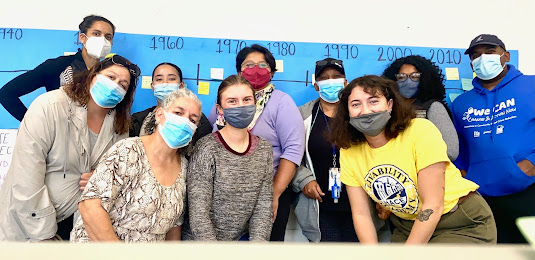
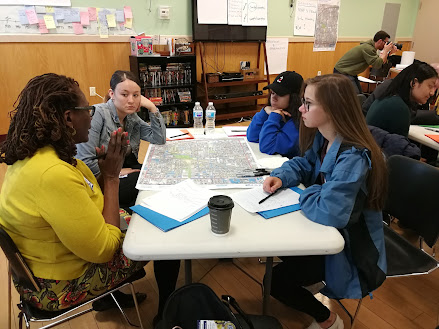
Team project planning from a previous Philadelphia Livability Academy class


2021 PROJECTS

During training, participants identify an issue and in work teams they tackle a small-scale, real-life project in their neighbourhood. In this training, the in-person, face-to-face team produced one project proposal while the online virtual team chose to divide into two project teams. 

This past week all three teams presented their preliminary plans of the work they’ve done over the past few months. All three teams created inspiring projects directly within their neighborhood and they tackled persistent problems that were made worse during COVID.


Cover of the project report from the Fairhill United for Livability team

Fairhill United for Livability 

The first team’s project focused on activating the neighbourhood park to create a space for people to come together and build connections. They envisioned a more united neighbourhood that fosters community pride, strengthens connections between residents, and partners with neighbourhood groups, schools, and businesses to promote livability. 

They divided their plan into 3 phases over the next year: outreach, clean-ups, and community celebrations. The goal is to create a movement of people to fix broken social connections, a problem made far worse by COVID. The team concluded with their slogan: “No one can do alone what we can do together”.


Literally Literacy (Increasing Adult Literacy)

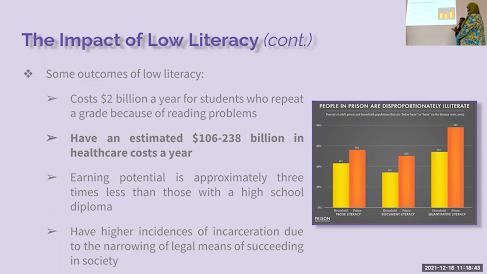
This team chose adult literacy as a key liveability issue. They identified low levels of literacy as a key barrier to job access, high earning potential, and access to better healthcare. Illiteracy is one of the major contributors to overrepresentation in the criminal justice system. Illiteracy is an obstacle to personal growth and this team decided to do something. The main objective of the project is to empower adults to seek assistance with reading and increase their self-esteem while eliminating the stigma associated with illiteracy. 


Data from the Literacy team's research project


The highlight of this team’s presentation was their inspirational personal stories. 

  • One member shared how her aunt learned to read late in life because she was unable to visit school as she had to prioritise caring for her family. 
  • Another member shared the experience of returning to college in her senior years and helped her expand her knowledge and reading capabilities. 
  • Another member recollected how it was once illegal for African Americans to read and she had to self-learn how to read. 
  • Finally, one member shared a story about how she remained a single young mother when she left her illiterate partner who was unable to provide for the family aside from selling drugs. 

They summarized their stories with the phrase: “You can be all that you can be; all you have to do is take the first step.”


Teen Trauma

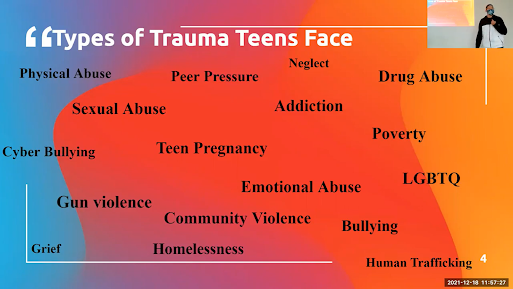
This team focused on the struggles of youth that (if not addressed early) can cause long-term damage to a young person’s life and the neighbourhood quality of life. They outlined multiple consequences of trauma such as emotional and behavioural issues, internalised stress, engaging in unsafe behaviours, substance abuse, and mental illness. 

They proposed a 6-week program with various topics to address traumatic events. They also proposed creating a safe space with a support group for teens experiencing trauma. Two young team members, who themselves went through traumatic events, were especially inspiring in their quest to help their peers turn a new leaf. The team summarised the objective of their program: “To go from dysfunction to function.”


Research chart on trauma from the Teen Trauma team


A HOLIDAY GIFT 

I was extremely proud of all three teams for the work they completed within this short time. It is amazing how a group of people who know little, if anything, about each other, were able to take steps together and share the common purpose of improving life in their neighbourhood. 

This is the true spirit of SafeGrowth and the Livability Academy. There is no better holiday gift to Philadelphia, to their community, and to themselves.

As one Livability Academy participant concluded: “It takes the whole village to raise this community.”


Congrats to Philadelphia's 2021 HACE Livability Academy grads!
(photo courtesy of Sierra Cuellar)


Thursday, November 29, 2018

May they fail


Times Square echoes Bladerunner - hyper-commercialized,
electronic billboards in every direction

by Gregory Saville

The writing on the shop walls and the floating billboards was Anglo-Chinese. On the street, the cityspeak combined English, Chinese and Spanish, a vernacular that served the homeless, the marginally employed and the unfortunate. Pollution and environmental collapse led to constant clouds and pelting rain. The affluent traveled to off-world colonies on Mars and elsewhere, leaving the rest of us behind. Bio-engineered, human-like robots called Replicants used their artificial intelligence and rebelled.

That was the horrific world described in Philip K. Dick’s book that became the 1982 sci-fi classic, Bladerunner. I blogged on Bladerunner architecture last year. When I watched Bladerunner in the 1980s it seemed like an impossible future. And it was set for such a long way ahead – 2019!

That's next year! With only a month left, how close is that future?

No escape - walls of electonics

UNFOLDING AS WE SPEAK

It doesn’t take much imagination to see a Bladerunner vision unfolding. True, we are nowhere near that specific dystopia. We still don’t have flying cars (but we have self-driving ones!). Yet, one wonders...

This week I watched NASA’s exciting landing on the planet Mars. Space X CEO Elon Musk says he’ll get people to Mars within six years. How long before off-world colonies evolve?

This year I watched the fruits of some incredible advances in artificial intelligence and bio-engineering, including the world tour of the remarkable Sophie, the first thinking and speaking robot to attain citizenship. Sophie tells us not to worry; real robots are not like Bladerunner.


Then there is the decades-long Chinese economic miracle or the environmental mess we watch with increasing regularity in hurricanes, wildfires, species extinction and climate chaos.

Philip K. Dick, it seems, was on track.

How might we derail that particular future? The usual formula is to rethink geo-politics and create new macroeconomics. Nevertheless, the maxim ‘think global, act local’ has special relevance here. Take, for example, Philadelphia!

ONE NEIGHBORHOOD’S STORY 

Over the past few years, we brought SafeGrowth to Philadelphia. We now have some great advocates working for the neighborhood association, HACE. This year they began implementing their latest 10-year 2025 Neighborhood Plan.

For years HACE and friends have been diligently working to transform the blight, drugs, and crime into a greener, socially connected, economically vibrant neighborhood. Now their new, SafeGrowth-infused 2025 plan is underway and they’ve been making strides.

They installed new, clean walking trails where garbage was once strewn.

The HACE Trail project in Philadelphia

They instituted Philadelphia’s first SafeGrowth Livability Academy, a collaborative workshop with 30 neighbors and police during which they developed problem-solving strategies for their neighborhood.

The HACE plan envisions greener areas, community gardens, better resourced neighborhood hubs, safe intergenerational and affordable housing. HACE has already built over 200 units of affordable housing and leveraged over $100 million in redevelopment and improvements. A host of community-building strategies are already underway.

Neighborhood bridge now cleaned and repainted

For example, they, and their partners shut down a drug infested, homeless camp along a railway underpass. That naturally displaced addicts to street level, resulting in a public outcry (after decades of inaction). Ultimately, that led to a more coordinated city response to treat drug users, expand homeless beds and increase shelters.

HACE built affordable housing
There is a long way to go and resources and shelter beds are still scarce (one estimate suggest Philadelphia has 50,000 opioid addicts, many of whom end up here). But at least action is finally underway.

That is the hard community-building work that cuts crime, improves livability, and gets neighbors engaged in shaping their own future.

In spite of successful resident-based projects, cities like Detroit
fund expensive CCTV technology to cut crime

BEYOND SECURITY

Too many mayors get caught up in a fear-based echo chamber that makes them vulnerable to peddlers of security technology and promises of a bright, high-tech future.

Too many city leaders act as obsequious errand-boys for the technologists, embracing the faint promise of hostile architecture, public CCTV, automated security robots, predictive algorithms seeking crime, and audio software to track gang gunfire. (Wouldn't it be better to prevent the gunfire in the first place?)

They do this with the ill-informed hope that technology will prevail. But in doing this, they snatch defeat from the hands of successful action-based community projects right in front of them.

They invite a Bladerunner future. May they fail.

Wednesday, August 8, 2018

Philadelphia Pop-ups - Placemaking for abandoned lots

Plans for a POP-up market in Philadelphia - diagram by Brad Vassallo

GUEST BLOG: Brad Vassallo is a SafeGrowth Advocate having taught POP-up placemaking and community development as part of a SafeGrowth team. He has worked in community development in Philadelphia for the past few years and offers here a case study from that city.


****

Philadelphia is a city of 40,000 vacant lots. Like many post-industrial cities, it fell victim to a mass exodus of middle-class residents in the mid-20th century. Unfortunately, the 40-plus-year drought in tax revenues has taken its toll, with neighborhoods in North and West Philadelphia ailing from high crime rates and rampant vacancy. These conditions have had a torturous effect on neighborhood quality of life.

As a former student at Temple University in community development, I witnessed first-hand the effects of this multi-generational disinvestment. Asociacion Puertorriquenos en Marcha (APM) is a neighborhood nonprofit serving residents of all color and creed, with a mission of helping families. This is no easy task in a neighborhood commonly referred to as "the Badlands" due to its high frequency of violent crime.

TACKLING THE BADLANDS

As part of my degree, I found myself working with APM during the beginning of a new creative placemaking grant. The goal of the Pop Up Market Place (PUMP), was to reactivate a vacant lot at the corner of 6th Street and Susquehanna Avenue. The 11,000-square-foot lot was slated to become a youth housing facility with ground-floor retail, but the development cycle often takes five or more years. Our task was to reimagine the space as a gateway for a downtrodden stretch of Germantown Avenue. The project involved several layers:

Using 3-D modeling during design charrettes - photo Brad Vassallo

  • Engage the local community in a conversation about the future of Germantown Avenue using the PUMP site as a centerpiece. Similar to the SafeGrowth model, we operated on a To-For-With-By model; each level represents a greater level of civic participation, with the pinnacle being those projects that are done with or by the community. We assembled a diverse steering committee and arrived at three focus areas: Crime and Safety, Jobs, and Youth Engagement.
  • Using feedback from the Steering Committee, we offered regular programming on the site to draw foot traffic and build awareness. Our events included an end-of-school summer block party, neighborhood potluck, and movie nights. Children flocked to the site for water balloon fights and piragua on a hot summer day. Neighborhoods like this have endured a great deal of trauma. By holding a small community event on the project site, we began to strip away some of the negative association people had with that location. 

Mapping survey and data collection areas

  • We led entrepreneurship training to build capacity. In a neighborhood like ours, educational attainment is low, making traditional employment difficult for most residents. Starting a small business is a more attractive option for first-generation immigrant families. By offering free training we were able to tap into our neighborhood's entrepreneurial spirit and offer an alternative income stream.
  • The final step was to identify a few promising candidates from our training with whom we could launch a business incubator on the site. Brick-and-mortar businesses have significant overhead expenses. By repurposing a few recycled shipping containers for micro-retail, we could lower the barrier to entry for these new business owners and provide a safe haven for residents to shop locally and explore.


Activating spaces at night - photo Brad Vassallo

Despite problems moving this version of the project forward, we learned how to revive vacant land and encourage business activities. We also learned that this unique design style was easy to mobilize, it could move from parcel to parcel, and it provided a beta-test for local businesses as an alternative form of entrepreneurialism.

Sunday, December 20, 2015

"We were all color blind"


The title above is a quote from one of my favorite people in 2015 - Amelia Price.

Every now and then I recognize a stellar community development worker, organizer or thinker, what we affectionately call SafeGrowthers. In 2009 it was Sarah Buffie in Africa. In 2012 it was Andy Mackie and his harmonicas in Washington State.

At the close of 2015 there are so many to recognize that electing one leaves an unpalatable choice. It's an embarrassment of riches! Candidates range from Calgary planner Anna Brassard - who organized the first-ever SafeGrowth Summit - to the resolute commitment of LISC community safety coordinator John Connelly, who promotes remarkable SafeGrowth programs in Milwaukee.

One of Philadelphia's commercial corridors - sites of SafeGrowth training - photo Philadelphia LISC

But today I choose one from Philadelphia. Amelia Price emerged as a leader and role model worth signaling out for accolades.

Amelia is a commercial corridor manager and she was a member of the Philadelphia SafeGrowth training. Part of her story emerges in the YouTube above. Listen to how Amelia describes her SafeGrowth team and who needs to be part of such teams. She knows the value of CPTED and promotes it in her work.

WORKING TOGETHER

Listen to how she describes the Philadelphia police officers who work her neighborhood, how the team began changing attitudes and how those officers contributed to making a safer street (police officers, take note).

My favorite Amelia quote:
"We were all color-blind. Although we all looked different, we never looked at skin; we look at each others' heart. And I noticed right away that they also had a passion for their community."
Of course Amelia  does not take credit for all the incredible work of her team, the police, or the organizations helping to make this happen - Philadelphia Department of Commerce, Called to Serve CDC and Philadelphia LISC. She does what stellar leaders always do - credit those around them.

Amelia, you make the world a better place. To you and your fellow SafeGrowthers around the world, know this - you are loved for what you do. Thank you!

Monday, August 3, 2015

Steel palms and transformation in Philly

Affordable HACE housing in Philly - a transformed neighborhood


One of the more offensive ideas I’ve come across in criminology is the theory that some high crime neighborhoods never change. Giving the lie to that myth is the above photo from new affordable housing by the non-profit housing group HACE in a transformed Philadelphia neighborhood. Yet, the criminology theory suggests such neighborhoods remain crime-ridden for decades and they are impervious to recovery. Equally offensive - and no less true - is a belief that zero-tolerance enforcement in crime hotspots or hardening targets in those high crime neighborhood is the best we can do.

No doubt crime persists in some places. Enforcement and situational prevention too can help. But they are far from the best we can do. Places do change and we can be part of that change. To peddle the inevitability of crime persistence or the impossibility of neighborhood rebirth is to embrace empirically unsound, intellectual funk.  

PHILADELPHIA PROJECTS

That was my thought last week in Philadelphia where we worked with Philadelphia LISC, the Philadelphia Commerce Department, and Police Department to launch more SafeGrowth community development projects.

We’ve been here twice over the past few years, most recently last year where impressive project work is still underway. One of those SafeGrowth projects started four years ago - Rainbow de Colores park - won accolades and was featured in an award-winning video for reducing crime and transforming a drug infested, shooting gallery at a handball court into a safe place alive with neighborhood life.

Last week energetic and dedicated commercial corridor managers, police officers, architects, city officials and residents began SafeGrowth projects in commercial corridors across the city. We did our training on 5th Street North, an area called El Centro de Oro, often associated with high crime and some of the highest drug dealing hotspots in the city.

Safety Audit walkabouts during our SafeGrowth training in Philadelphia
There is much to be done here (and elsewhere). The truth is that positive transformation is no more inevitable than stagnation. Fortunately work is already underway.

5th STREET NORTH

For example on 5th Street positive things are happening: street-scaping, thriving restaurants, an active arts and music scene, and vibrant community groups such as the innovative HACE (the Hispanic Association of Contractors and Enterprises) where we held our training. This corridor is revitalizing. Things are looking up!

You know something special is going on when you hear that local residents and shop owners take it on themselves to clean graffiti from the decorative, steel palm trees lining 5th Street North. To one author those hand-crafted trees are “a beloved symbol of the many Latin American islands represented in the local population.”

Obviously, undeterred by obsolete criminology theories, local pride and cohesion is where neighborhood transformation begins.

Tuesday, February 18, 2014

Rainbow de Colores


Every now and then some irresistible news comes along you just can't wait to share.

Today I received that news; a team project seeded from our 2010 Philadelphia LISC SafeGrowth course is up for a prestigious video award. The video "Rainbow de Colores Park" produced by APM For Everyone describes a capacity-building project in a small park in eastern north Philadelphia. It's the kind of news we need in every troubled community, everywhere!

The Philly Focus website hosting the video describes it "Faced with an epidemic of crime and blight, one small block of neighbors in North Philly reached out for city allies and took matters into its own hands. The story of Rainbow de Colores park as told by two of its current caretakers and longtime community residents, Oscar and Lamont."

This is one of the most creative and artistic short films I've seen on safety.

The contest requires your vote on line. Please watch it and register to vote for the video. Good work deserves applause. And our help.

Vote here.

Wednesday, October 19, 2011

Imagine this - transforming the untransformable


Last blog was about cohousing as a way out of a Wire-esque future. Here's another.

I love winning stories, especially in places with special challenges. Winning stories have power; cynics are exposed with winners under their nose.

Wins in Philadelphia have appeared here previously in the Semillia arts initiative and the city's vibrant South Street.

Eastern north Philadelphia however has special challenges. At a policing conference last week I spoke to a participant from a 2010 SafeGrowth training. Sarah Sturtevant is a talented member of Philadelphia's LISC team and shared some wonderful stories with me.

One was about a redeveloped Rainbow de Colores park. See Sarah's blog HERE.


A few other wins are described HERE.

Then I came upon a great video of their visioning sessions. Says one person in the video: "When you build a plan to fix problems you might be wildly successful and fix all the problems, but still not create a good community."

How true.

The video Our Community, Our Vision.


Thanks Sarah to you, your fellow LISCers, and especially those community members and local organizations committed to wins. You all remind me of another Sarah I wrote about a few years ago. She too was remarkable.

Thanks for your inspiration.

Thursday, March 24, 2011

From desolate to dynamic - northeast Philadelphia

Scene from Desolate to Dynamic

"If it wasn't for the recreation programs, where would the kids be other than hanging out on the corner, selling drugs?" [Daniel Clark, neighborhood recreational organizer, Philadelphia]

Exactly right, Daniel!

Eastern north Philadelphia is a "community service desert" with few recreation centers or playgrounds. With a quarter million residents, it is less a neighborhood and more a mini-city of rich and poor. For much of it, years of divestment have left few services for kids and families. Handball courts are rare and parks, obsolete. One community worker claims there are 40,000 vacant and blighted properties.

The asset map below shows only 5 community asset hotspots (in black). They are surrounded by large swaths (in grey and white) where few community services exist anywhere within walking distance.

Asset map showing lack of services

In such a place it can be easy to lose hope. Unsurprisingly crime flourishes in such places.

Last year, as part of a larger neighborhood redevelopment project underway, I worked with LISC and ran a SafeGrowth training. I met remarkable community development workers in the training. They chose field projects to improve the quality and safety of depleted services in northeast Philadelphia, particularly a local handball court.

The LISC Community Safety Initiative website describes what happened next. Click HERE.


Local playgrounds, shown above, were in need of care and repair. This month they released a video describing how their work is turning the desolate to dynamic.

In the video you'll note that the transformation unfolds during a time of stark budgets. According to program officers the city has "a capital-spending program that is barely large enough to maintain existing facilities, much less build new ones."

Still, they find paths forward. If you want to see them, check out their video from Desolate to Dynamic HERE.

The best part of the video was Kiki, listening to this charming young lady and watching her amazing basketball skills.

I've said it before about youth in the city - it's kids like Kiki who will show us the way forward.

Monday, June 7, 2010

Tipping Points in Philadelphia

Ghost Busters on South Street

How much is too much?

Planner, developer, and academic types have asked this question for decades. So has Malcolm Gladwell in his bestseller The Tipping Point. I asked this question in field research with Paul Wong my business partner years ago. I asked it again in research with my colleague Chuck Genre, a co-faculty member at our university research center.

In the 1960s, Jane Jacobs and William Whyte talked plenty about it too in their writings of diversity on the street. How much diversity is a good thing? How many benches before people use them? How many shops before a street becomes vibrant. How many shops is too many? What kind of shops will tip a neighborhood into or out of crime? How many bars are too many (Paul and I tackled that in the mid 1990s). How many parking lots trigger auto crime (Chuck and I studied that from 2000 - 2002).

I am back this week with my latest SafeGrowth students in Philadelphia. My weekend comprised walks and talks on the eclectic South Street, the Bohemian mecca for street kids, students, shoppers and a fair share of tourists, artists, and hangers-on.

South Street is one of those self-evolving, hipster commercial drives, about 25 blocks and a mile and a half in length. I walked back and forth on it and was surprised by its intense diversity. Unlike many such entertainment venues like Bourbon Street in New Orleans, this one does a much better job catering to local residents. Over a thousand live in pricey digs directly on or near the one way, narrow street. I'm not a fan of one-ways, but the narrowness and eye-catching architectural diversity make this one work pretty well.

One of Philadelphia's famous murals

It has some community gardens, a grocery store, and similar places where locals can patronize. It also has a region-wide reputation for hipness, a place where, as the song says, "the hippies go".

I also learned there was local organizations and non-profits who kept momentum moving forward by watching zoning issues, providing programs, and working on neighborhood livability. As in SafeGrowth strategies, it is the local organizations and non-profits who sustain positive momentum forward. It sure seemed to work on South Street.

True, South Street has the odd controversy; one example was a recent Twitter Flash Mob of juveniles (both the chronological and emotional types) who rampaged storefronts and generally acted out their immaturity. Some crowded evenings the street gets so packed cops must siphon pedestrians in one direction to keep the street moving. I also found crime stats too, a handful of thefts, a store robbery, a street robbery, and a few burglaries over the past 6 months.

For the most part, with such a high population density and diverse population, it all seems to work pretty well.

Humanizing the street with community gardens

I don't know if this is the best combination for the diverse street. I don't know if South Street represents the Golden Rule for what diversity should look like. It feels like a cross between the positive vibe on Vancouver's Commercial Drive and the livability of Dayton's Oregon District. Yet it's much larger than both and Philadelphia faces considerably more crime.

So consider this - In one of the country's largest cities (6 million in the metro area), with a national city ranking in the top ten for too many crime categories, South Street's diversity and cultural energy thrives, it draws shoppers and tourists in droves, and still provides a convenient and interesting place to live.

Jacobs and Whyte, it seems, were right.

Thursday, May 20, 2010

Overcoming complexity - A Philadelphia story

Simple solutions to complex problems

CPTED prevents crime by designing defensible space into places - what 1st Generation CPTED calls territoriality. It is a strategy that doesn't always happen with design. It needs help.

Walkability was my theme this past week. A walkable street helps encourage neighborhood vitality, which in turn helps folks take ownership of their public domain. Walkability is the first step towards territoriality and defensible space.

This week I was reminded of another by one of my Philadelphia students in a SafeGrowth course run by the Community Safety Initiatives folks at LISC; The revitalization of public space by citizens.

Betsy Casanas sent me the following story regarding how to do what 2nd Generation CPTED calls culture-making:

Our project is called "Reclaiming Vital Spaces" We have done so much already in the past couple of weeks. We've built 8 new beds with a few guys in an adjudicated program, We've done a workshop with one of the neighboring schools and created permanent art work for the fence with a 3rd grade class. We've just received 2 benches from a neighboring center who is interested in having their kids participate in the garden.

We have organized a group of neighbors to take over several of the boxes and grow there own food. In the coming weeks we will build a steel sculptural fence because we can't afford to buy a real fence. I think this one will be much more amazing anyways. We did get a small grant that will help us buy a tool shed, tools, benches and picnic tables. 


Semilla Arts organizers for social change

How, one wonders, does such a SafeGrowth-like approach ever start in the first place? Betsy filled me in:

As a reaction to the social conditions in North Philadelphia in 2007 artists Betsy Casanas and Pedro Ospina co-founded “Semilla (seed) Arts Initiative” a grassroots initiative that uses art as a catalyst for social change and artistic collaborations as a means of empowering individuals and communities. Semilla’s goal is to unite the community by actively involving them in the process of physically transforming their own neighborhood, exposing them to solutions and possibilities. 

I'm very impressed by some of the things I've seen in Philly during this SafeGrowth project. I can hardly wait to see what they come up with next month when we return.

Most encouraging of all is Betsy's conclusion:

The vitality of any community can be found in the strengths and stability of its members and their ability to overcome the complexity of today.

Yes! In a nutshell, that's it!

If walkability is the first step to safety, overcoming complexity is the second.

Community vitality is found in the ability of it's members to overcome the complexity of today!

Thank you to Betsy, Pedro, and their dedicated kin for reminding us where to find yet another key to open safe places.

Saturday, August 1, 2009

Graffiti - artist or anarchist


Philadelphia mural project

My life the past week has been spent editing the newest product of the International CPTED Association (ICA). It's the first of a series in Designer's Guidebooks and the first issue is on the subject of graffiti and how we can deal with it.

While reading this excellent document I was struck by the many types of graffiti and the many kinds of people and motives who create them. Some are vandals, artists, gang-bangers, activists, and some just rebellious youth.

I was also struck by how many of those tackling the problem often have no idea which is which. And as with all safety and prevention, if we don't know what's behind a problem it is difficult to solve it. We might slow or displace it with temporary fixes. But if we want a sustainable solution, we must understand it. That's what the ICA Designer Guidebooks are all about.

It's not the first time graffiti has been featured by the ICA. Last fall an issue of the CPTED Perspective newsletter also dealt with the topic, specifically on how murals can turn a space into a place. I also wrote a blog entry on graffiti problems in Victoria. Then there is the story about City Repair a few blogs ago, a kind of murals-on-steroids in Portland.

Some cities, like Toronto and Philadelphia, have great programs for tackling graffiti. For example, check out the Time Magazine photo story on the Philadelphia project. Also check out a You Tube of Toronto's Amnesty International Urban Canvass project.

Watch for the launch of the new Designer's Guidebook on the ICA website.

PS: Houston SafeGrowth students - don't forget to click Risk Assessment Descriptions under the Toolkit for the July 31 assignment!

Reblog this post [with Zemanta]