Showing posts sorted by relevance for query philadelphia livability academy. Sort by date Show all posts

Sunday, December 26, 2021

"It takes the whole village to raise this community"

Philadelphia's Benjamin Franklin Bridge
Skyline views at night mask the reality of neighbourhood life 
- photo Jeffrey Phillips Freeman Creative Commons Wiki

by Mateja Mihinjac

At a time when a rising tide of violent crime infects Philadelphia and so many other American cities, one small pocket in that city has discovered a different way forward. A few weeks ago, community teams from the HACE Livability Academy presented preliminary plans for improving livability in their neighborhood. It was like an early holiday gift to their city and their neighborhoods and I was enormously impressed with their plans. 

The HACE SafeGrowth Livability Academy has been underway in the Fairhill and Kensington neighborhoods for a few years and – although applied only to these two neighborhoods and severely challenged by the COVID pandemic – academy classes continued unabated thanks to the amazing work of HACE, the non-profit community development organization.

COVID has made life miserable for community development work. In 2020, we were forced to suddenly transition to a virtual environment that was not conducive to collaborative workshops. But a year later we’ve managed to better adapt to this new reality. Training from afar is not ideal, but the virtual environment does have advantages and we can now reach a wider audience.


WHAT IS THE LIVABILITY ACADEMY?

Over the past two months, I had the pleasure of co-facilitating the latest online cohort of HACE Livability Academy participants. 

HACE has been successfully running Livability Academies twice a year since 2018. Last year, the HACE team modified the curriculum to run virtual-only sessions. This year we were able to offer both face-to-face and virtual modalities. 

The Livability Academy is a 6–8-week program developed by AlterNation LLC  – the company behind SafeGrowth® – in which local residents and community representatives learn skills in community leadership, SafeGrowth and CPTED, community organizing, and project management.

The Livability Academy is an integral part of the SafeGrowth philosophy and it provides a constant flow of community leaders into neighbourhood problem-solving teams to address local issues. I found it empowering to see the kinds of complex issues that the latest cohort decided to tackle in their project work. 
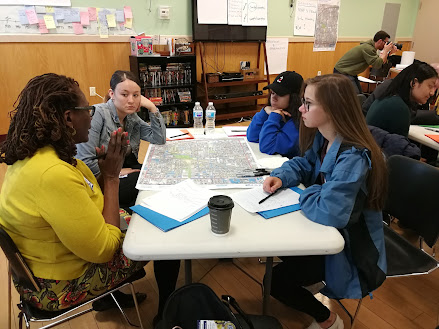

Team project planning from a previous Philadelphia Livability Academy class


2021 PROJECTS

During training, participants identify an issue and in work teams they tackle a small-scale, real-life project in their neighbourhood. In this training, the in-person, face-to-face team produced one project proposal while the online virtual team chose to divide into two project teams. 

This past week all three teams presented their preliminary plans of the work they’ve done over the past few months. All three teams created inspiring projects directly within their neighborhood and they tackled persistent problems that were made worse during COVID.


Cover of the project report from the Fairhill United for Livability team

Fairhill United for Livability 

The first team’s project focused on activating the neighbourhood park to create a space for people to come together and build connections. They envisioned a more united neighbourhood that fosters community pride, strengthens connections between residents, and partners with neighbourhood groups, schools, and businesses to promote livability. 

They divided their plan into 3 phases over the next year: outreach, clean-ups, and community celebrations. The goal is to create a movement of people to fix broken social connections, a problem made far worse by COVID. The team concluded with their slogan: “No one can do alone what we can do together”.


Literally Literacy (Increasing Adult Literacy)

This team chose adult literacy as a key liveability issue. They identified low levels of literacy as a key barrier to job access, high earning potential, and access to better healthcare. Illiteracy is one of the major contributors to overrepresentation in the criminal justice system. Illiteracy is an obstacle to personal growth and this team decided to do something. The main objective of the project is to empower adults to seek assistance with reading and increase their self-esteem while eliminating the stigma associated with illiteracy. 
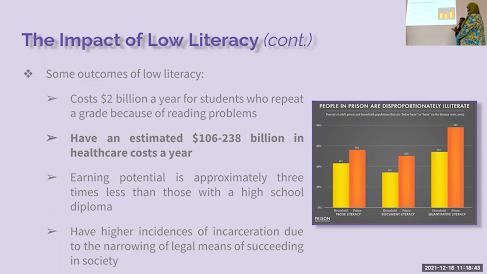

Data from the Literacy team's research project


The highlight of this team’s presentation was their inspirational personal stories. 

  • One member shared how her aunt learned to read late in life because she was unable to visit school as she had to prioritise caring for her family. 
  • Another member shared the experience of returning to college in her senior years and helped her expand her knowledge and reading capabilities. 
  • Another member recollected how it was once illegal for African Americans to read and she had to self-learn how to read. 
  • Finally, one member shared a story about how she remained a single young mother when she left her illiterate partner who was unable to provide for the family aside from selling drugs. 

They summarized their stories with the phrase: “You can be all that you can be; all you have to do is take the first step.”


Teen Trauma

This team focused on the struggles of youth that (if not addressed early) can cause long-term damage to a young person’s life and the neighbourhood quality of life. They outlined multiple consequences of trauma such as emotional and behavioural issues, internalised stress, engaging in unsafe behaviours, substance abuse, and mental illness. 

They proposed a 6-week program with various topics to address traumatic events. They also proposed creating a safe space with a support group for teens experiencing trauma. Two young team members, who themselves went through traumatic events, were especially inspiring in their quest to help their peers turn a new leaf. The team summarised the objective of their program: “To go from dysfunction to function.”
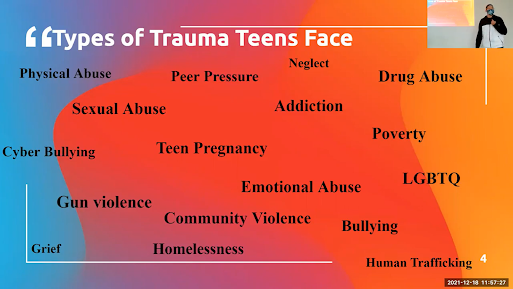

Research chart on trauma from the Teen Trauma team


A HOLIDAY GIFT 

I was extremely proud of all three teams for the work they completed within this short time. It is amazing how a group of people who know little, if anything, about each other, were able to take steps together and share the common purpose of improving life in their neighbourhood. 

This is the true spirit of SafeGrowth and the Livability Academy. There is no better holiday gift to Philadelphia, to their community, and to themselves.

As one Livability Academy participant concluded: “It takes the whole village to raise this community.”
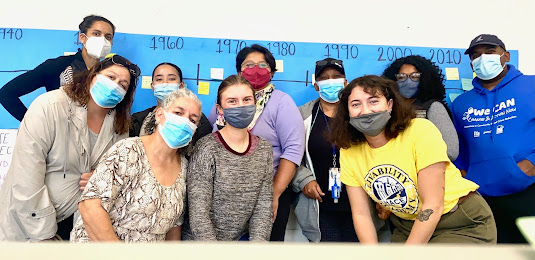

Congrats to Philadelphia's 2021 HACE Livability Academy grads!
(photo courtesy of Sierra Cuellar)


Friday, July 4, 2025

The mastery of tradecraft in crime prevention - Why quick fixes fail

Independence Hall where the Declaration of Independence was signed in Philadelphia


by Gregory Saville

On this July 4 Independence Day, I discovered something worth celebrating emerging from Philadelphia. And it wasn't the Declaration of Independence. 

Last week, I was dealing with a failed air conditioner during a brutal heatwave. Calling an A/C technician was fascinating. He was energetic, hurried, and confident (overconfident – it turns out). He glanced at the unit and announced it was too old to repair. He didn’t test the refrigerant, didn’t run diagnostics. He jumped quickly to a simple conclusion - it likely had a Freon leak requiring a full system replacement. The going rate? Over $8,000!

That was declined.

The next day, I called in a different HVAC technician — someone calm, experienced, and focused. He listened carefully as I explained the background of the A/C issue, then got to work. In under an hour, he had diagnosed the real problem, tested the system, checked the wiring, bypassed a strange connection, and replaced the dirty filter. The result? Cool air again — and all for under $200.


Something worth celebrating on July 4 - it all started with an air con


He also went a step further – he pointed to a website that ships replacement filters automatically, provided some education on how to self-diagnose simple AC problems, and made sure other parts of the system were not at risk. “That way, you can prevent future problems and self-repair when necessary.” 

That is mastery of tradecraft.


PRACTICING CRIME PREVENTION

It made me think, too often in CPTED, we meet the first kind of technician — fast talkers selling quick fixes at a high cost. What we need are more like the second — grounded pros who diagnose carefully, teach as they go, and work with the client, not around them.

Nowhere is the contrast between shallow fixes versus deep tradecraft more visible than in Philadelphia — between the neighborhoods of Kensington and Fairhill/St. Hugh.


Philadelphia's Kensington neighborhood remains among the highest
crime communities in the city 


Kensington is infamous — a high-crime zone marked by open-air drug markets, encampments, and a long history of short-term government crackdowns. One of the most aggressive was Operation Sunrise, a year-long police campaign launched in 1998 that promised zero-tolerance enforcement aimed at gangs and drugs. Authorities were confident (overconfident, as it turned out).

The effort made headlines. It felt bold, but it didn’t last.

Early criminology research praised Operation Sunrise and its “place-based policing” model, highlighting short-term drops in crime and minimal displacement. But later analysis challenged the no-displacement finding and warned of widespread unintended consequences. One study concluded the operation failed to sustain lower crime rates and instead produced a “generation of fugitives” and widespread collateral harm.

Today, government research concludes that Operation Sunshine’s zero-tolerance policing and hotspot crackdowns failed to deliver sustainable safety.


The business towers of downtown Philadelphia.
Not far away, some of the nation's highest crime neighborhoods. 


MASTERFUL CRAFTSMANSHIP MISSING

There’s nothing masterful about these strategies. They are the equivalent of replacing the entire HVAC system when the real problem is a dirty filter, a lack of client knowledge and no self-capacity to resolve problems.

When you leave Kensington and travel a half mile north, you arrive at Fairhill/St. Hugh, a primarily Hispanic neighborhood anchored by the vibrant El Centro de Oro commercial corridor. 

In contrast to Kensington, the St. Hugh neighborhood has been growing and improving for a while and, while Fairhill has some crime and disorder challenges similar to Kensington, there is something very different happening. 

It is difficult to get the full picture from stats, and violent crime rates are notoriously difficult to measure, much less calculate. But by at least some estimates, the violent crime rate in Fairhill/St. Hugh is lower than in Kensington.

For example, one source claims Kensington's violent crime rate of 9.3 per 1,000 residents is 55% higher than the 5.9 rate in Fairhill/St. Hugh. Unfortunately, stats like this are bound to be imperfect and imperfect stats rarely tell the full story.


2023 Crime Density map for Philadelphia - Map from GIS Geography

Kensington and Fairhill neighborhoods overlay onto crime density map
- crime stats are notoriously difficult to calculate and tell only a small part of the story. In this version the dark red suggests higher crime rates in Kensington 


THE HACE STORY

Enter HACE, a community development corporation working in Fairhill/St. Hugh for over three decades. HACE was formed to combat disinvestment and preserve community culture. Their approach? Place-based strategies not limited to law enforcement. Instead, they use long-term investment, community leadership, neighborhood planning and strategies grounded in SafeGrowth.

Long before HACE adopted SafeGrowth, their results were stunning:

  • Over $100 million in local investment
  • More than 450 new housing units built
  • 400+ vacant lots rehabbed and greened
  • A community-run food distribution center
  • Housing counseling programs that build generational wealth

Even more impressive, HACE now adopts SafeGrowth and crime prevention principles within their ten-year Goodlands 2025 plan — not as add-ons, but as core pillars of community design.

The neighborhood plan focuses on major areas of development activity, including housing, commercial corridor revitalization, improving the quality of life, and crime and safety. 


Celebrating the birthday of a Livability Academy member - a local police officer


They also train residents through SafeGrowth Livability Academies, helping locals become leaders in problem-solving, safety design, and civic engagement.

Academy classes lead local projects — clearing encampments, building safe walking trails, and working with police. Cops don’t arrest their way out of crime; communities and police build their way out, together.


PREVENTION TRADECRAFT

Masterful prevention tradecraft has a look: practical, visible, and led by the people who live there. It is grounded in self-help, local knowledge, rooted in evidence, and police are partners, not enforcers of one-size-fits-all solutions.

It’s patient work, unlikely to reveal itself to 6-month evaluations. Instead, it requires patience like slowly melting ice from frozen A/C lines. Like tracing faulty wiring until the real problem is clear.

And in neighborhoods, as in A/C systems, the difference between a temporary fix and a long-term solution is rarely visible at first glance — but unmistakable over time.


Thursday, November 29, 2018

May they fail


Times Square echoes Bladerunner - hyper-commercialized,
electronic billboards in every direction

by Gregory Saville

The writing on the shop walls and the floating billboards was Anglo-Chinese. On the street, the cityspeak combined English, Chinese and Spanish, a vernacular that served the homeless, the marginally employed and the unfortunate. Pollution and environmental collapse led to constant clouds and pelting rain. The affluent traveled to off-world colonies on Mars and elsewhere, leaving the rest of us behind. Bio-engineered, human-like robots called Replicants used their artificial intelligence and rebelled.

That was the horrific world described in Philip K. Dick’s book that became the 1982 sci-fi classic, Bladerunner. I blogged on Bladerunner architecture last year. When I watched Bladerunner in the 1980s it seemed like an impossible future. And it was set for such a long way ahead – 2019!

That's next year! With only a month left, how close is that future?

No escape - walls of electonics

UNFOLDING AS WE SPEAK

It doesn’t take much imagination to see a Bladerunner vision unfolding. True, we are nowhere near that specific dystopia. We still don’t have flying cars (but we have self-driving ones!). Yet, one wonders...

This week I watched NASA’s exciting landing on the planet Mars. Space X CEO Elon Musk says he’ll get people to Mars within six years. How long before off-world colonies evolve?

This year I watched the fruits of some incredible advances in artificial intelligence and bio-engineering, including the world tour of the remarkable Sophie, the first thinking and speaking robot to attain citizenship. Sophie tells us not to worry; real robots are not like Bladerunner.


Then there is the decades-long Chinese economic miracle or the environmental mess we watch with increasing regularity in hurricanes, wildfires, species extinction and climate chaos.

Philip K. Dick, it seems, was on track.

How might we derail that particular future? The usual formula is to rethink geo-politics and create new macroeconomics. Nevertheless, the maxim ‘think global, act local’ has special relevance here. Take, for example, Philadelphia!

ONE NEIGHBORHOOD’S STORY 

Over the past few years, we brought SafeGrowth to Philadelphia. We now have some great advocates working for the neighborhood association, HACE. This year they began implementing their latest 10-year 2025 Neighborhood Plan.

For years HACE and friends have been diligently working to transform the blight, drugs, and crime into a greener, socially connected, economically vibrant neighborhood. Now their new, SafeGrowth-infused 2025 plan is underway and they’ve been making strides.

They installed new, clean walking trails where garbage was once strewn.

The HACE Trail project in Philadelphia

They instituted Philadelphia’s first SafeGrowth Livability Academy, a collaborative workshop with 30 neighbors and police during which they developed problem-solving strategies for their neighborhood.

The HACE plan envisions greener areas, community gardens, better resourced neighborhood hubs, safe intergenerational and affordable housing. HACE has already built over 200 units of affordable housing and leveraged over $100 million in redevelopment and improvements. A host of community-building strategies are already underway.

Neighborhood bridge now cleaned and repainted

For example, they, and their partners shut down a drug infested, homeless camp along a railway underpass. That naturally displaced addicts to street level, resulting in a public outcry (after decades of inaction). Ultimately, that led to a more coordinated city response to treat drug users, expand homeless beds and increase shelters.

HACE built affordable housing
There is a long way to go and resources and shelter beds are still scarce (one estimate suggest Philadelphia has 50,000 opioid addicts, many of whom end up here). But at least action is finally underway.

That is the hard community-building work that cuts crime, improves livability, and gets neighbors engaged in shaping their own future.

In spite of successful resident-based projects, cities like Detroit
fund expensive CCTV technology to cut crime

BEYOND SECURITY

Too many mayors get caught up in a fear-based echo chamber that makes them vulnerable to peddlers of security technology and promises of a bright, high-tech future.

Too many city leaders act as obsequious errand-boys for the technologists, embracing the faint promise of hostile architecture, public CCTV, automated security robots, predictive algorithms seeking crime, and audio software to track gang gunfire. (Wouldn't it be better to prevent the gunfire in the first place?)

They do this with the ill-informed hope that technology will prevail. But in doing this, they snatch defeat from the hands of successful action-based community projects right in front of them.

They invite a Bladerunner future. May they fail.

Wednesday, October 26, 2022

A desert Summit in Palm Springs - COVID finally eases

2022 SafeGrowth Summit hotel - Hilton Palm Springs

by Gregory Saville

Over the past 7 years, the SafeGrowth Network has met annually at our training Summits to teach each other new concepts and tactics arising through our community-building and crime prevention programs. It’s a time for us to recharge our batteries and recuperate in the company of like-minded, funny, and intensely talented, people (Pina colada’s served with pink umbrellas under palm trees comes to mind). 

We invite others outside the network to participate in our Summits, such as community groups, journalists, business associations, housing groups, police, academics, and other urban design professionals. Then we set aside time to give back to the community in the form of public training, presentations, or workshops. 

All that came to a halt with the COVID pandemic relegating us to online Zoom meetings – a distant substitute for sharing good food, relaxing at the beach, or laughing in person. Finally, after a long wait following our Cancun, Mexico Summit in 2019, we had our first face-to-face in three years in Palm Springs, California last week. 


One of the Palm Springs pathways we examined
during our walking audits

PALM SPRINGS, CALIFORNIA

Over the years we have partnered with neighborhood associations, national non-profits, and crime prevention organizations. This year we were delighted when the Palm Springs police department –  in the form of Chief Andy Mills and Lt. William Hutchinson – offered to sponsor our meeting and participate in our 2022 SafeGrowth Summit. 


Palm Springs police chief Andy Mills introduces the
SafeGrowth team to community members


Ten members of our team, (five more virtually) and a half dozen members of the police service, gathered at the Hilton Palm Springs Hotel, the police training facility, and on the downtown streets of the city, to discuss, analyze, audit, and brainstorm different ways to bring safety and livability to neighborhoods of the future. 


SafeGrowth team member Anna Brassard describing SafeGrowth

Mateja Mihinjac outlines a part of model to residents

Harry Tapia explains Livability Academies 


Among other topics, our Summit themes included:

  • a new method for community engagement, 
  • different ways to review crime trends in Palm Springs,
  • next steps for the Livability Academy status in Philadelphia,
  • situational awareness during site visits,
  • SafeGrowth progress in Sweden following the 2022 H22 Smart City Expo,
  • A review of current trends in planning theory,
  • geography of crime theories and community crime theories related to SafeGrowth.

We discussed the situation in Palm Springs and we ran two public sessions on two different days to introduce residents and business owners to different parts of the SafeGrowth model. We gathered 40 community and business residents for presentations on Livability Academies and other programs in SafeGrowth. We toured their city with them so they could show us their concerns and hopes for the future. The local media was terrific in providing accurate and timely reporting on our week in their lovely city. 

THE END OF COVID

Work retreats can be dull and dry affairs, but beautiful Palm Springs did not disappoint with its eclectic street furniture, art, and statues, along with some of the best mid-century modern architecture in the nation (Frank Sinatra and the rat pack lived here). Along the way, we hiked the nearby mountains, went up the gondola, spent time at the weekly street market, and were entertained by the Denver band MOOSGH at the Hotel Zoso

There is no replacement for face-to-face encounters when it comes to SafeGrowth and other forms of community development. It’s great to see the other side of the pandemic.

Best wishes to the many wonderful residents and professionals in Palm Springs, especially Chief Andy Mills and Lt. William Hutchinson. Thanks for the hospitality.  


Friday, December 31, 2021

Do the right thing - It will satisfy some and astonish the rest


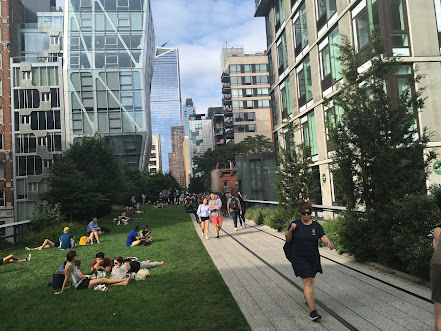
Walkable, carless, pro-social, and safe. What do future neighborhoods look like?

by Gregory Saville

With apologies to Mark Twain, that quote above is what came to mind as 2021 ends. Such a turbulent year with so many distractions – Covid, mass shootings, increasing crime, social unrest! It’s hard to look back through the lens of the 24-hour news cycle and social media and not conclude that we are going to hell in a handbasket.

Do yourself a solid and have a read of Bailey and Tupy’s exceptional book Ten Global Trends Every Smart Person Should Know. They use those increasingly rare things called facts to soundly debunk the doom-and-gloom-is-everywhere theory.

Bailey and Tupey's book Ten Global Trends - using research and facts to tell the truth. 


When you've read Global Trends, (and after you mask up, vaccinate, and elect better politicians with better policies), then give a thought to doing the right thing for safety in 2022 and learn some state-of-the-art theories in neighborhood crime prevention. There are a few good ones to pick from, but be careful - some only go halfway. 

Here are a few to watch:


SITUATIONAL PREVENTION 

In the 1970s they created electric car alarms to cut auto theft. You know, those pulsing lights and blaring horn alarms (BLEEP...BLEEP...BLEEP) that, nowadays, most people just ignore.

Around the 1980s, they created The Club to lock a steering wheel so thieves could not drive the car. Unfortunately, thieves adapted and learned to hacksaw the steering wheel and slide The Club off. One thief said: “So if it takes 60 seconds to steal a car, it now takes 90.”


The Club auto theft prevention device - photo Wiki Creative Commons

In the 1990s auto manufacturers adopted another situational crime prevention approach to harden the target. They created vehicle immobilizers, electronic devices that prevent a car engine from starting until a proper key transponder is present. Immobilizers prevent hot wiring and also eliminate that annoying BLEEP...BLEEP...BLEEP.

What is the result of situational crime prevention?

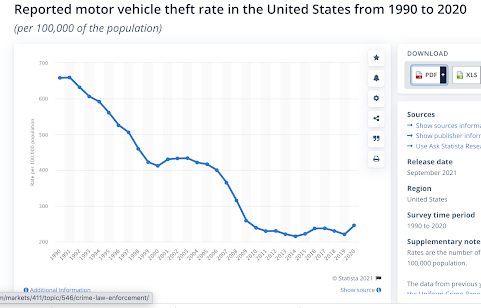
Some criminologists say the increasing adoption of security technologies has cut crime opportunities all over the world. Crime everywhere has decreased and auto theft has plummeted, as you can see on the graph.


Auto theft rates sunk as theft devices were adopted...

Except, there are a few glaring problems with this theory. First, not all crime rates around the world have declined in spite of more security technology! (Latin America comes to mind). 

Second, consider this...

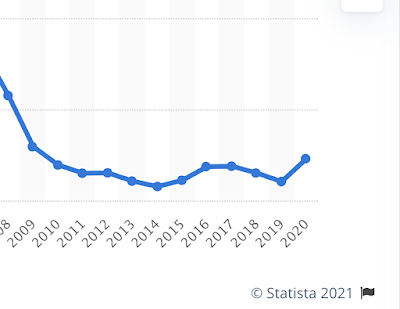
...up until the past decade when rates began increasing.


Even with improvements to auto theft prevention, decade after decade, in the past ten years auto theft rates have NOT declined. In fact, they have started to increase! Look at the reality in the chart above of the past 10 years! How can this be? Security technologies have not vanished.  

Why are auto theft rates increasing? Perhaps the situational prevention theory spends so much time hacking at the branches of crime opportunity, it missed digging at the roots of crime causation?


FOCUSED DETERRENCE

Consider another recent prevention theory - focused deterrence, also known as CVI (community violence interrupters). I blogged on this promising strategy a few weeks ago.


Most modern crime prevention strategies zoom down from the level of the
entire city into specific areas (SafeGrowth), specific situations (situational prevention), or specific offenders (focused deterrence)


In a 2019 article, "There is no such thing as a dangerous neighborhood",  Stephen Lurie says we should not fix broken neighborhoods but rather target the small group of chronic offenders in those neighborhoods who cause most problems. That is how CVI intervenes in the cycle of violence. Says Lurie:

"The notion that public disorder drives criminality can seem an intuitive approach to public safety. But if people understand that most serious violence circles specific interpersonal group dynamics in structurally disadvantaged communities, order maintenance policing seems more like what study after study shows it is: an unnecessary evil."

Regrettably, permanently resolving a complex crime problem is not as simple as intervening with the offender before they rob or shoot. As the late Desmond Tutu warned, "There comes a point where we need to stop just pulling people out of the river. We need to go upstream and find out why they're falling in."  

No doubt we need to do something fast when violence threatens and that is something at which situational prevention and focused deterrence both excel. But there is no hiding the fact that they both hack at the branches - neither one alters structurally disadvantaged communities in any meaningful way. 

Criminologists will tell you there are many seeds to crime causation. But over a half-century of criminological research amply demonstrates that the dysfunction, trauma, substance abuse, and blight in disadvantaged communities provide the breeding ground from where most chronic offenders emerge in the first place. Severely disadvantaged places create an endless supply of chronic offenders and if we want to dig at the roots of crime, and not hack at the branches, we must face those structural disadvantages. That is from where hope emerges and that is how we do the right thing.  


ANOTHER WAY - SAFEGROWTH

Some criminologists and law enforcement officials will complain that it is exceedingly difficult, (and takes a long time) to deal with deep structural problems in neighborhoods. Part of that is because the expertise and professions that deal with such problems are not found within criminology or law enforcement. They are found in economic development, urban planning, neuropsychology, cognitive science, and education. 

That is why SafeGrowth practitioners collaborate with experts in all those different fields and then work with residents to co-develop prevention plans. This kind of deep-dive capacity-building is neither simple nor fast. Ultimately, SafeGrowth marries community development and social prevention with 1st, 2nd, and 3rd Generation CPTED. The method has been successful for decades. Our SafeGrowth book describes how we keep our eyes on the real prize. 

A few other recent examples:

These are only a few of many ways forward. In 2022 let’s do the right thing and not lose sight of the fact that, if we want to build a better society, we actually have to build a better neighborhood.

Happy New Year. 


Sunday, September 22, 2024

A Catalyst for climate action and sustainable communities


Alberta's glacier-crowned Mt. Athabasca, in Jasper Park - a symbol of connectedness. Water runs west to the Pacific, north to the Arctic, and east to Hudson's Bay. The nearby town of Jasper was recently destroyed by climate wildfires
- photo courtesy Florian Fuchs, CC BY 3.0 Wiki Commons

by Anna Brassard

We have often stated that SafeGrowth is less of a crime prevention strategy and more of a neighborhood planning method. True, we usually begin by tackling crime and using tactics like 1st and 2nd-generation CPTED. But from the beginning, we have built many of our ideas on the urban planning Smart Growth movement, which has at its core a sustainable environment and a response to climate change. 

CPTED, of course, is none of those things. That we are able to have such a potent impact on reducing crime and building cohesion convinces us that climate change programs are a powerful magnifying force with benefits far and wide.


Climate change fire near Los Angeles. Our neighbourhoods need to
learn resilience strategies - Photo Eddiem360, CC BY-SA 4.0 


EXTREME WEATHER EVENTS

Some of our earliest SafeGrowth programs began due to extreme weather events, such as our work in the Hollygrove neighborhood following Hurricane Katrina in 2005. We are increasingly seeing extreme weather events with increased flooding and wildfires. Our cities are getting hotter and hotter with few places for reprieve from the heat. Concrete jungles, indeed! Forest fires burn around the world, displacing many. 

Jasper National Park, in Alberta’s Rocky Mountains, was recently evacuated due to out-of-control wildfires that consumed 30% of the historic town of Jasper.  Alongside extreme weather, aging infrastructure is beginning to fail. The need to address climate change is becoming increasingly evident. 

A recent study measuring the effectiveness of worldwide climate policies that significantly reduced emissions over the past twenty years provides guidance for meeting climate targets. It concluded that a mix of carrots and sticks is required. Policy is one piece of the puzzle. 

How do we approach sustainability at the community level?  This is where SafeGrowth arises. A pioneering initiative, SafeGrowth aims to empower communities to address climate change and build a more sustainable future. By focusing on a range of interconnected issues like transportation, housing, streetscapes, and land use in conjunction with crime prevention, SafeGrowth helps communities identify and implement solutions that address climate change and enhance the overall quality of life.


The Glenmore Reservoir supplies Calgary with water - until an outdated water feeder line failed in June leading to weeks of shortages  - photo Qyd, CC BY-SA 3.0


WATER DISASTER IN CALGARY 

Calgary recently suffered a catastrophic water main break of its main waterline that provides water to 40% of the city. Montreal also recently suffered a significant water main break with the subsequent flooding of homes and businesses. In Calgary, residents and businesses were placed under Stage 4 water restrictions to reduce water usage by 25% until repairs to the water main could be made. 

Fortunately, the community stepped up in this emergency and found ways to reduce water consumption including flushing their toilets less often, installing rain barrels to water their gardens, and taking shorter showers. Initially, residents worked together and there were few tickets for violations issues. After an extensive review of the entire water system, it was discovered that many segments of the waterlines needed immediate repair to prevent another imminent failure. The city returned to Stage 4 water restrictions so repairs could be made. 

Recent news headline about water feeder line failure in June, 2024

This time around, residents and businesses were less enthusiastic about reducing water consumption, and many tickets were issued for water usage violations. Apparently, social cohesion is not easy to sustain in climate emergencies, possibly since residents have only limited experience with intensive community collaboration. 


AN EARLY EXAMPLE OF COHESION

SafeGrowth offers a path forward for communities seeking to create a more resilient, equitable, and prosperous future. When we teach our classes, including a recent training in Vancouver, our team was taught 1st, and 2nd CPTED as tools to address the physical, and social aspects of the neighbourhood. This is the beginning of connecting with the natural and built environment. By working on long-term neighbourhood plans and crime reduction projects on a regular basis, different groups within the community learn the skills of project development. 

Our Livability Academy is the next step in furthering collaborative programming as we discovered in New Orleans and Philadelphia. That is a longer-term program of free, weekly public education classes in which dozens of community members learn the skills and power of collaboration. Now that 3rd Generation CPTED has been introduced, there are specific tactics for economic, public health, social, and environmental sustainability – the very core principle of environmental resilience. 

Collaborative teams using the SafeGrowth model create innovative visions and plans for a more resilient, safe, and sustainable neighbourhood future. The latest water crisis in Calgary reaffirmed the need to train neighbourhood residents across the city in collaborative action before the disaster shows up.