Showing posts with label public art. Show all posts

Monday, April 27, 2020

Public art in the time of COVID-19

Vancouver's public art during COVID-19
- photo by Ramachandran Kumaraswamy

by Tarah Hodgkinson 

It has been over a month since the world went into lockdown and we were all told to #stayhome. Much has changed since then. As we have noted in previous blogs, the world has pulled together to stop the spread of the virus and protect our most vulnerable. We are also witnessing irresponsible leadership and divisive politics. It has been a trying time and while many of us are beginning to adapt to this new normal, there are still many who are out on the frontlines of the pandemic risking their lives.

Photo by Ramachandran Kumaraswamy

Much has changed in our communities as well. In conversations with other criminologists over the last few weeks, I have heard how crime trends are changing around the world. As people move inside and away from the public realm, the nature of crime opportunities is also changing. While these data are still preliminary, some researchers are finding early declines in burglary and theft, while others are warning of dramatic increases in domestic violence.

Indeed, the city of Vancouver has not been immune to these shifts. Commercial burglary has increased dramatically compared to previous years. This is unsurprising to many readers as there is no longer the watchful eyes of owners and employees, and natural surveillance is obsolete.

Photo by Ramachandran Kumaraswamy

Many business owners in Vancouver’s Gastown neighbourhood have taken to boarding up their windows as an interim target-hardening measure. However, for those who have spent any time in communities where the downtown is failing and businesses are boarded up, you know this can be a very depressing sight.

Photo by Ramachandran Kumaraswamy

One of these Vancouver businesses was less than satisfied with the dreary look of the boards. Local business, Kimsprints, reached out for local artists to paint a mural on the boarded-up shop. The artwork couldn’t be about just anything. It had to celebrate the frontline workers and their incredible efforts to respond to the COVID-19 crisis. Soon after, murals of Dr. Theresa Tam, Canada’s public health officer, and Dr. Bonnie Henry, British Columbia’s health officer were painted over the boards.

The trend continues with several more painted boards, paying tribute to those assisting during the crisis and brightening the appearance of a community in lockdown. While the crisis continues, these beautiful pieces of community art remind us that not only do we need to support our frontline workers – including demanding worker protections and appropriate pay – but we also should remain resilient and connected rather than divided.
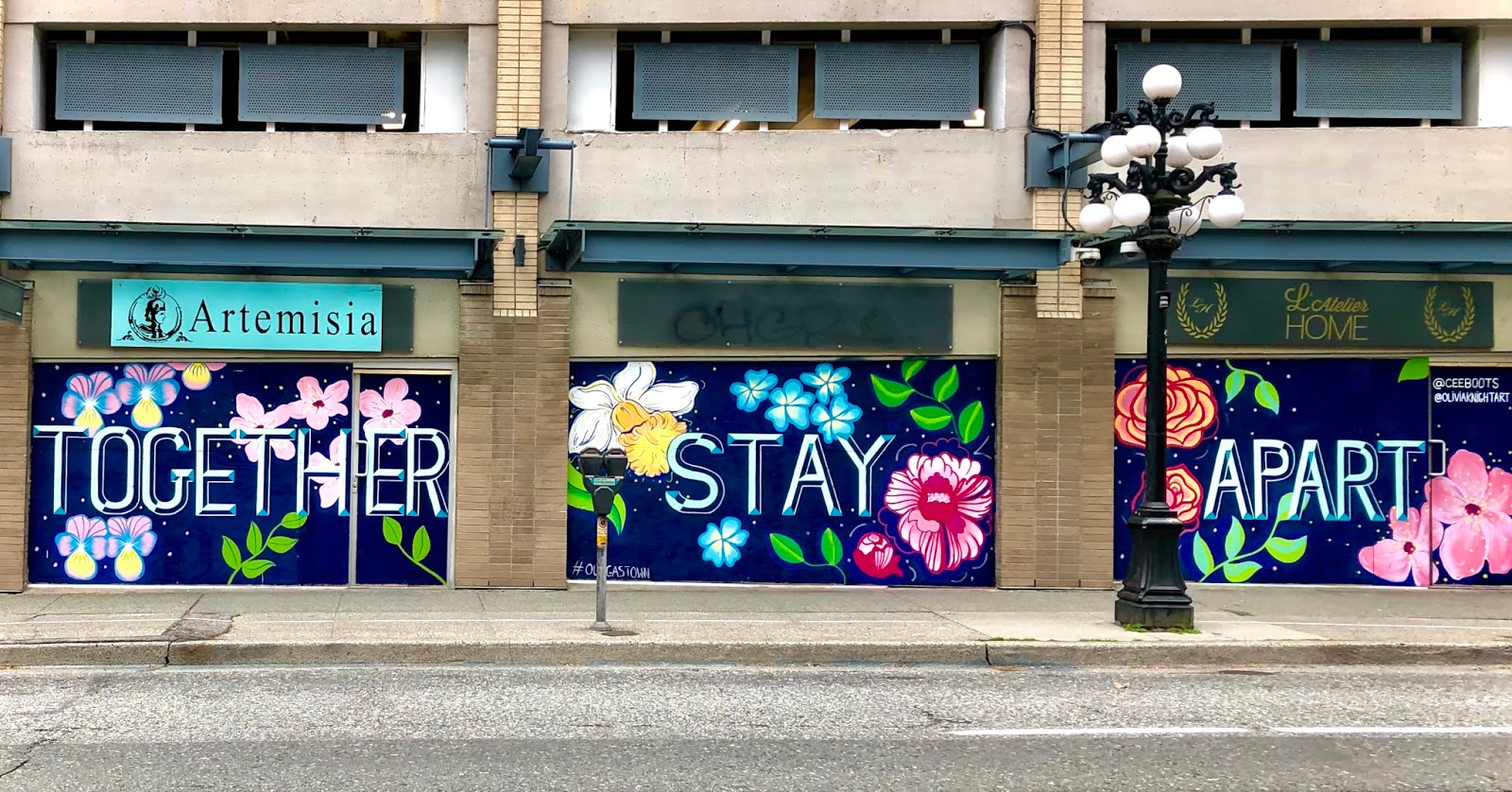
Photo by Ramachandran Kumaraswamy

Friday, August 24, 2018

What if public art could serve a second purpose?

Public art framing a street artist in Brisbane
GUEST BLOG: SafeGrowth Advocate Anna Brassard recently mentored a high school student about design and safety and encouraged her to submit her project here. Sophia Marchenko is a grade 9 student at Calgary’s Master’s Academy and College. We congratulate Sophia on her exceptional work and welcome her contribution to SafeGrowth. 


by Sophia Marchenko

In grade nine this past year, I had the opportunity to participate in the Professional Initiatives Program at my school, Master’s Academy and College. As part of the program, I was matched with a mentor in a field of my interest and was challenged to create my own research project. I was fortunate to be matched with Anna Brassard, an urban planner. The central question of my research project became “What if public art could serve a second purpose?”

I asked: What if public art could also be a bird sanctuary? A way to improve safety? A crime prevention system? An electric vehicle charging station? A way to generate electricity?

Public art and street furniture in Christchurch, New Zealand container village

I found many examples of public art serving a functional purpose within Calgary and beyond. There were examples in Calgary, such as the public transit bus stops currently being built with art pieces, and artistically designed stormwater filtration systems. I looked into musical swings in Montreal, Quebec, and Chicago’s multimedia Crown Fountain. All of these examples display messages of beauty, culture, environmental stewardship, and community, while serving a practical purpose.

Since my school is located right beside the newly constructed Flander’s Bridge, I’ve seen how reckless drivers can get in that area. There is a plan for a new piece of public art for that area and I wondered whether a piece of public art could contribute artistic elements to the bridge while also helping to slow down traffic and improve safety.

I was put in contact with a transport engineering at the City of Calgary and he described the existing traffic volume is 94,000 vehicles per day at that location, a very large amount of road traffic. There were many schools in the area that have kids crossing Flanders Bridge every day.

Flander's Bridge in Calgary, site of potential public art project - photo City of Calgary


FLANDER'S BRIDGE PROPOSAL 

I decided that my public art would have speed signs incorporated in an artistic way, showing drivers their current speed and encouraging them to slow down. It would also have artistically-integrated solar panels to generate the needed electricity. I liked the idea of using strips of copper for most of the design and having the whole design illuminated with soft light at night.

By the end of my research project, I realized that I had learned a lot about public art and how an artistic element on a key piece of Calgary’s infrastructure could also contribute to a safer environment for both drivers and pedestrians. It was an eye-opening experience to learn from an urban planner, an architect, students at the University of Calgary’s Faculty of Environmental Design, where Anna had years ago taught a SafeGrowth program, as well as planners and engineers from the City of Calgary. Many thanks to my mentor throughout this program, Anna Brassard, for opening my eyes to the field of urban planning.