Showing posts with label abandoned lots. Show all posts

Wednesday, December 19, 2018

Meanwhile spaces - from liabilities to assets

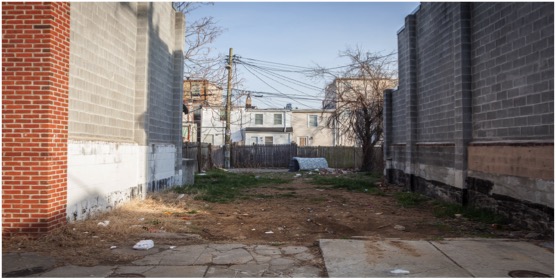
Vacant land in Baltimore, fenced, blighted and ugly
by Mateja Mihinjac

Vacant land is concerning because it attracts vandalism, provides refuge for drug activity and squatting, and attracts other undesirable behavior. In SafeGrowth we often find vacant lots and empty properties are associated with crime and disorder.

Fortunately, there are ways to transform these liabilities into assets. In our work, we encourage communities to activate vacant land in order to prevent a downward spiral of neighborhood disorder emerging from empty properties. This form of activation is also known as meanwhile spaces.

THE PROBLEM - VACANT LAND 

Land vacancy is a prevalent issue especially in formerly highly industrialized cities across North America that are dealing with the consequences of economic downturn. Some of these cities suffer from hypervacancy where 25-50% of properties per census tract have been neglected.

New York developers restricting access to the river
while vacant land sits unused

We know from 1st Generation CPTED that this is due to poor territoriality or ownership resulting in decreased quality of life. We know from 2nd Generation CPTED that different neighborhoods have different thresholds for tolerating social destabilators (like vacant land), before they tip into social disorder. A timely response to vacancies can halt the slide into disorder.

Some cities have successfully rebuilt former factory buildings into housing. Others, as I've written in prior blogs, transform vacant lots into community gardens and community gathering places. And yet there are many cities that still struggle with vacant land and the consequences of poor upkeep, disorderly conduct, and crime.

MEANWHILE SPACES

Cities across North America and Europe are increasingly activating vacant land – a phenomena sometimes called meanwhile spaces – and temporarily using it to boost the local economy, provide jobs, advocate for social justice, and attract prosocial activities. These include pop-up markets and shops, placemaking, festivals, food trucks, art installations, programs by non-profits and civic collectives, and other activities that benefit the local community.

Meanwhile spaces are a form of tactical urbanism allowing local participation, and they also help developers see what people want in a particular space.

In Baltimore, there are plans to turn this blank wall into a projector
screen for neighborhood movie nights

In Paris, one place was transformed into a temporary marketplace with diverse, small enterprises. It gave community groups and startups use of a rent-free space rent free until 2020 when the developer intends to commence with the construction.

Another example, from a prior blog, was SafeGrowth advocate Brad Vassallo's description of the pop-up market-place in Philadelphia, a city suffering over 40,000 vacant lots.

In Christchurch, New Zealand, an entire downtown commercial area, destroyed following a devastating earthquake, was transformed into a beautiful shipping-container shopping district. It was a temporary solution that now has wide acceptance and popular appeal (and may become a permanent feature of the city).

Christchurch NZ shipping container shopping district

MULTI-FUNCTIONALITY

There are many low-cost and low-risk ways that meanwhile spaces can respond to the needs of residents and their neighborhoods. Creative design strategies can adapt quickly to changing conditions, such as layering multiple activities into one space, thereby injecting life and vibrancy into the local community.

Meanwhile spaces strengthen local relationships, build resilience and provide ownership to spaces that could otherwise attract undesirable activity. They may also signify a shift in modern city planning toward temporary and more responsive use of space.

However, what resonates most with me as a criminologist is the importance of a dedicated local community for transforming vacant spaces from liabilities into assets, thus preventing crime and disorder.

Friday, April 21, 2017

Baltimore's Pigtown launches SafeGrowth

Abandoned lot in Pigtown tackled by SafeGrowth team
There were 2 murders, 3 shootings, 17 assaults, and 14 property crimes over the past 5 years at, and near, an abandoned lot on Ward Street in southwest Baltimore. One murder cost the life of a friend of a member in our latest SafeGrowth class.

Ward Street is in Pigtown, an up-and-coming area with Baltimore-style row houses, a reinvigorated commercial street, and a historic museum for the first American railway, the B&O Railroad (in the 1870s they unloaded pigs onto the streets for herding to nearby slaughterhouses – hence, Pigtown).

Over the years the area suffered a higher than average crime rate, numerous abandoned homes, and vacant lots like the one on Ward Street. But in recent years the area has started revitalizing and things are improving! Led by Ben Hyman, executive director of the nonprofit Pigtown Main Street association, the neighborhood hosted the first SafeGrowth training in the city of Baltimore.

Dark areas and poor lighting - SafeGrowth teams recommended improvements
The response to the training was outstanding. Participants in four SafeGrowth teams included residents of the community, Baltimore police, planners, local shop owners, university students, representatives from city hall, crime analysts, and others. One of those teams tackled the Ward Street vacant lot mentioned above.

TRANSFORMATION PLAN

During final presentations to the wider community, each team described their plans for improvement.

The Ward Street group was particularly impressive with their SafeGrowth Analysis and Transformational Plan. They recommended community engagement meetings, linking community groups to others across the city, and expanding programming within the lot itself. They plan to use community cleanup days to clean the lot, better activation with murals, signage, and improved lighting.

The SafeGrowth team provided a vision for changes to the abandoned lot - photo PPS
Integrating the police and the business association into their plan ensured a more sustainable way to cut crime at the lot and in the surrounding neighborhood. Their long-term vision was to create a community hub for local social and recreational activities.

As their instructor I was most impressed by the fact that, like the other three groups, they did this entire project in only 5 weeks, they fought time constraints and they battled a classic north-eastern winter snowstorm during their site visits and safety audits. How’s that for commitment!

Saturday, June 28, 2014

The curse of abandoned lots

What to do with abandoned lots? Photo - Belmont community SafeGrowth Team 

SafeGrowth teams in Philadelphia and Newark this week produced some remarkable gems for transforming troubled areas. They tackled neglected parks, drug infested commercial corridors, and blighted playgrounds.

One of my favorites was a team from the Belmont community in Philadelphia who zeroed on an abandoned lot. Abandoned lots are not just an eyesore. This one triggered disorder, health and squatting problems for the entire for the neighborhood.

The Belmont team came up with some fascinating ideas for rehabilitation and in a tabletop exercise solicited us for some new ideas.

It was a bright side to this creeping plague. One estimate puts the number of abandoned lots at astronomical levels. It says in 2010 there were 12,000 in Detroit, 40,000 in Philadelphia and 90,000 in Baltimore alone...that's not a typo - 90,000!

SOLUTIONS

The POP Center Guidebook on the topic lists solutions but few actually deal with the root of the problem. Most are superficial situational prevention tactics - changing the environment, installing CCTV, enforcing building codes, and cleanup campaigns. A few are a bit more substantive such as financing to rehabilitate or reuse the property.

More specific help appears in horticulture magazines, especially one interesting decade-long study comparing blighted lots with greened vacant lots. Greening was linked to significant reductions in gun assaults across most of Philadelphia and significant reductions in vandalism in one section of the city.

Another interesting approach appears in an architectural article about a Philadelphia program turning blighted lots into produce generating mini-farms.

Still another idea is a Rhode Island program turning abandoned lots into community gardens. The Philadelphia SafeGrowth presentation on abandoned lots, like all the SafeGrowth presentations this week, was inspiring. It showed how we can turn these places around.

Rhode Island urban community garden. Turning abandoned lots into fun. Photo Maravillosospaisajes