Wednesday, March 30, 2022

Headlines do not define us - Part 2

Ljubljanica river banks in the Slovenian capital city
Photo Aleš Kravos, Creative Commons


Last week we began a series of blogs about the impact of local news on neighborhood perceptions and how different media styles affect community engagement. The last blog discussed media coverage in Denver, Colorado. This week Mateja takes our analysis to Slovenia.


by Mateja Mihinjac

Like in many other parts of the world, Slovenian daily news likewise has disproportionately covered the Ukrainian war for over a month. Sadly, local crime remains uninhibited despite this global crisis. In fact, it is possible that crime may increase during these times or shortly afterwards.


ARMED ROBBERY OF A JEWELLERY STORE

One news story that raised eyebrows was a brazen armed robbery of a jewellery store committed in daylight adjacent to the city’s municipal building.

Two robbers, one of whom was armed, tied up an employee and then escaped via the historic part of the city. There was a description of the two perpetrators, however, readers commented that this was of no use since the perpetrators would have already disguised themselves once they escaped. Those responsible for the robbery have not yet been apprehended.

As in last week’s blog, reader comments also mentioned police issues. Readers complained that police foot patrols that were once present in the city centre are now absent. They believed such a presence could deter crime and provide reassurance to city-goers. There is scientific evidence supporting these comments. Research shows that police foot patrols can help reduce robberies.


Preseren Square, main activity node in Ljubljana


DOMESTIC HOMICIDE

This story reports on a domestic homicide from last year when an 80-year-old man murdered his sleeping wife by repeatedly hitting her on her head with an axe. The story reports details of how he hit her at least 34-times causing her to die at the scene. The story questions whether the accused will be fit to stand trial considering his frail health and possible impaired judgment at the time of the act. The report offers a dry description of facts.

While the cases of domestic homicide are difficult to comprehend, they are sadly all too common and have increased in Slovenia during COVID lockdowns. Domestic violence most often occurs behind closed doors and in neighbourhoods where people are disengaged from one another. In Slovenia, it is not uncommon to expect that what happens at home is a private matter, especially in rural areas.


ARSON

The final news story involves a 25-year-old perpetrator who broke in, stole items, and then set fire in several locations across Ljubljana city centre including the COVID test location, a market stand, and a rubbish bin. The perpetrator was apprehended owing to witness information about his movements. The rest of the report provides basic facts about the event and the police statement. Readers’ comments, however, are highly judgmental about the apprehended young man and suggest he must be bored for engaging in such acts or that he needs to “learn to do some real job”.

This case attracted extra attention as the country is currently on high alert for forest fires, so any open fire is strictly prohibited. Over the past two weeks, firefighters had to extinguish several forest fires and police suspect these fires have been set intentionally.
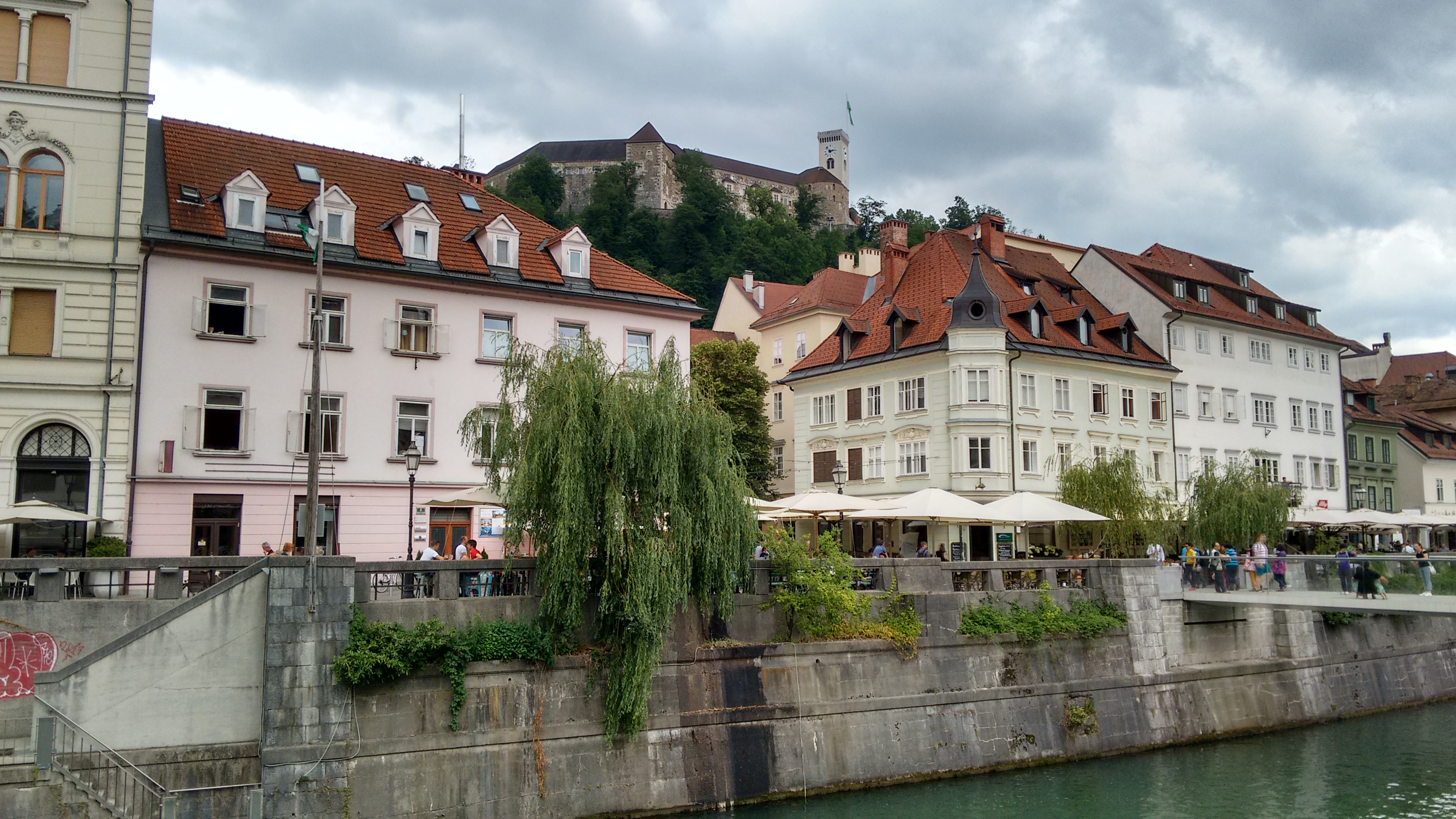


Ljubljana is noted as one of the most beautiful cities in Europe


TAKEAWAYS

I am lucky to live in a fairly safe country. The national homicide rate is around 1 per 100.000 inhabitants. Rates vary by city (the capital city Ljubljana’s rate is below 1 while Celje’s – the third-largest city – is 2.6) but overall serious crime is rare. Unlike the situation in Denver reported last week, in Slovenia the rarity of shootings and homicide is reflected in scarce reporting of serious crimes in the news media.

However, there are some implications from Slovenian news not directly mentioned in these reports. They are obvious to those of us engaged in SafeGrowth programming:
  • Neighbourhoods need to offer something for everyone. Youth and young people, especially, require extra stimulation and access to activities that fulfil them. Consider, for example, how intentional fire setting is commonly attributed to youth and how more inclusive opportunities for youth offer a deterrent.
  • We should work to eliminate the mantra that what happens behind closed doors is no one’s business. Support structures within neighbourhoods should offer assistance for family conflicts to both the perpetrators and victims. Building up neighbourhood social cohesion will help reverse people remaining disengaged from one another.
  • Police-community relationships are important for a balanced neighbourhood and those relationships can only be built by a direct and positive interaction between the police and residents. Properly deployed foot patrols, with well-trained officers, offer the first step toward this positive interaction. Research supports police patrols as integral to community or neighbourhood policing models.

It might be too early to tell what impacts the current war will have on local crime trends, however, one thing is certain. We should not disregard the impacts of global affairs. Our neighbourhoods are not insulated from their surroundings. Spending extra attention on community-building and creating resilient neighbourhoods is the best insurance policy against the potential post-war effects of increasing crime and the worsening news headlines that may become a new reality.

Sunday, March 20, 2022

Headlines do not define us - Part 1


News headlines matter when it comes to neighborhood safety
photo Huffington Post online

by Gregory Saville

As we read the horrific daily news from the Russia/Ukraine war, usually somewhere close by are crime headlines. When we write about, work towards, and teach others how to use SafeGrowth to build safer neighborhoods, we run into local fears about crime. Sometimes fears are debilitating and residents are too afraid to leave their front doors. Other times, they are outraged by some local crime and it mobilizes them. In all cases, local perceptions are driven not only by experience, but by stories.

Local engagement hinges on the role of media in story-telling. I often analyze the content of a news organization’s headlines to see how reporting will help or hinder a SafeGrowth program in a new city. 

With that in mind, Mateja, Tarah, and I decided to write three different blogs over the next month on media story headlines where we live. Tarah will write about reports in and around Hamilton, Ontario in Canada. Mateja will write about reports in and around her city of Ljubljana in Slovenia. Today in Part 1, I will write about reports in and around Denver, Colorado.

Our deep-dive will compare the latest crime stories in local and national news related to our cities. We will examine how media reports those crime stories (Blood and gore? Perceptions of residents?) And we will assess the police/law enforcement response or role in those media stories. 

How do our different cities compare?


We will compare crime reporting in three different cities
- public perceptions matter when it comes to preventing crime


DENVER, COLORADO

The United States is a country where firearms are easily available, so the chance that guns end up in the wrong hands is multiplied a hundredfold. A decade ago I wrote the Washington/BC murder mystery blog and reported that when a burglar breaks into a Washington home there is a 1 in 20 chance of finding a handgun versus 1 in 500 in British Columbia. There is a mass or school shooting somewhere in the U.S. a few times a month

Thus American crime stories focus on guns, shootings, and horrific firearms crimes. 

This week, I read a Denver Post news article about “A 14-year-old was shot dead early Friday morning in NE Denver". The story had very few details. We learn only that juveniles were involved. We learn nothing about how juveniles got hold of firearms! (See my murder-mystery blog above). So while sensational murders show up on the front page, we learn little about them or what caused them. In this environment of perpetual fear-mongering, neighborhoods are, understandably, fearful of a wave of crime.

These types of stories are common in Denver in spite of the fact that Denver’s crime rate is significantly lower than many other American cities. Reality, it seems, plays little role in the reporting of crime.


Denver's crime is lower than most large American cities,
but you'd never know it from the news

IT DOESN’T DEFINE US

Another story in Friday’s headline documented the one-year anniversary of a grocery store mass killing in Boulder in 2021. 

This journalism was an attempt at “investigative” reporting, although without a great deal of actual investigation. One resident described how he attempted to mentally recover by playing his cello at the streetside memorial to the victims. The Boulder mayor acknowledged the impact but said the shooting does not define their community. 

The story ended by citing research about the harm to emotional well-being within neighborhoods after mass shootings. It is encouraging that there are news editors asking these more in-depth questions to follow up on the long-term neighborhood. Their message: People are resilient! Now THAT is something SafeGrowth can work with.


FOCUS ON POLICE

Sadly, the most alarming news coverage was not shootings. It was the coverage on police accountability. Yesterday’s media carried stories on “Unsealed memos reveal concerns by Denver police about internal “leadership failure” during 2020 protests” 

The implication of internal police turmoil has as deep an impact on neighborhood confidence as crime stories. Most people want to be confident and trusting of their police and, in fact, most are. They might support police reforms, but research indicates they overwhelmingly oppose defunding

But, perhaps the most disturbing of all recent coverage was not shootings or accountability, rather it was this local news video clip about the city of Wheat Ridge in suburban Denver. 


Long-term motel tenants feel forced out by the new Wheat Ridge ordinance

This story dealt with increasing police calls for service that were generated from a cluster of motels along an interstate highway. The clip quotes a local police Chief who promotes the long-ago discredited “broken windows” crime theory as a reason to take action on local motels. 

Wheat Ridge now has an ordinance to crack down on motel owners forcing many long-term motel residents out of their apartments. The implication is that they will end up on the street, and not in the local homeless shelter (if you have been inside shelters, you know why). 

From a SafeGrowth perspective, it is hard to know what is worse: 

  • a police official using a discredited crime theory to take action, or; 
  • a municipality more concerned about disorder at a motel strip and less concerned about throwing residents into homelessness.

Will the municipality find affordable homes for the evicted residents? Will the motel policy cut crime or merely displace it? Will the evicted simply add to the homelessness in Wheat Ridge? Hard to say - but it seems this news outlet, at least, is keeping watch. News stories can help, or hinder, public safety. 

Next week: Crime coverage in the Slovenian capital city of Ljubljana.


Monday, March 7, 2022

Books 2 Prisoners - Capacity building from the inside/out


Tarah Hodgkinson

This week, one of my friends, and colleague, Jeffrey Bradley, came to give a guest lecture in my course on victimology. While he has a range of experiences with victim services, most notably, he spoke about his experience volunteering with Books 2 Prisoners

Books 2 Prisoners (B2P) first started in Seattle in 1972. Since then, it has spread to parts of Canada, including Ottawa where my friend Jeff co-chairs their local chapter. B2P receives requests for books from prisoners, local volunteers source these books through donations and/or crowd-sourcing, and these books are mailed to the correctional facility. B2P is an important pathway to support literature in prison, as it is one of the only ways to provide books and much of the material that enters Canadian prisons are censored for revolutionary content. 

One of the key messages I’m trying to drive home with my students is that victims and offenders are frequently the same people. As such, B2P is an important victim service, since many prisoners have suffered significant victimization and trauma in their own life. 

The impact of books in prison is well documented. Reviews of the literature have found that most stated commitments to education in prison are severely lacking in practice and any access to educational materials is an improvement. In addition, literature contributes to prisoners’ well-being and sense of self in an unforgiving and oppressive system like prison. Chris Hedges’ new book The Class documents this impact in an accessible, engaging, and even heartbreaking way. 


NEIGHBOURHOOD BUILDING 

As we said in the last blog, Wild Horse Redemption, we cannot ignore the rehabilitation of offenders back into society as part of neighourhood building. Many of the neighbourhoods we work in have been devastated by legislation that punishes poor people of colour (think the War on Drugs) and contributes to mass incarceration. Children grow up without parents and siblings as these folks are imprisoned for minor possession charges or simply trying to survive in a community where all legitimate means of earning an income have disappeared.  


A major part of the SafeGrowth movement is building local capacity. B2P provides those who are currently incarcerated with some of the necessary materials to improve their situation. 

But that’s not enough since, as we said last week, eventually, almost all offenders end up back in society. Prisoners need better support for their mental and emotional well-being. They need healthy food and safe conditions. They need job training AND job opportunities when they leave prison. Most importantly, they need a system that doesn’t benefit from keeping them incarcerated through privatization and the equivalent of slave labour. 

SafeGrowth is all about grassroots and community-led strategies for revolutionary change. B2P is just one example of these strategies, working to support one of our most marginalized populations. 


Friday, February 25, 2022

Wild horse redemption


by Gregory Saville

One of the great things about living in Colorado is horses, especially free-roaming, wild American Mustangs. When we first arrived in Colorado, we spent four months living on a ranch with some friends who had a number of horses that we could ride and enjoy. They are remarkable creatures both frightening and magical. 

Step outside any city in Colorado and you’ll find horses on the land, in equestrian centers, and on farms. What do horses have to do with crime and prevention? Think of the Horse Whisperer, the story of how working with horses can help those afflicted by trauma.

In 1986 the State of Colorado Department of Corrections and the U.S. Bureau of Land Management established the Colorado Wild Horse Inmate Program. The horse whisperer program provides jobs to prisoners who voluntarily agree to learn how to tame wild Mustang horses – a case of the rough-and-wild inmate meeting the tougher, wilder, and much more dangerous Mustang horse. Inmates go through hours of classroom learning and then spend up to three months with mentors helping to tame a wild horse. The story is beautifully told by the documentary film The Wild Horse Redemption


The Colorado program teaches inmates compassion, patience, and discipline.
Screenshot from The Wild Horse Redemption


Over the years, hundreds of inmates have been successfully released from prison following the program by learning skills in discipline, patience, and compassion. The program's success is well known among state correctional circles. 

This alternative style of rehabilitation, albeit within a prison system, is a step towards a different way to treat crime and justice. Alternative justice like this is even better when applied before entry into the formal system, in a community setting – the so-called restorative justice method. Otherwise, we only end up trying to rehabilitate people who have already become hardened to crime.


OFFENDER REHAB IS COMMUNITY REHAB

We cannot ignore the rehabilitation of offenders back into society as a part of neighborhood-building. We cannot build and maintain livable, safe communities unless we learn what to do with those who commit crimes. Eventually, almost all offenders end up back in society. 

As criminologist Todd Clear and I wrote years ago about a concept called community justice

“This alternative approach to public safety uses neighborhood problem-solving strategies to obtain better, longer-lasting results. It holds offenders responsible locally and then reintegrates them back into their communities… Society must look at new ways to reform the criminal justice system towards community justice and rebuilding our neighborhoods from within.”


There are better ways to reach out to our wayward citizens.
Screenshot from The Wild Horse Redemption 


RESTORATIVE CITIES

I am excited to hear of the recent announcement by the City of Vancouver, Canada to become a city committed to restorative justice – A Restorative City.

My friend, criminologist Evelyn Zellerer is one of the many initiators of the idea and, as a powerful influencer in the restorative movement, Evelyn plays an enormously positive role in initiatives like this around the world (she also loves horses). 

SafeGrowth is a close cousin to community justice approaches like Restorative Cities. Such approaches teach us that we cannot build our way out of crime without re-building the trust lost through the actions of some of our wayward citizens. 

True, not all will respond. Many are lost in drugs, violence, trauma, and other ailments. They may need intensive and creative programs before rejoining us. But as we see from the Colorado horse whisperers, there are peaceful and productive paths back to us.


Thursday, February 17, 2022

You win, we win - An alternative development model


by Mateja Mihinjac

A couple of weeks ago I wrote on self-governing urban open spaces as venues that support creativity, freedom of expression and informal social programming. The two examples from that blog teach us about the importance of government/non-government/civic society partnerships in order to preserve such venues and integrate them into the urban fabric.

Yet not all informal spaces have such fortune. 


ROG AUTONOMOUS FACTORY

In 2006 a group of students illegally occupied the Rog factory complex, once a home of a popular Slovenian bicycle factory. The building, owned by the City Council and protected as a monument of national heritage, had been vacant for several years, which led to degradation of the area. In their collective statement about opening Rog to the public in 2006 the occupiers issued the following statement:

"Until the City of Ljubljana finds a solution for the 7000 square meters of unused space in Rog, that very space can – instead of staying merely forsaken and unexploited – host ateliers, music, video or graphic studios, theatre and dance halls, meeting rooms for different associations, playgrounds, social activities etc. We want to open a public space for entirely non-profitable and independent activities, and through this initiative contribute to the quality of art, culture, social health, thought and life in Ljubljana."


Graffiti on the Rog factory wall after the eviction describing the
"capitalist outlook" of the municipality


After the occupation, the complex operated as an alternative cultural centre and a self-managed social centre for 15 years. It hosted music performances, held a skate park and a football pitch, a medical clinic for asylum seekers, and housed artist ateliers. Despite the negative reputation associated with squatting and occasional undesirable conduct, the centre became an important place for celebrating diversity, inclusivity, and creativity in Ljubljana.

There were several attempts to evict the centre and in January 2021 the City Council delivered its promises, a move that Rog occupants termed “social cleansing of the city”. During the eviction, the authorities had to forcefully remove some of the occupants who fought to protect the centre from its fate. Shortly following the eviction the city started demolishing the site with a promise to rebuild it into a new modern cultural centre that will house 500 creative workers. The former occupants of the centre remain unconvinced of this trade-off and believe that the city has lost an important informal social place.


Slovenian police implementing eviction order as Rog occupants defend the autonomous zone
Photo by Goran Jakovac of IPOP
NonCommercial Creative Commons 4.0 International (CC BY-NC 4.0)


ALTERNATIVE DEVELOPMENT MODEL 

The Rog Autonomous Factory was not intended to be a permanent space. It aimed to fill the cultural void and prevent the degradation of a vacant heritage space. In other cities, authors suggest that the temporary use of space can function as a catalyst for long-term sustainable development. However, for this to be realised, there needs to be a consensus between the users of the space and the municipality.

In their article on regenerating urban spaces, Cotic and Lah proposed an alternative model where informal and formal stakeholders find a consensus about the functioning of space. This alternative model envisions the co-governance of groups representing all the various interests in public spaces. 

Could the municipality have approached the issue of the Rog Autonomous Factory more effectively? 


Police action to evacuate the Rog autonomous zone
Photo by Goran Jakovac of IPOP
NonCommercial Creative Commons 4.0 International (CC BY-NC 4.0)


A LOST OPPORTUNITY 

The municipality showed little interest in discussing the matter with the occupants or making an effort to come to a consensus about the use of the space. 

In our SafeGrowth work, we put special emphasis on partnerships and collaboration between formal and informal organisations. For an effective neighbourhood liveability strategy, local governments play a crucial role at the table. But they must come to the table. 

In SafeGrowth we employ the search conference method to do this, a process we described in places such as New Orleans. The first application of the search conference in this type of work appears in the book, Crime Problems - Community Solutions, describing a 1988 search conference in Canada.

Such collaborative methods not only benefit the local community, but also provide a platform for building mutual trust, discussing issues, and finding workable solutions. They also lead to better liveability, wellbeing and life satisfaction outcomes for the residents.

The Rog centre is a lost opportunity for the municipality. The municipality might have adopted an alternative development model of urban planning in which everyone involved could identify the best way to preserve the social and cultural heritage of the centre. 

Perhaps we can look forward to an alternative future where both sides could win?


Wednesday, February 9, 2022

Fear and safety in the city - Feminist City: A Field Guide

Day Without a Woman 2017 protests in New York City
Photo Alec Perkins, Wiki Creative Commons

GUEST BLOG - Lilit Houlder is an urban planner working with a consulting firm in Edmonton, Canada. She is the most recent member of the SafeGrowth team and in this blog she reviews the book Feminist City: A Field Guide. 


In Leslie Kern’s 2019 book Feminist City: A Field Guide, readers discover the contemporary female experience of urban space. Kern is an associate professor of geography and environment and the director of women’s studies at Mount Allison University.

Her research is mainly focused on gender and cities, gentrification, and feminist urban theory, which is often reflected in the book. I blogged previously about diversity with a focus on indigenous inclusionary practices and this book looks at similar issues using the concept of “intersectionality” as one lens. 

Kern’s personal stories from growing up in Toronto shed light on struggles and uncomfortable situations women deal with in public spaces. She addresses her privilege of being a white, cisgender, middle-class female and admits that her feminist perspective on fear and safety is only one of many. Intersectionality is reinforced and brought up often in the book, bringing up the notion that women of colour, single mothers, non-binary people, and other marginalized groups may experience fear and crime in the city differently from one another. 


DEFENSIBLE SPACE - ONLY PART OF THE SOLUTION

Her approach was refreshing to read since the subject of contemporary feminist geography tends to focus on privileged women and fails to emphasize issues of age, family, sexuality, and race. Kern claims that fear is contoured by these wider issues - an admirable admission that should be discussed more often as part of safe urban environments. 

Using Oscar Newman’s defensible space, Kern declares that physical environments are only a part of the solution to reduce fear and crime in an urban space. Social and political change plays an equally important part, mimicking 2nd Generation CPTED principles of social cohesion, community, and culture - a point made over a decade ago by DeKeseredy and Schwartz in their study on Gendered Second-Generation CPTED and Woman Abuse.


Feminist Protest at Buenos Aires, in 2014
Photo Beria Lima de Rodrigues, Wiki Creative Commons

While Kern does a great job eliciting a sense of empathy from her audience, the book leaves the reader with more questions about how we can close the gap between feminism and white feminism – for example, how to avoid divisiveness, acknowledge differences, and discover how to work together. 

Kern mentions that making cities safer for privileged women often comes at a cost to marginalized groups. Consider urban revitalization projects. A gentrified neighbourhood can bring a new sense of security for white, middle-class females, but at the same time drive other marginalized groups to the urban periphery. 

As Kern puts it, “safety becomes a private commodity.”

Immigrants and people of colour are often subliminally associated with danger and criminal activity, causing victimization of these groups. A study in Malmo in 2008  found that public violence against veiled Muslim women was mainly committed by older, white, Swedish women. 


Emma Watson, ambassador for UN Women, speech in Uruguay
Photo Cotidiano Mujer, Wiki Creative Commons

This reflects back to actor Emma Watson’s call for solidarity and her famous acknowledgment of her blind spots around race. Says Watson, "Feminism is not a stick with which to beat other women” when criticized by other feminists on various issues. 

Reading Kern’s book is tense as you navigate through the political space of women vilifying one another - white feminism is seen as an exclusionary movement. Practicing separatism and divisiveness rather than solidarity (from either side) is not beneficial for anyone. Kern’s book certainly leaves room to see what this solidarity could look like.